CJSOI

Stablecoins, Banking & Blockchain

Explainers & Analysis

Fedwire gross settlement and CHIPS netting paths compared
Fedwire ·

Fedwire vs CHIPS: How High-Value Dollar Payments Settle

Fedwire settles payments one by one; CHIPS uses liquidity-saving netting. Here is what that changes in practice.
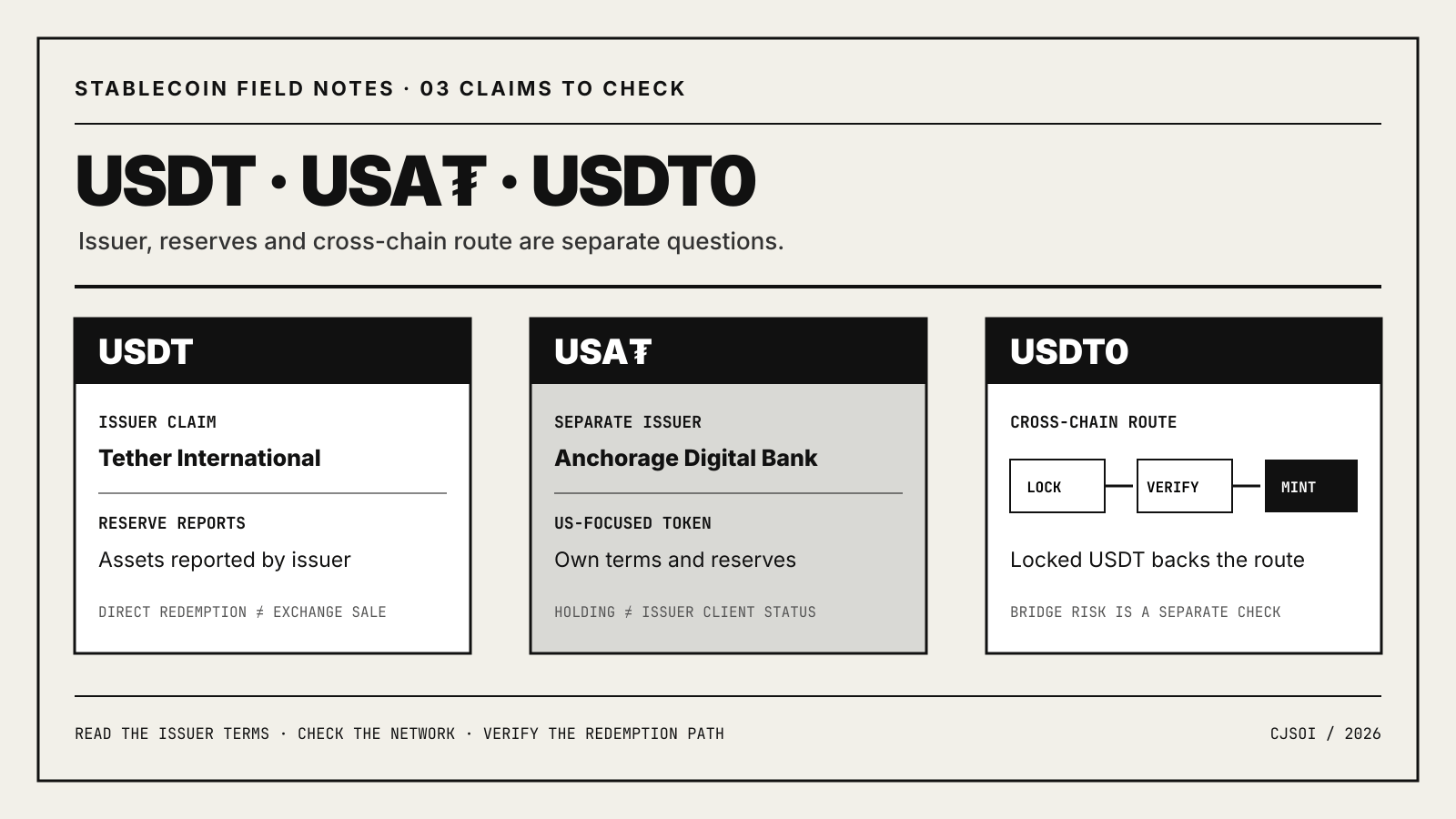
Monochrome comparison diagram of USDT, USA₮ and USDT0 showing issuer, redemption route and cross-chain bridge path
Stablecoins ·

USDT vs USA₮ vs USDT0: Issuer, Redemption and Bridge Risk

USDT, USA₮ and USDT0 share a dollar target but differ in issuer, redemption rights and cross-chain risk.
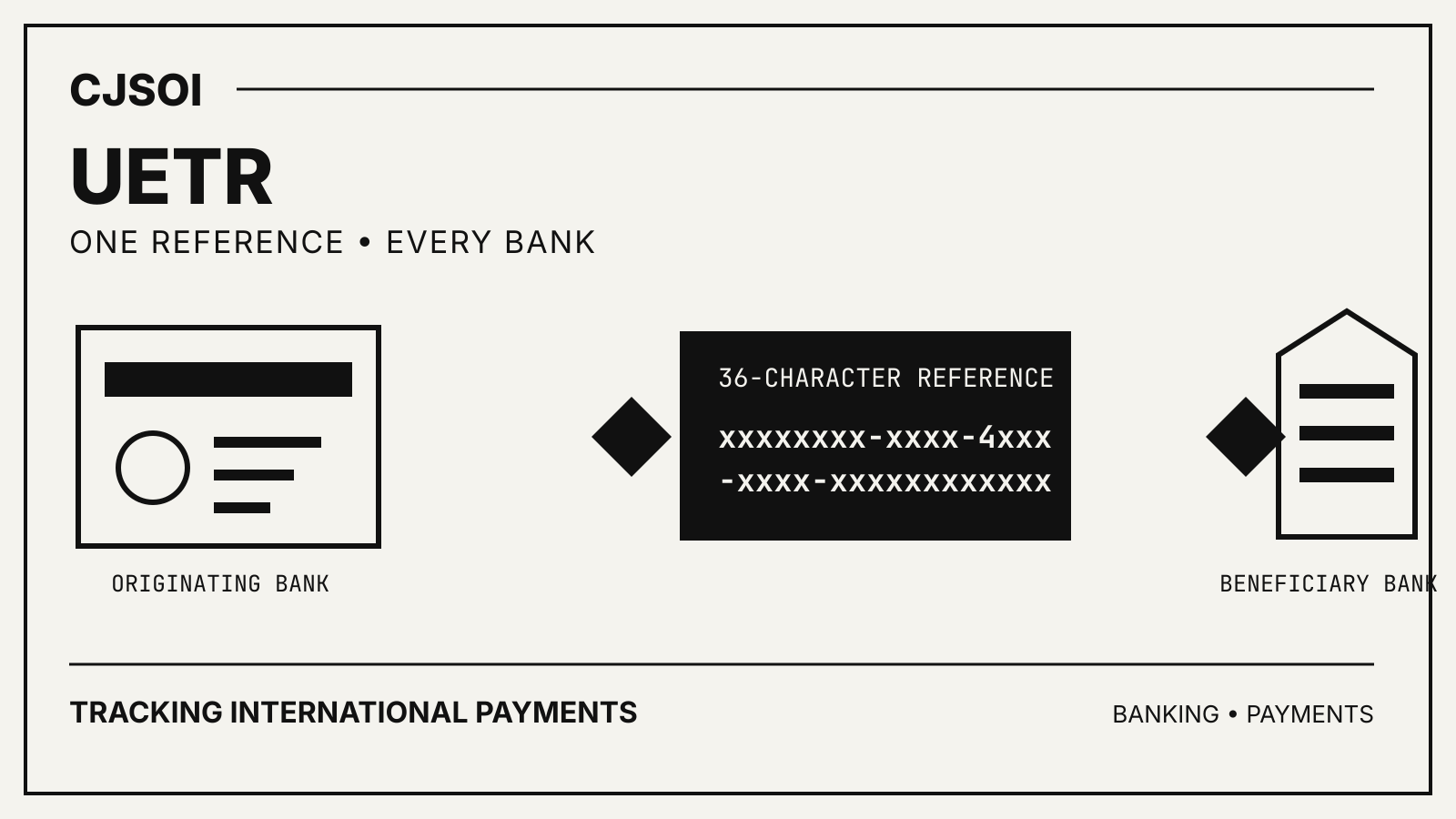
Monochrome UETR diagram showing one 36-character payment reference passed between originating and beneficiary banks
UETR ·

UETR Payment Tracking: How Banks Trace a Swift Transfer

How a 36-character UETR helps banks trace a Swift payment—and what it cannot prove.
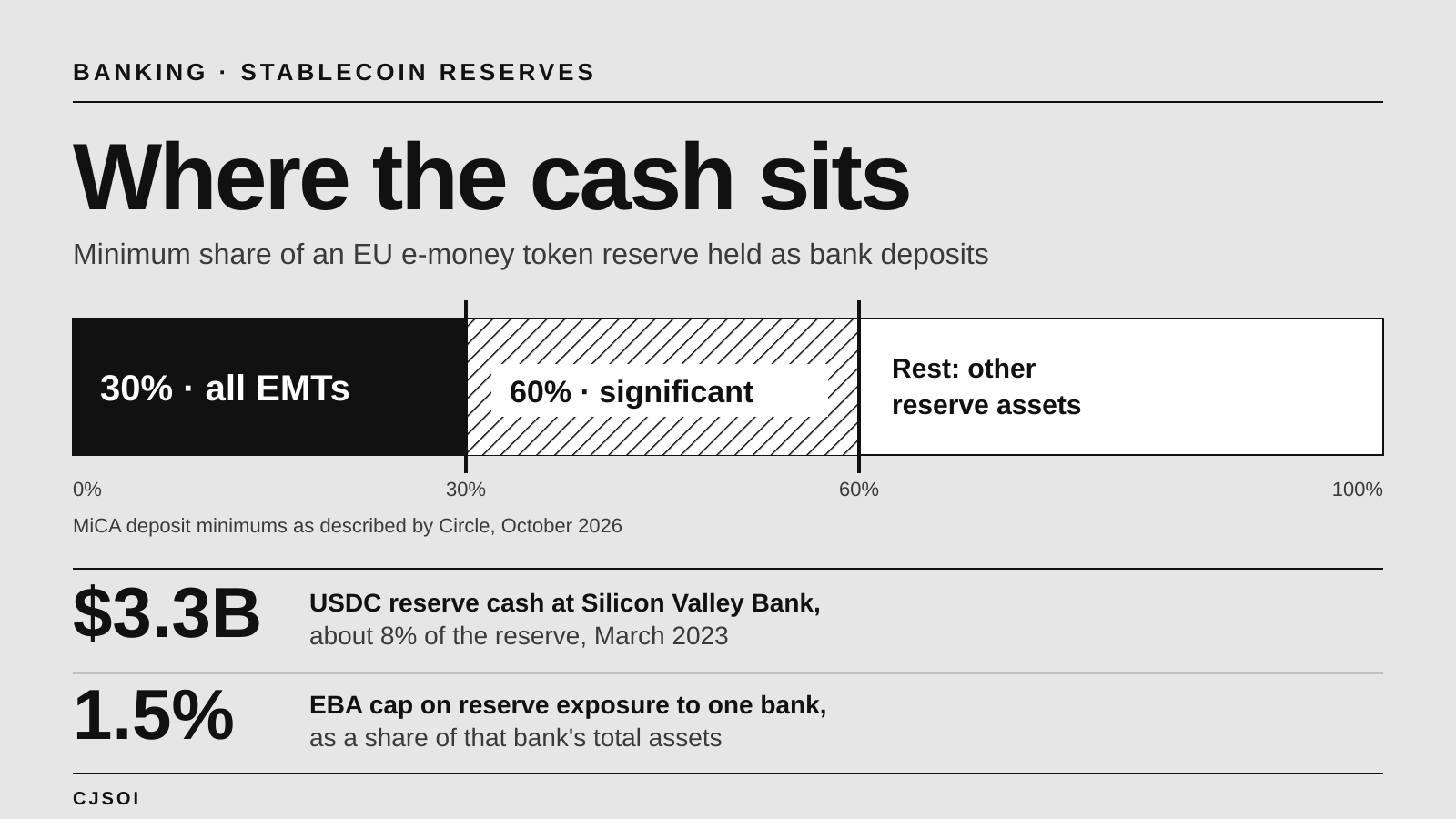
Bar diagram of the minimum share of an EU e-money token reserve held as bank deposits, 30% for all issuers and 60% for significant tokens as described by Circle, with two figures below: $3.3 billion of USDC reserve cash at Silicon Valley Bank in March 2023, about 8% of the reserve, and the EBA's 1.5% cap on reserve exposure to one bank.
Banking ·

Stablecoin Reserves in Bank Deposits: Why Issuers Hold Cash at Banks

Redemptions are paid in bank money, so issuers keep part of the reserve at banks. MiCA sets a minimum; March 2023 showed the risk.
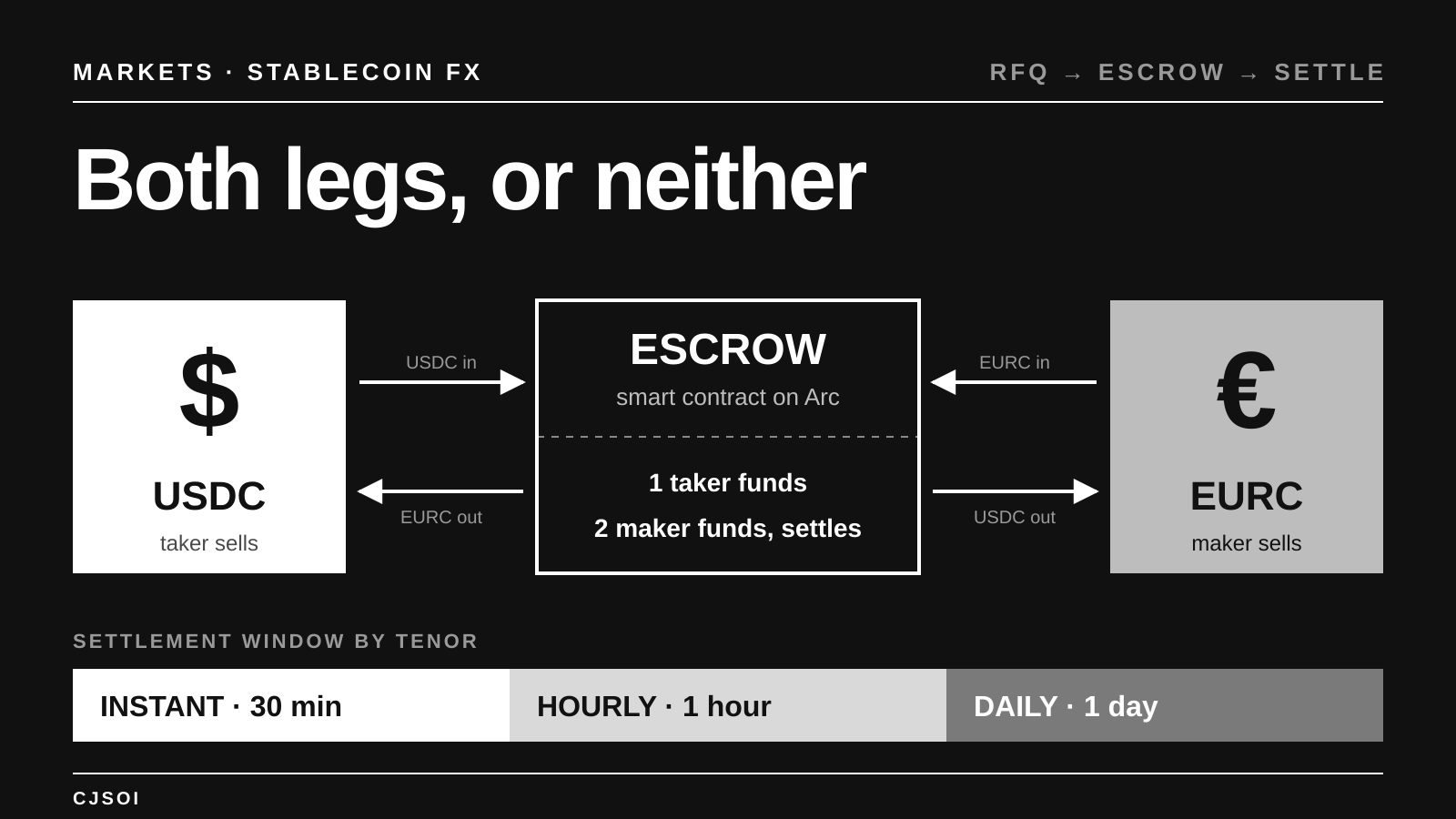
Diagram of a stablecoin FX trade: the taker's USDC and the maker's EURC both go into an escrow smart contract on Arc, which releases both legs together, with settlement windows of 30 minutes, one hour or one day depending on the tenor.
Markets ·

Stablecoin FX: How a USDC-to-EURC Trade Settles Onchain

Onchain FX keeps the market price but changes settlement: an escrow contract releases both stablecoins together, or neither.
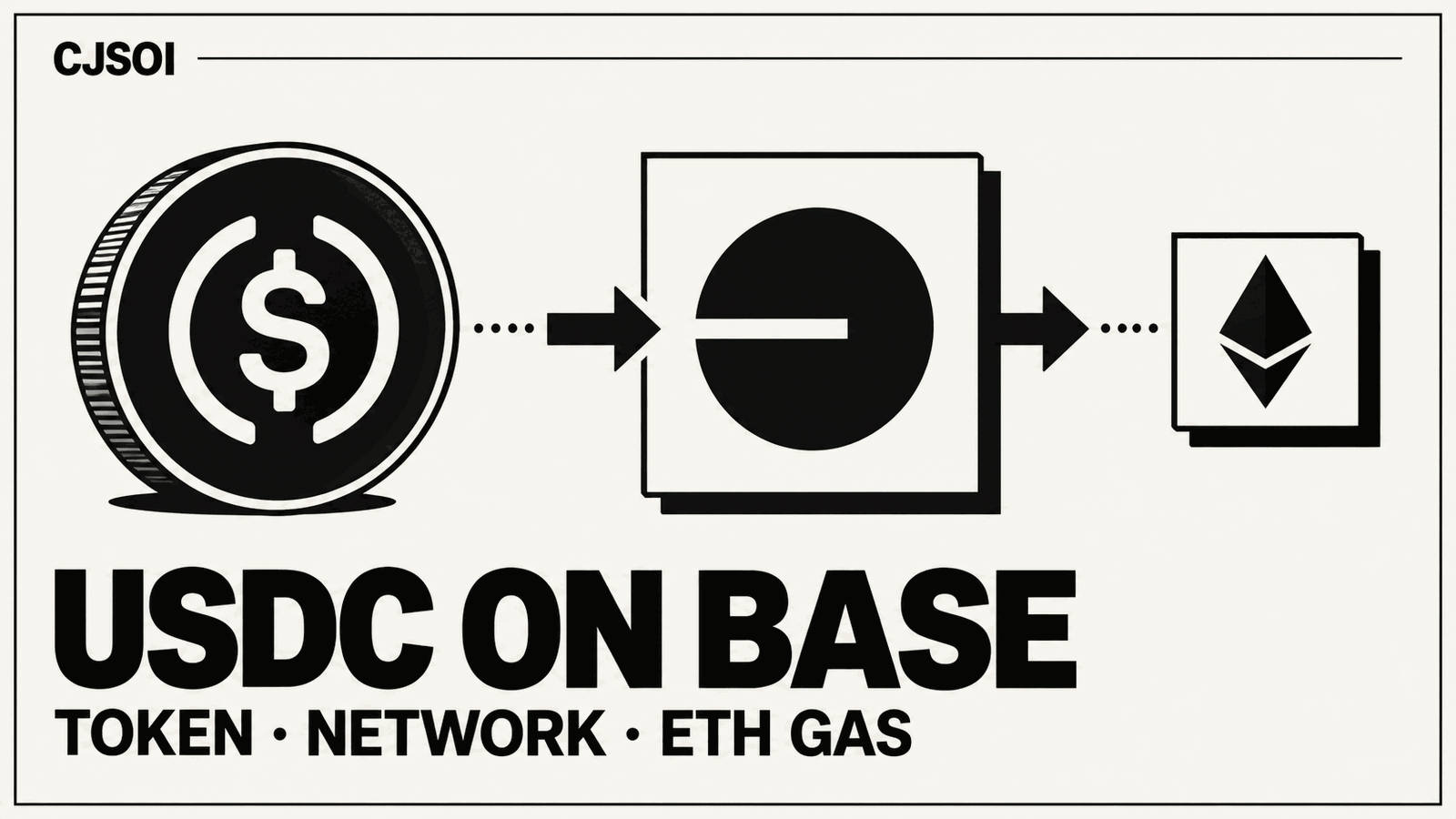
Monochrome USDC on Base transfer diagram showing the token, network route and ETH gas requirement.
USDC ·

USDC on Base: How to Send It and Pay Gas in ETH

How to send USDC on Base, verify the contract and network, keep ETH for gas, and avoid unsupported deposits.
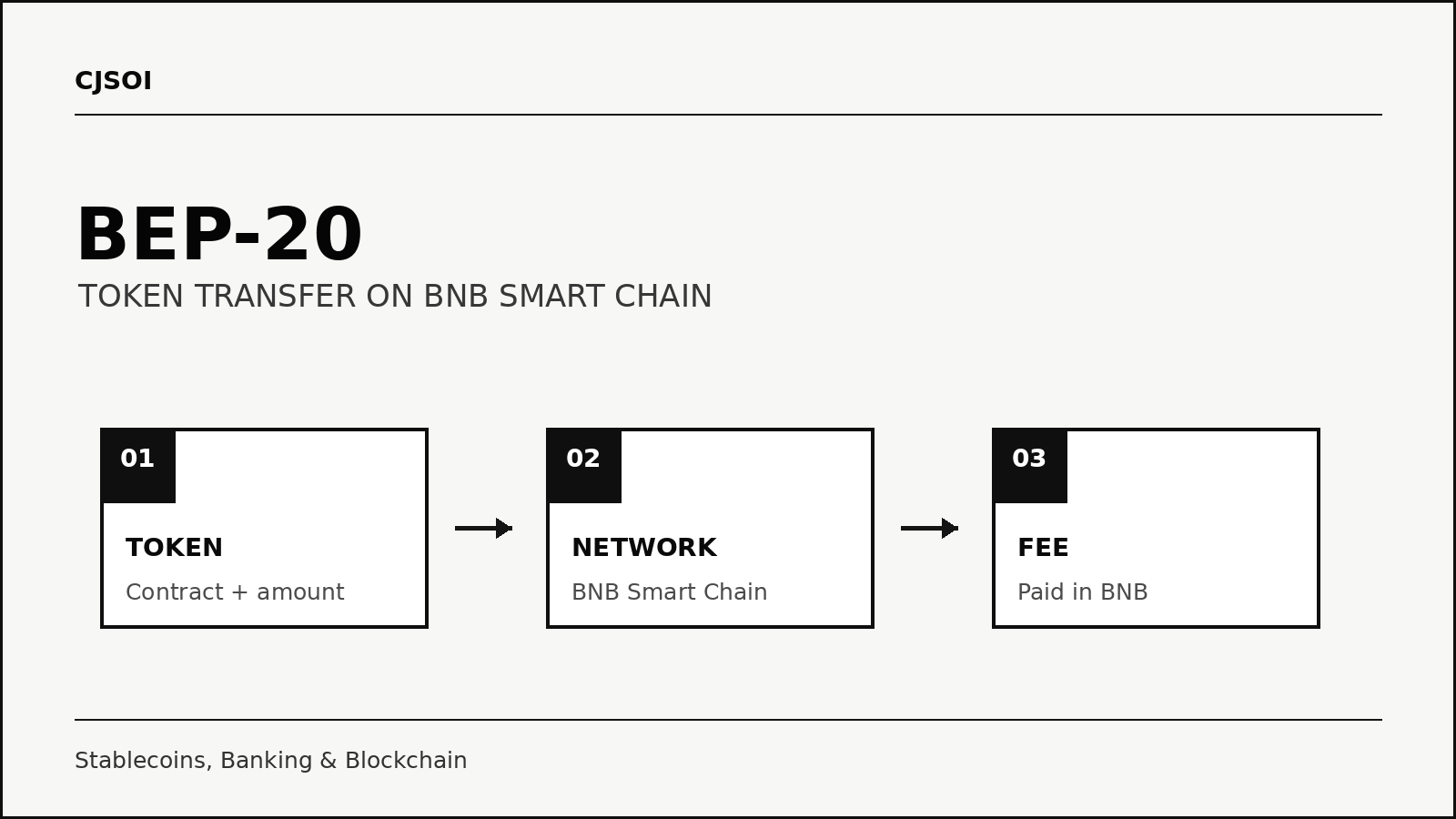
Monochrome three-step BEP-20 transfer diagram: token contract and amount, BNB Smart Chain network, and transaction fee paid in BNB.
BEP-20 ·

BEP-20: BNB Smart Chain Tokens and BNB Gas

BEP-20 tokens run on BNB Smart Chain. Check the contract, BNB gas, network and destination before sending.
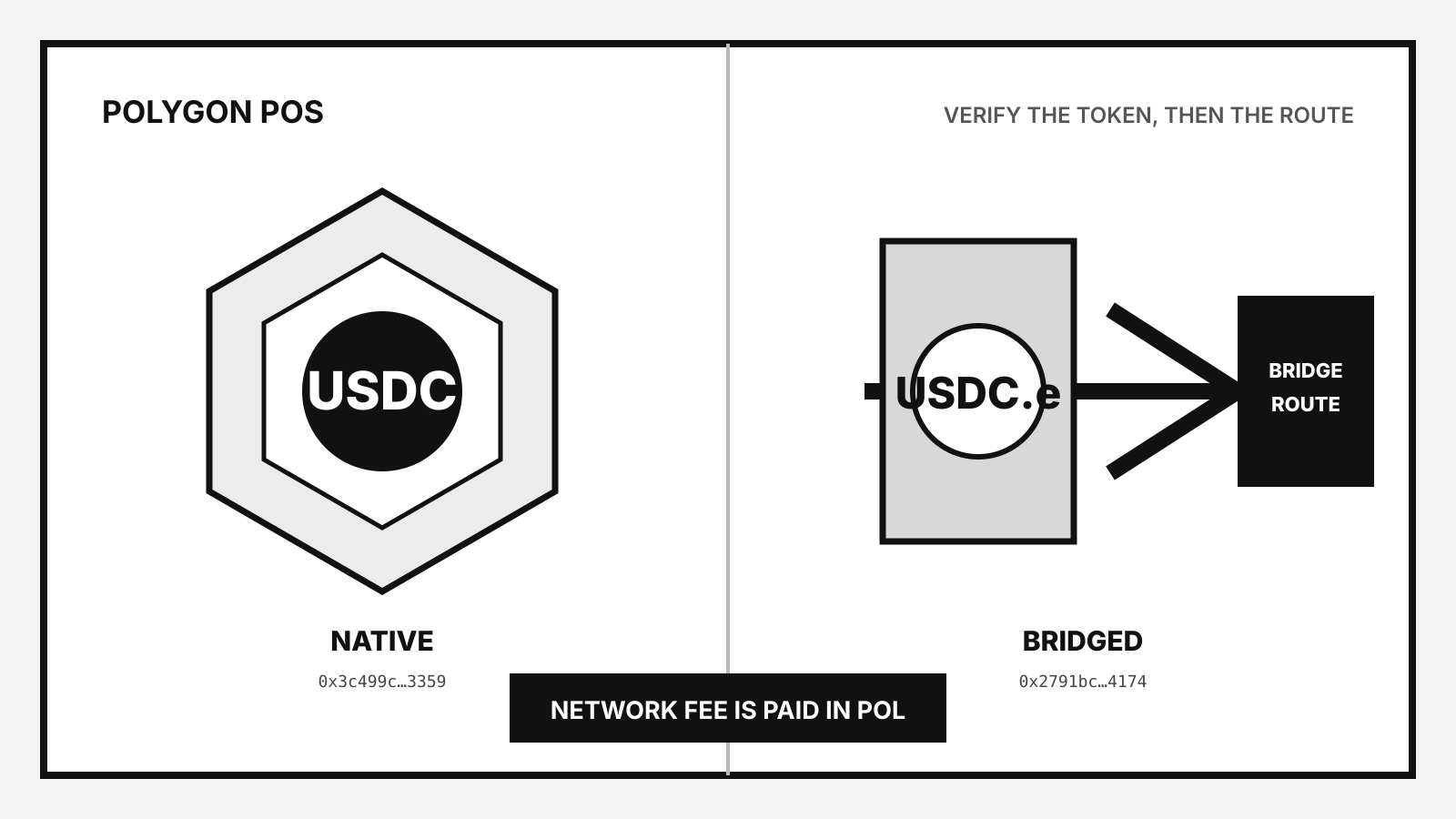
Native USDC and bridged USDC.e shown as separate Polygon PoS routes with their contract checks
USDC ·

USDC on Polygon: Native USDC vs USDC.e

Check native USDC, USDC.e, Polygon PoS gas in POL and destination support before sending.
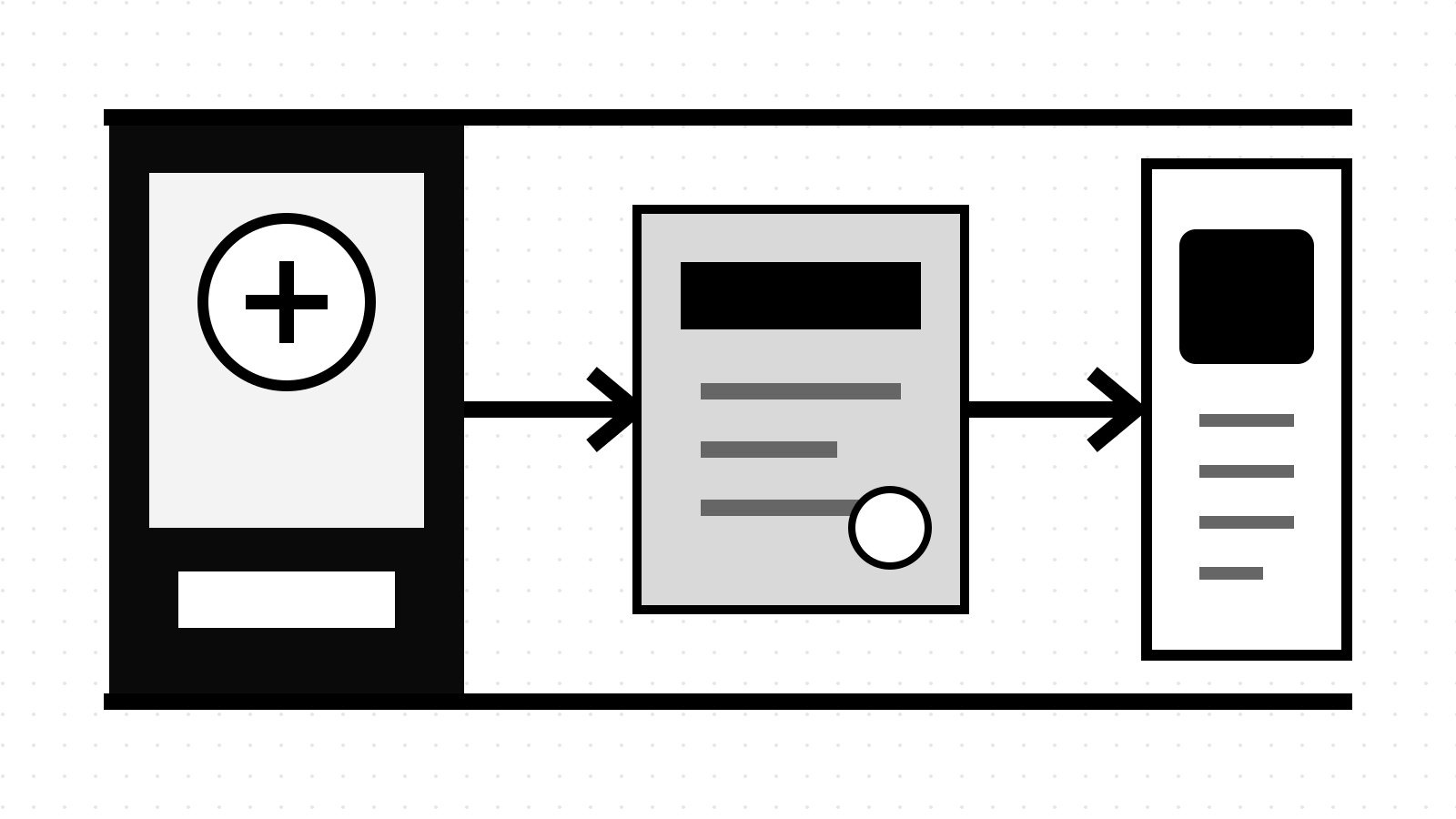
A monochrome stablecoin checkout flowing from a customer wallet through a payment processor to a business balance
Payments ·

How Businesses Accept Stablecoin Payments

A stablecoin checkout needs a payment intent, supported chain, settlement record, refund policy and reconciliation.
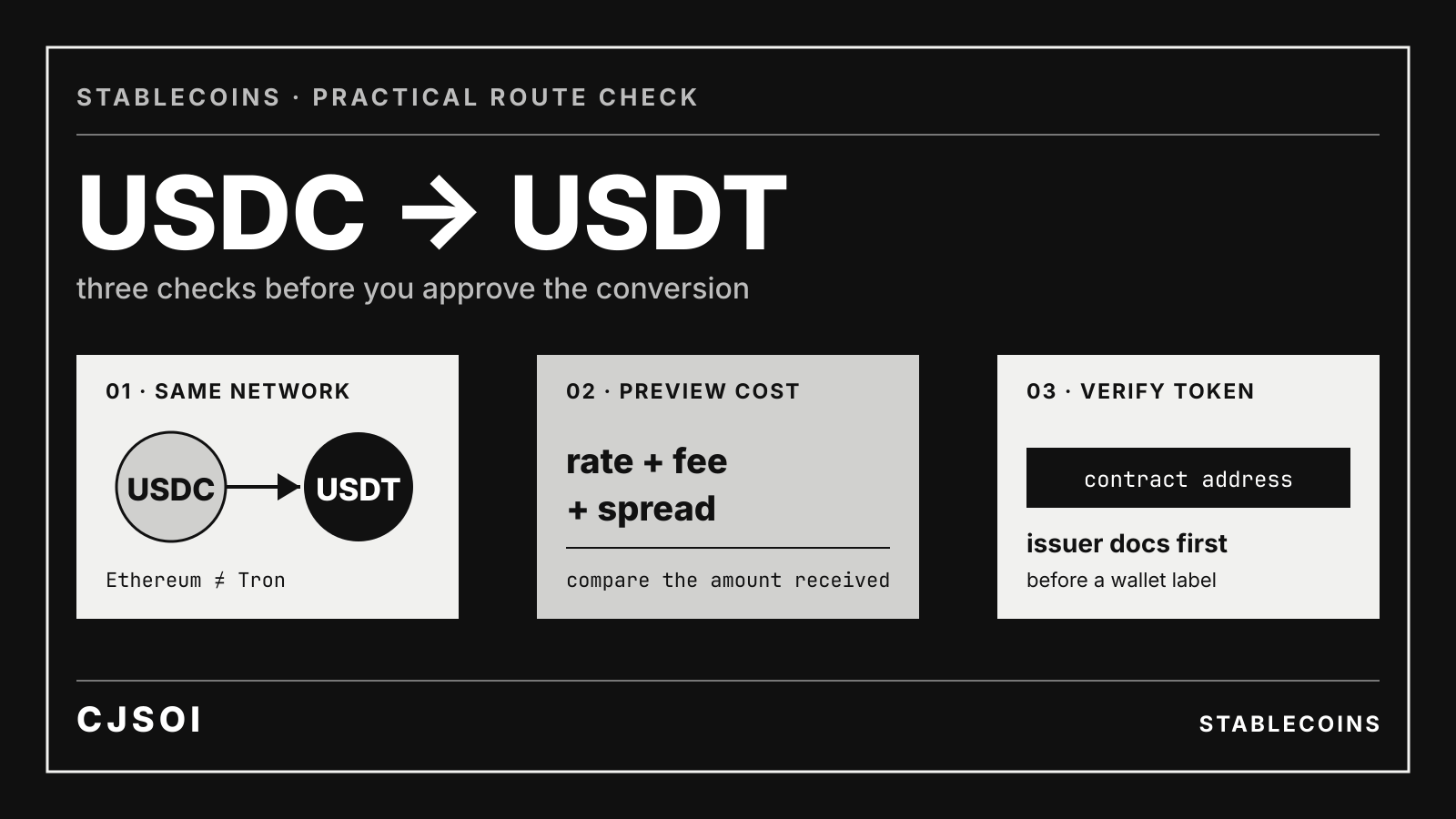
USDC to USDT conversion checklist: same network, previewed costs and verified contract address
USDC ·

USDC to USDT: How to Convert Without Mixing Networks

A practical USDC-to-USDT checklist for exchange conversions, wallet swaps, fees and network matching.
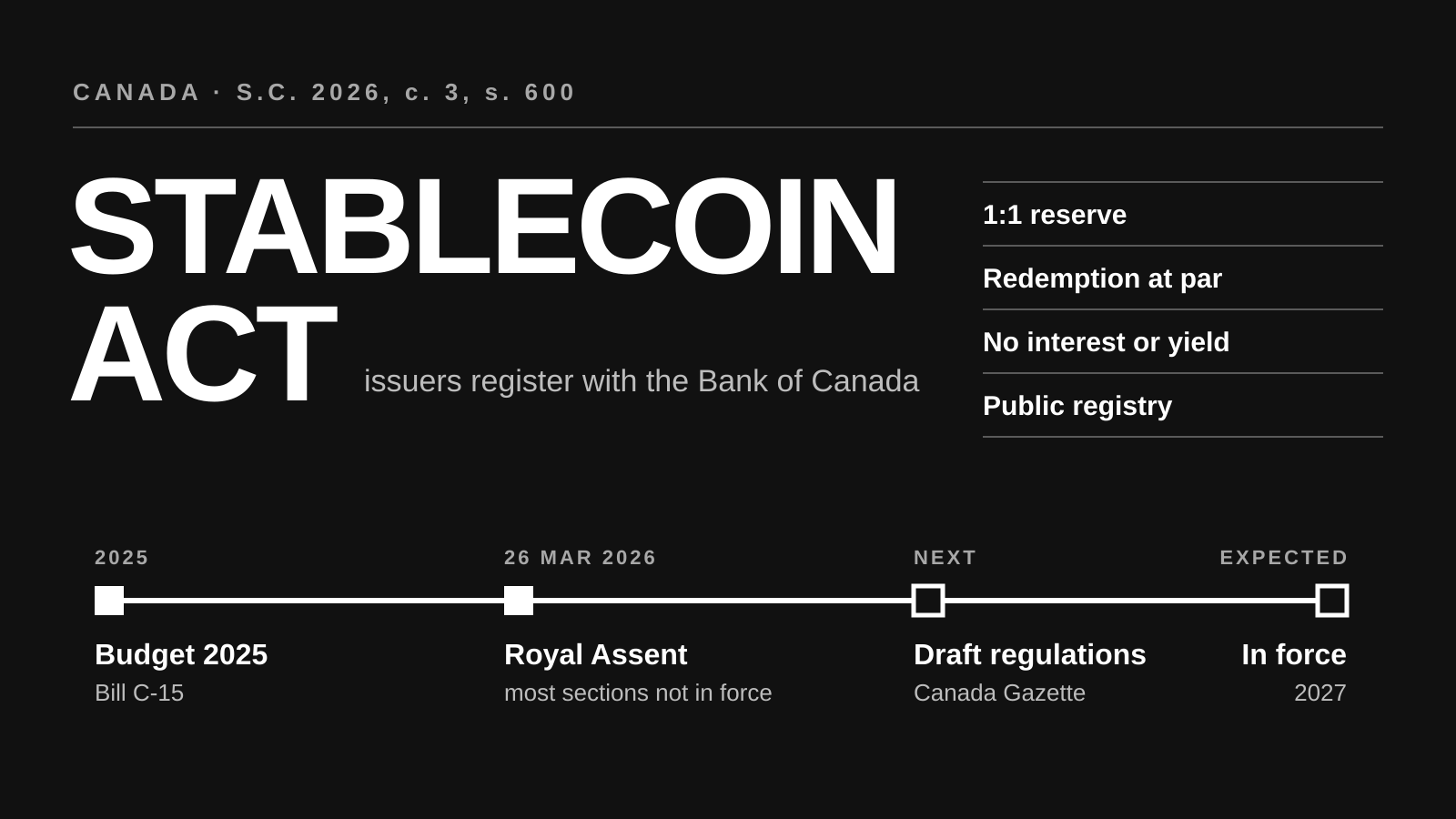
Canada's Stablecoin Act: four issuer rules and a timeline from Budget 2025 and Royal Assent on March 26, 2026 to draft regulations and expected entry into force in 2027
Canada ·

Canada's Stablecoin Act: How the Bank of Canada Will Regulate Issuers

Canada's Stablecoin Act puts non-bank issuers under the Bank of Canada: registration, a full reserve, redemption at par and no interest. Most of it is expected in force in 2027.
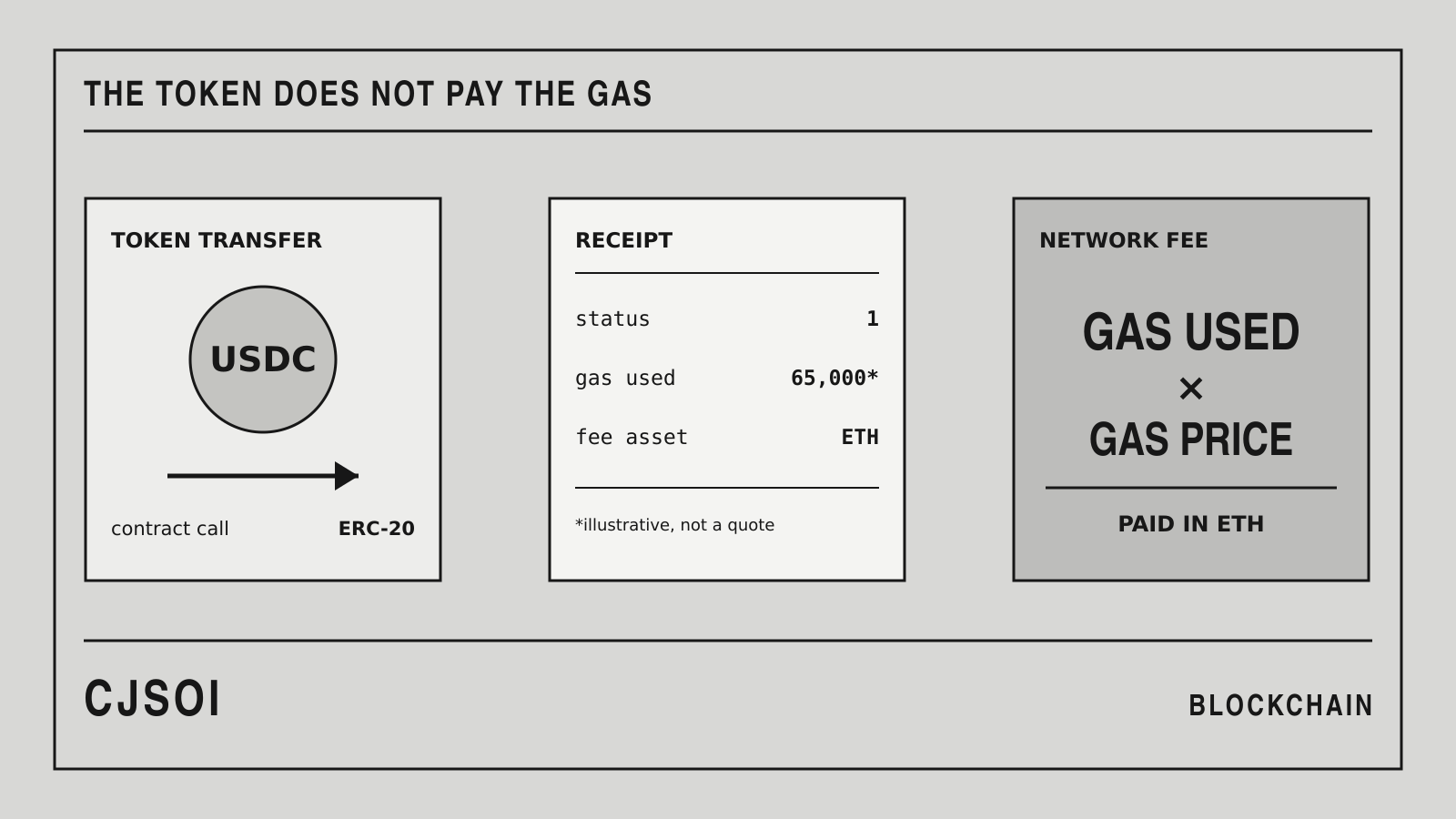
Ethereum stablecoin transfer receipt showing gas used, gas price and ETH as the fee asset
Ethereum ·

Ethereum Gas Fees for USDT and USDC Transfers

Ethereum gas fees for USDT and USDC are paid in ETH. See the fee formula, gas limits and failed transfers.
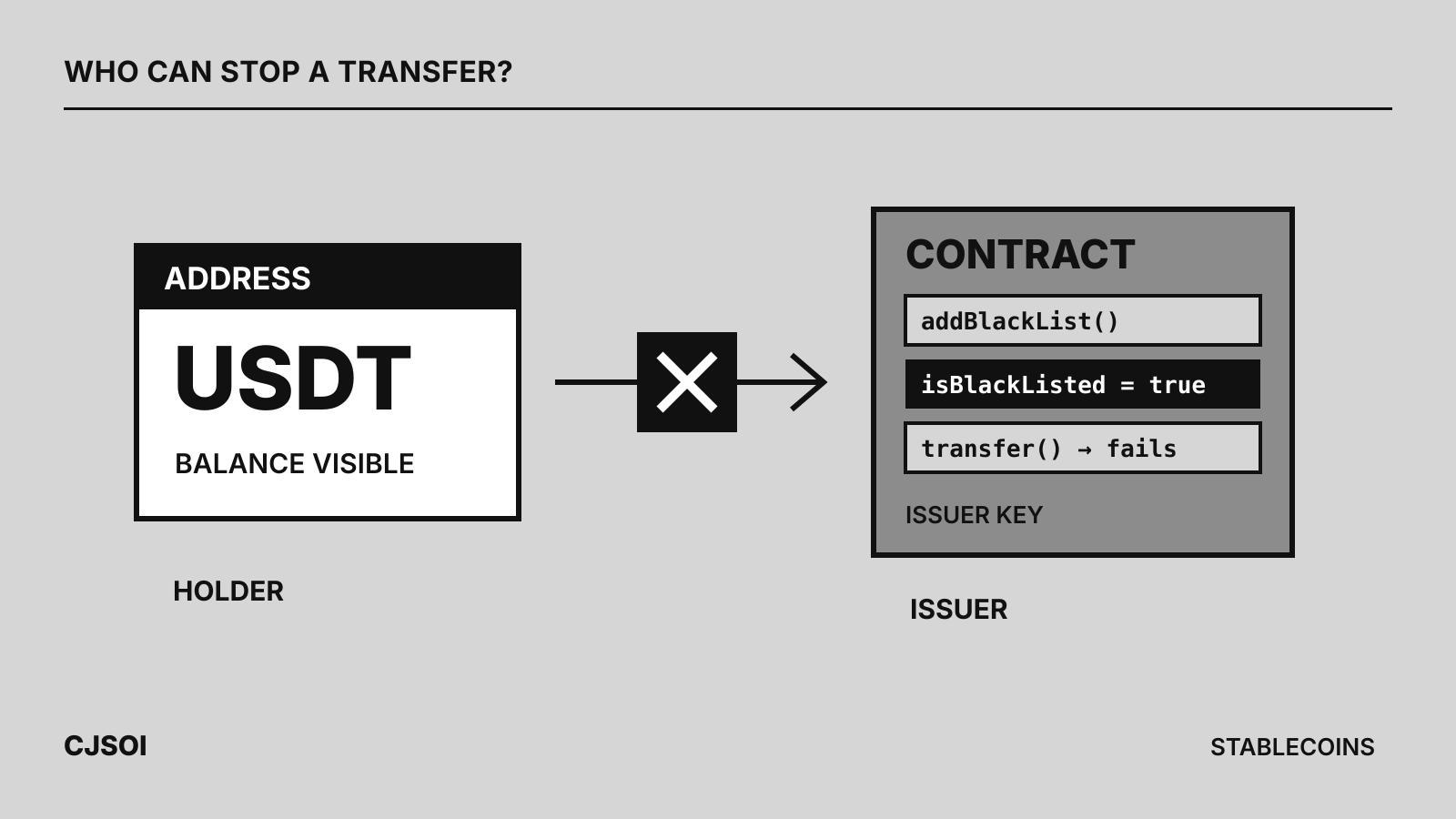
A USDT address with a visible balance, blocked by an issuer blocklist entry in the token contract.
Stablecoins ·

Can USDT Be Frozen? What Tether and Circle's Terms Allow

Yes, and so can USDC. The power sits in the issuers' terms and in the token contracts themselves.
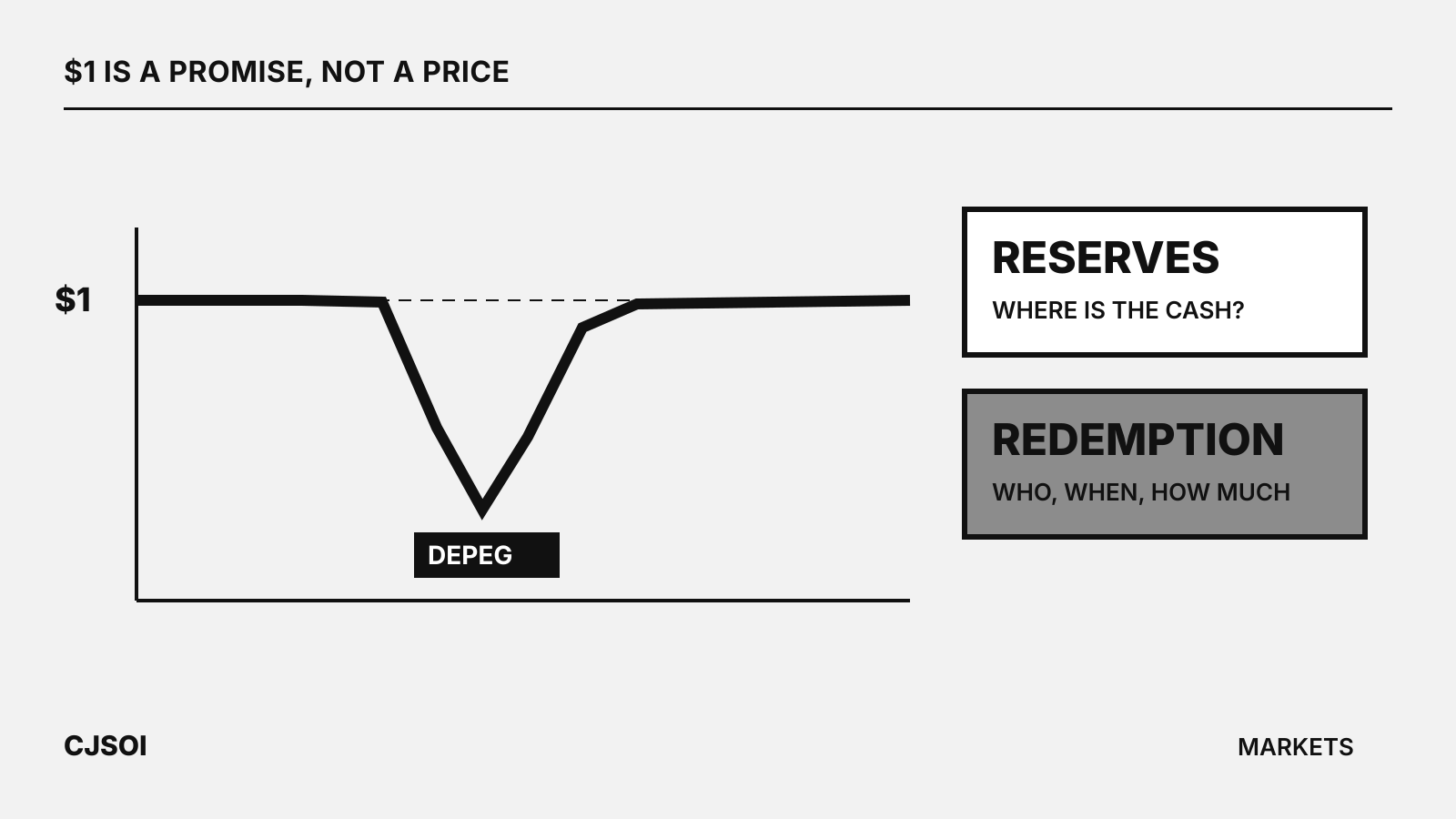
A price line holding at $1, dipping in a depeg and recovering, beside reserves and redemption boxes.
Markets ·

Can Stablecoins Lose Value? How a Peg Holds and Breaks

The $1 is a redemption promise, not a set price. USDC in 2023 and UST in 2022 show how it bends and breaks.
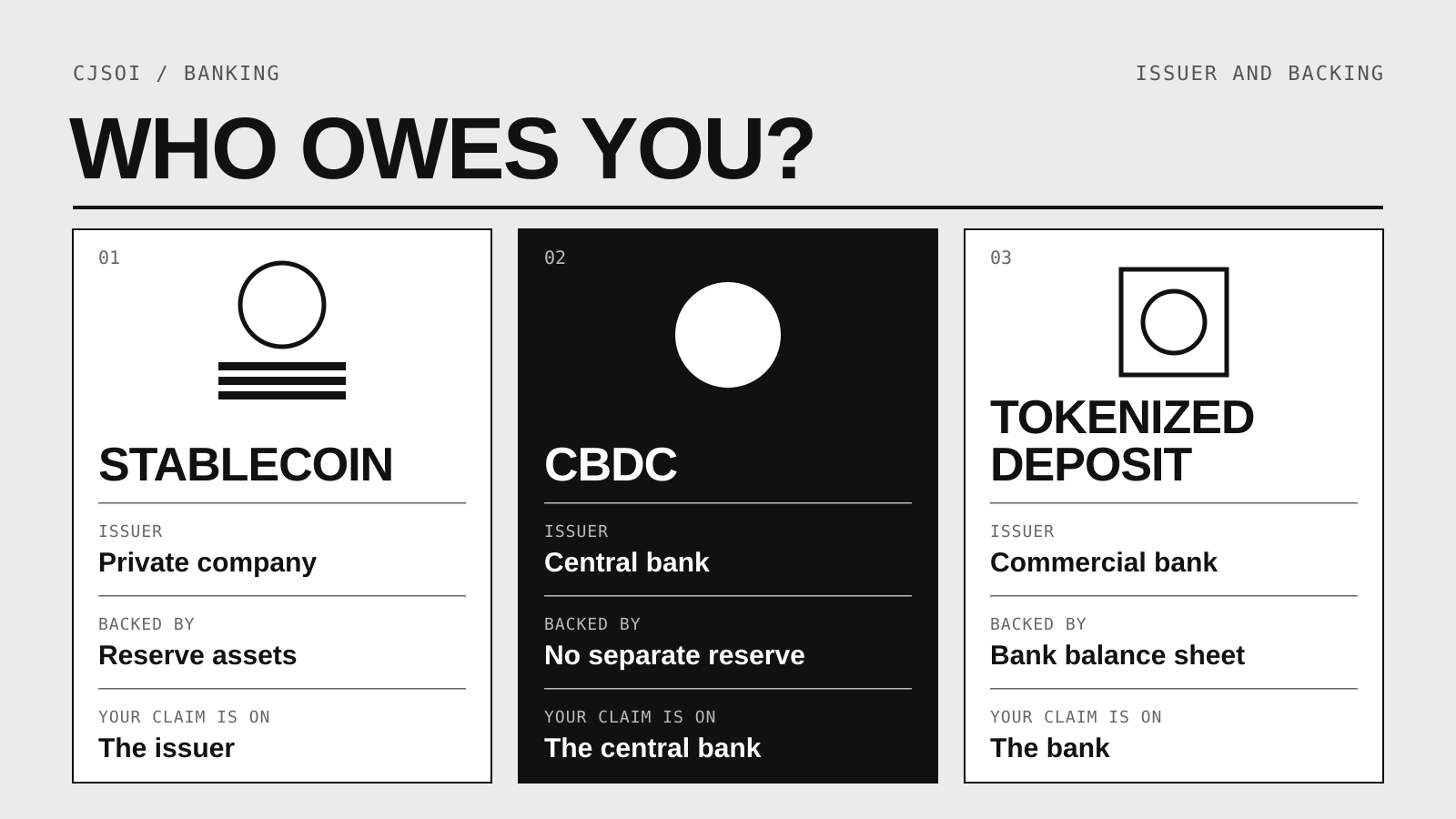
Three-column comparison of a stablecoin, a CBDC and a tokenized deposit: the issuer is a private company, a central bank or a commercial bank; the backing is reserve assets, no separate reserve or the bank's balance sheet; the holder's claim is on the issuer, the central bank or the bank.
Banking ·

Stablecoin vs CBDC vs Tokenized Deposit: Who Issues It and What Backs It

Three kinds of digital money, three different debtors: a private issuer, a central bank or a commercial bank.
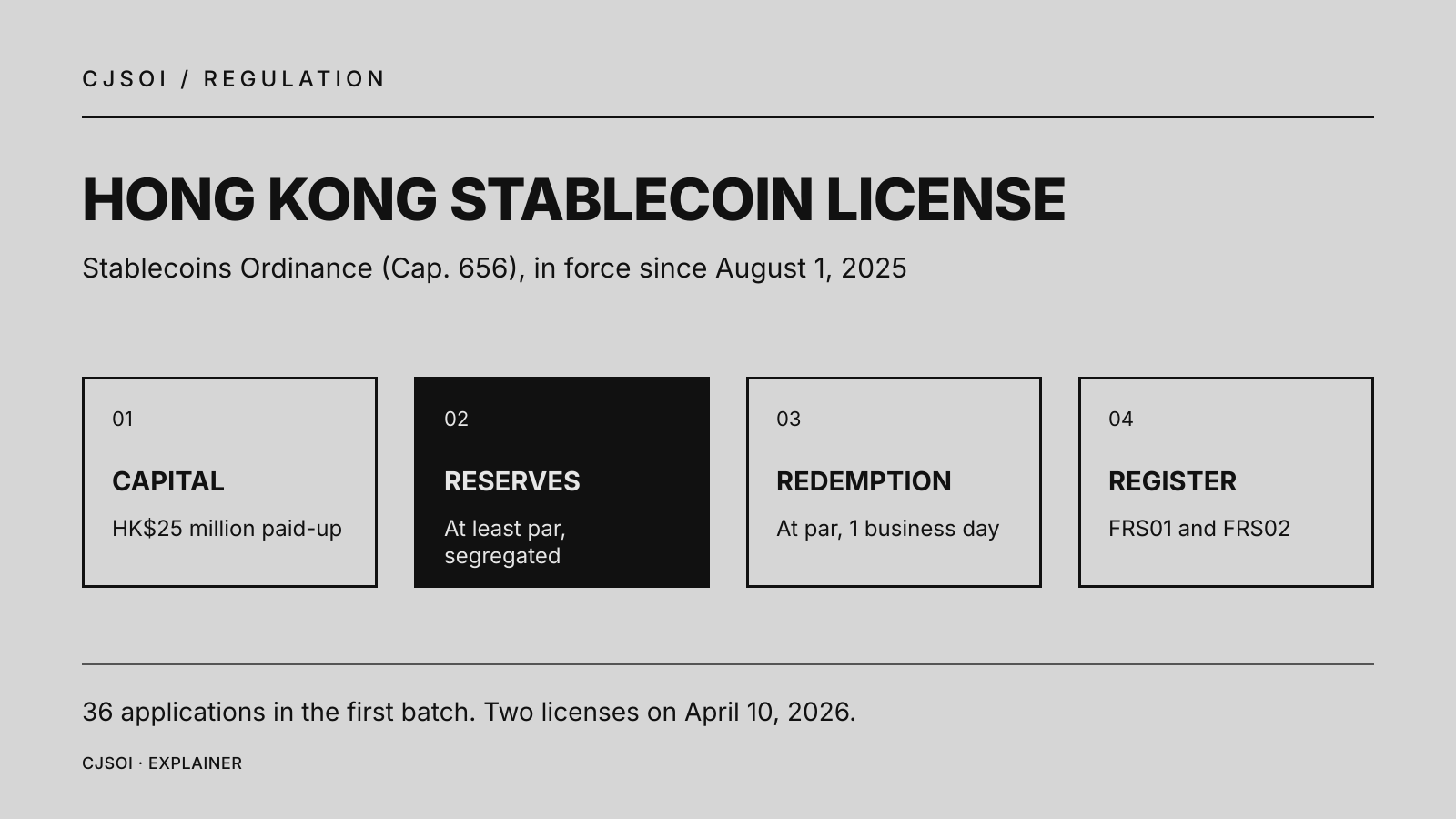
Four requirements of Hong Kong's stablecoin issuer license: HK$25 million paid-up capital, segregated reserves of at least par value, redemption at par within one business day, and the HKMA register listing licenses FRS01 and FRS02.
Hong Kong ·

Hong Kong Stablecoin License: How the HKMA Regime Works

Who needs an HKMA stablecoin license, what it requires on capital, reserves and redemption, and which issuers hold one.
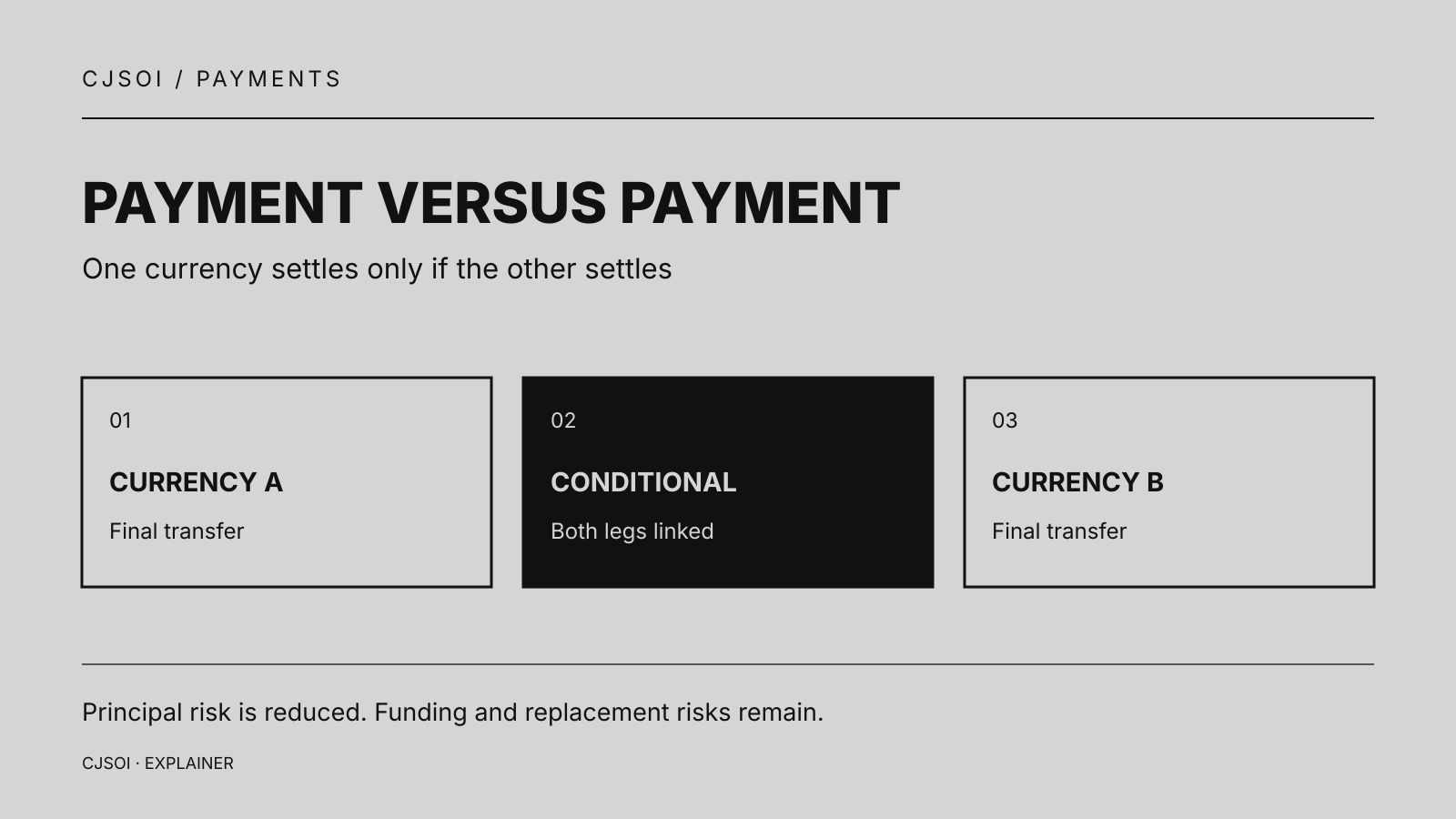
Payment versus payment links the final transfers of two currencies; funding and replacement risks remain.
Payments ·

Payment Versus Payment: What PvP Removes from an FX Trade

Conditional currency settlement reduces principal risk. It still leaves funding, replacement and operational questions.
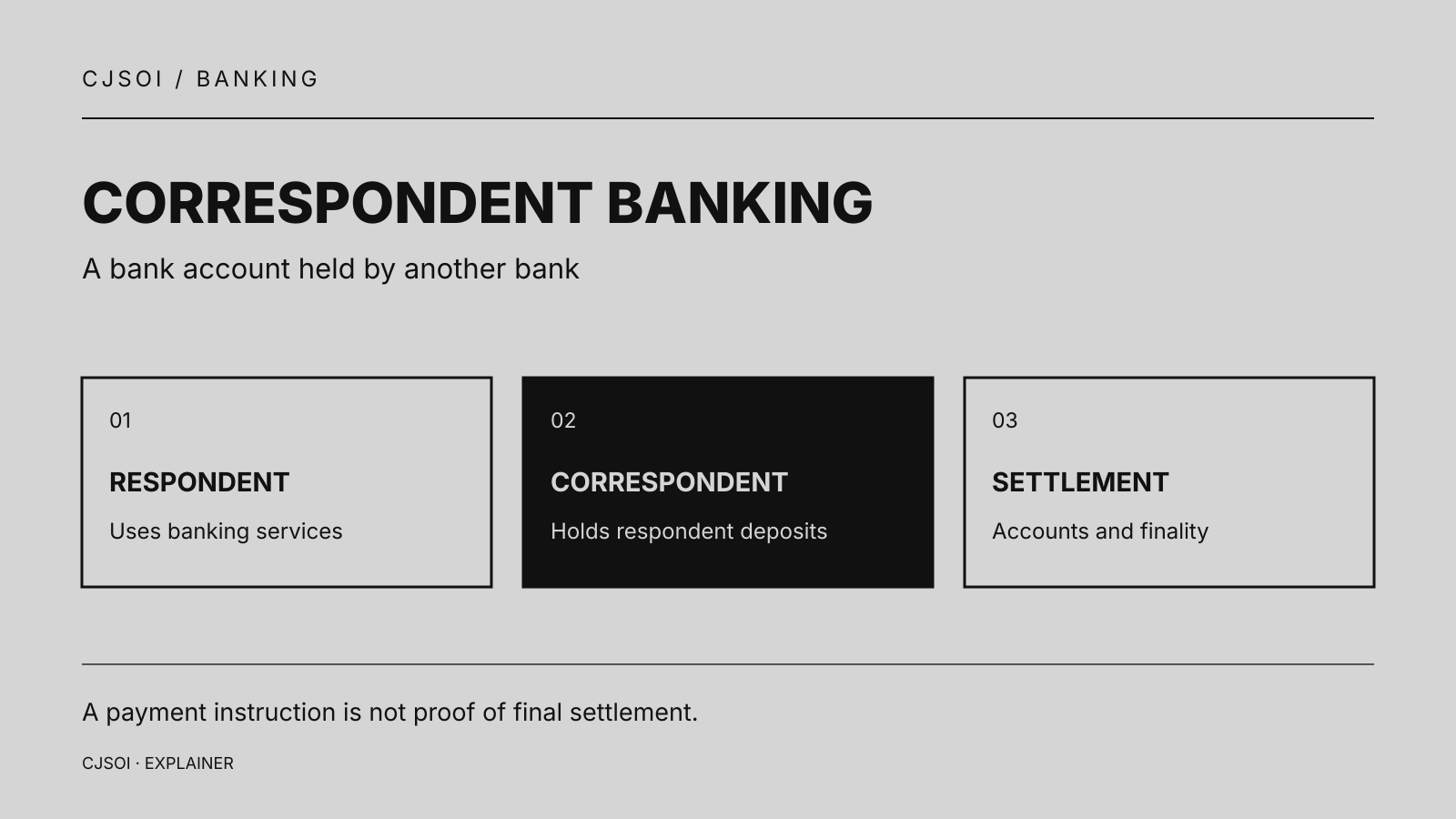
Correspondent banking roles: respondent, deposit-holding correspondent and settlement arrangements.
Banking ·

Correspondent Banking: How Banks Use Other Banks to Pay

The accounts and bank relationships behind cross-border settlement, and the risks a payment message cannot remove.
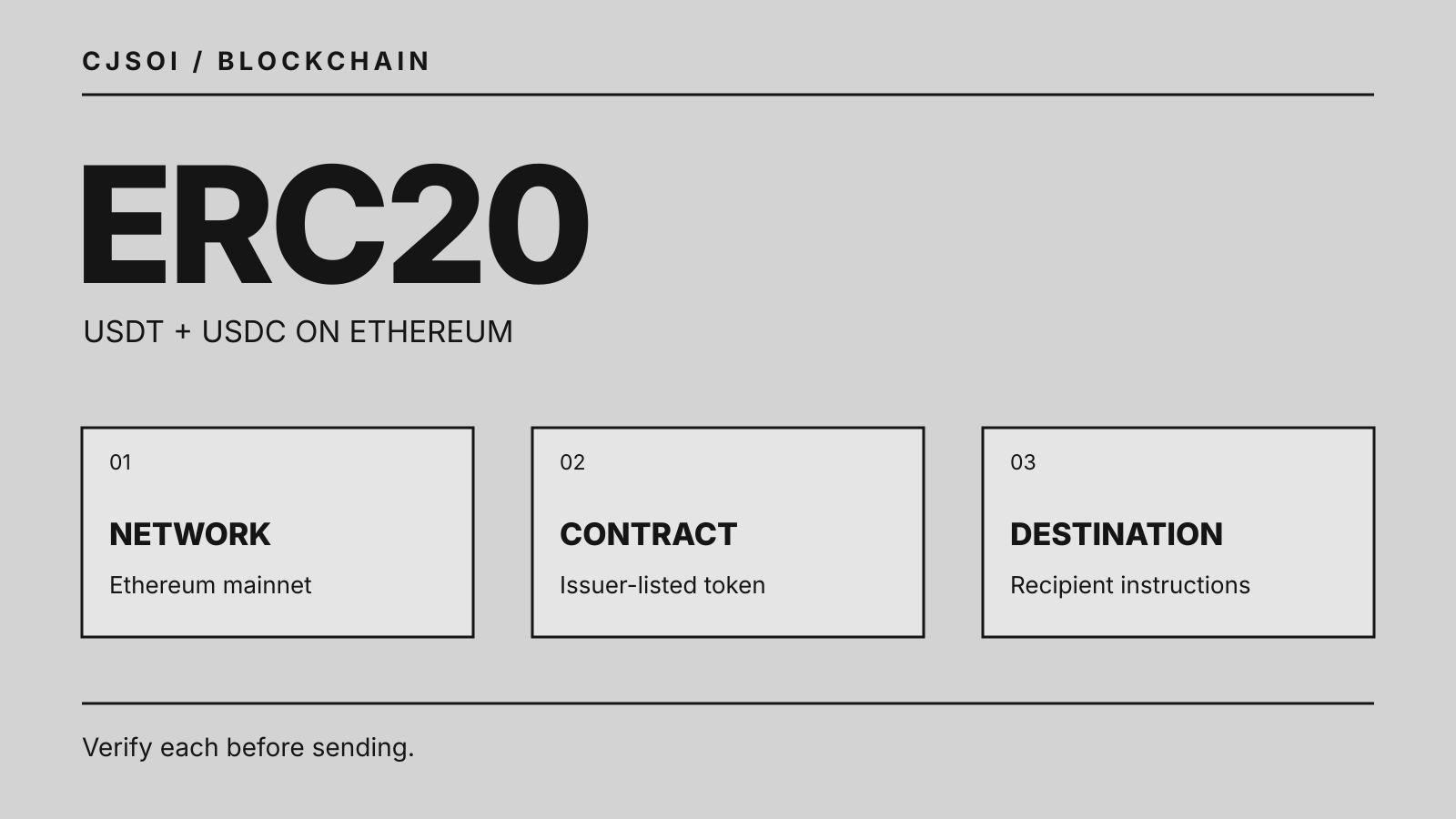
ERC20 transfer checks: network, token contract and recipient destination.
ERC-20 ·

ERC20: USDT and USDC on Ethereum Explained

ERC20 defines token functions. For USDT or USDC, verify the network, issuer contract and recipient before sending.
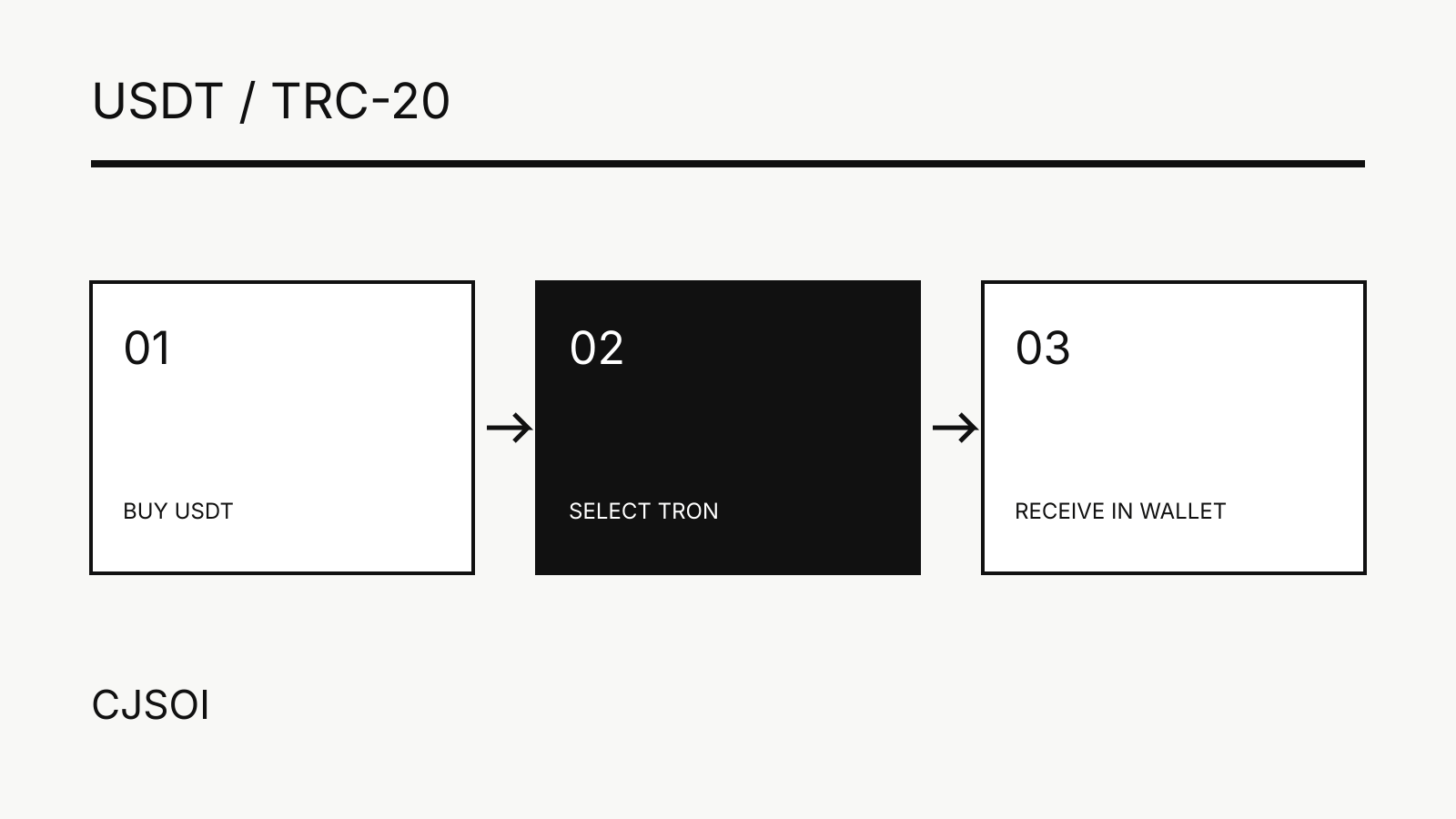
An exchange purchase followed by a network choice and a TRON wallet receipt
Stablecoins ·

How to Buy USDT TRC20 and Withdraw It on TRON

Buy USDT where TRON is a withdrawal network, then withdraw it on TRON: steps, holds, fees and the TRX you need next.
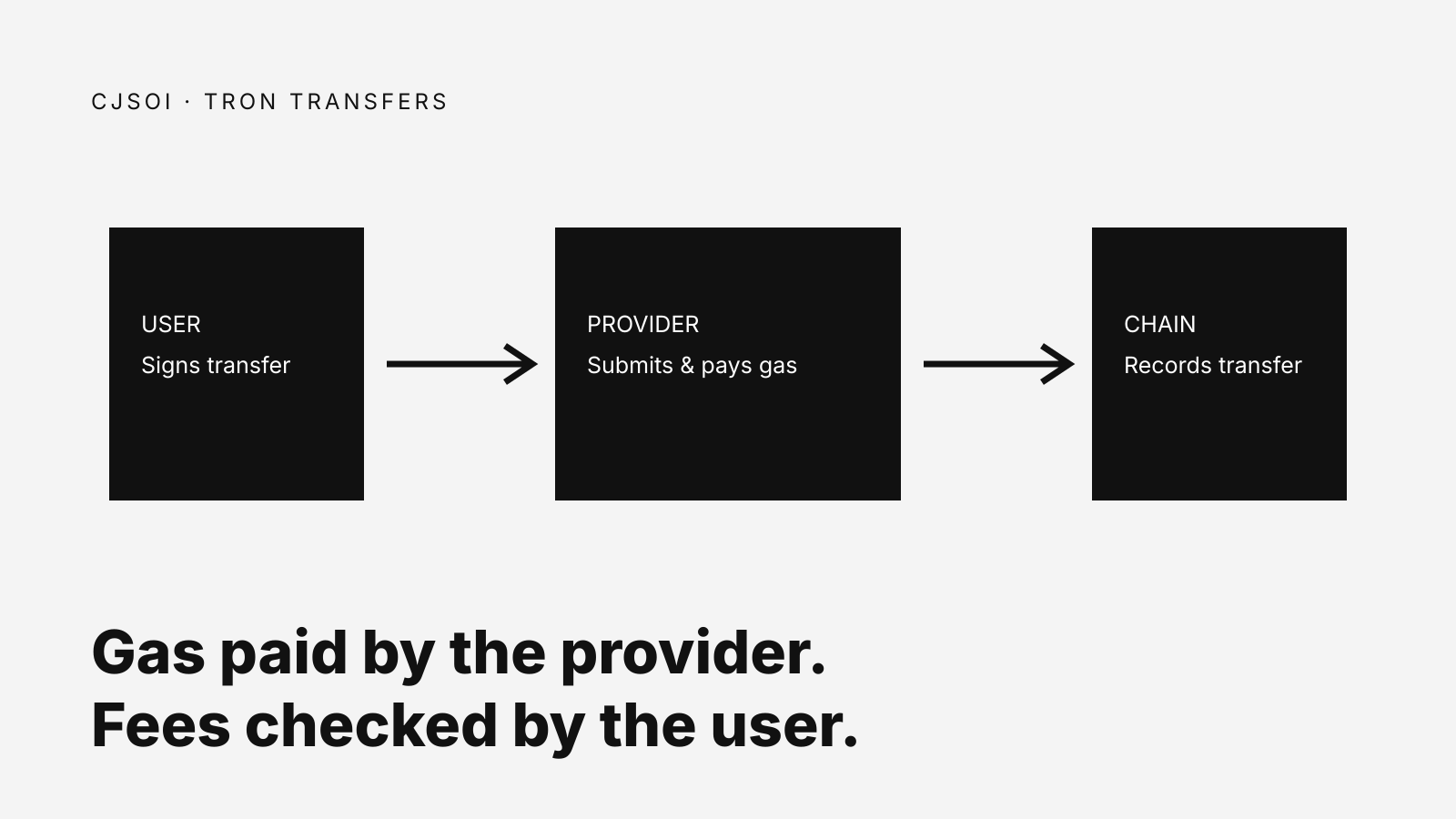
GasFree flow from user authorisation through provider submission to a blockchain record.
TRON ·

Gas-Free TRON Transfers: USDT Fees and Provider Payments

GasFree removes the need to hold TRX for gas, while activation and transfer handling fees can still apply.
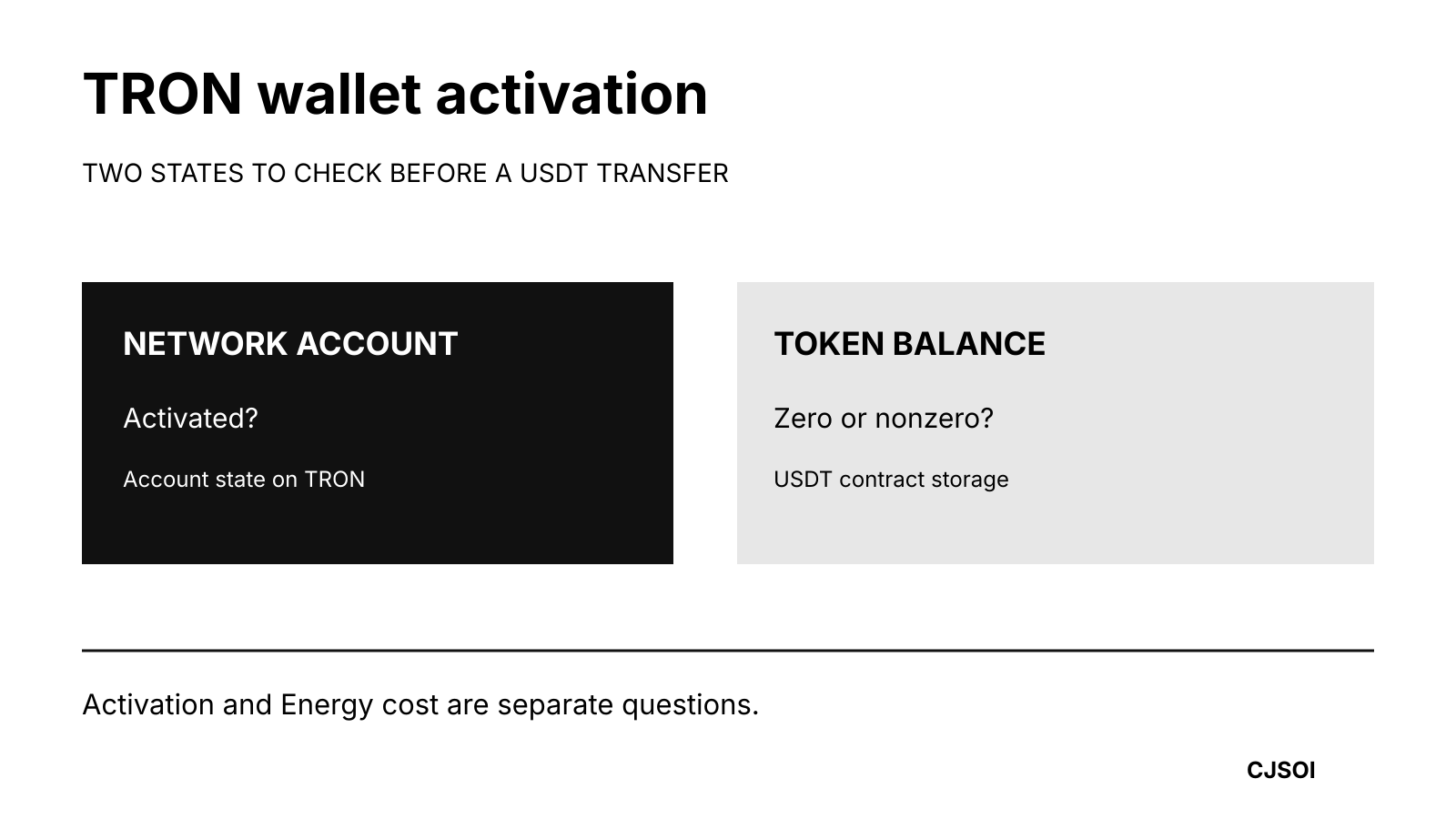
Separate panels show TRON network account activation and a zero or nonzero USDT balance in token storage.
TRON ·

TRON Wallet Activation: Account State and First USDT Transfer Costs

Account activation and a recipient's USDT balance are separate inputs to a TRON transfer.
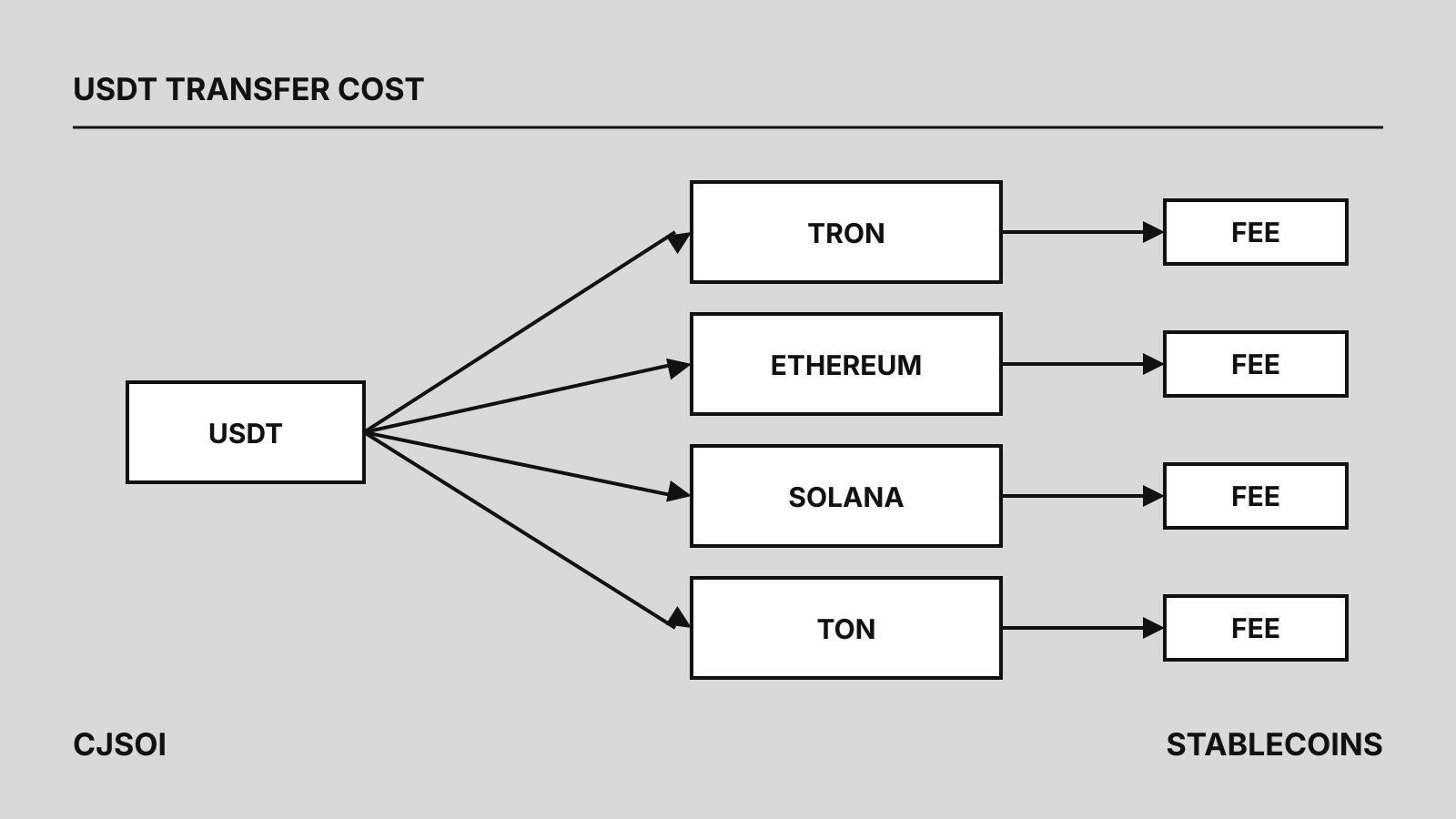
Line diagram: a USDT box on the left with arrows to four network boxes, TRON, Ethereum, Solana and TON, each leading to a box labeled fee.
USDT ·

Cheapest Way to Send USDT: Network Fees on TRON, Ethereum, Solana and TON

USDT network fees on TRON, Ethereum, Solana and TON, checked November 8, 2026.
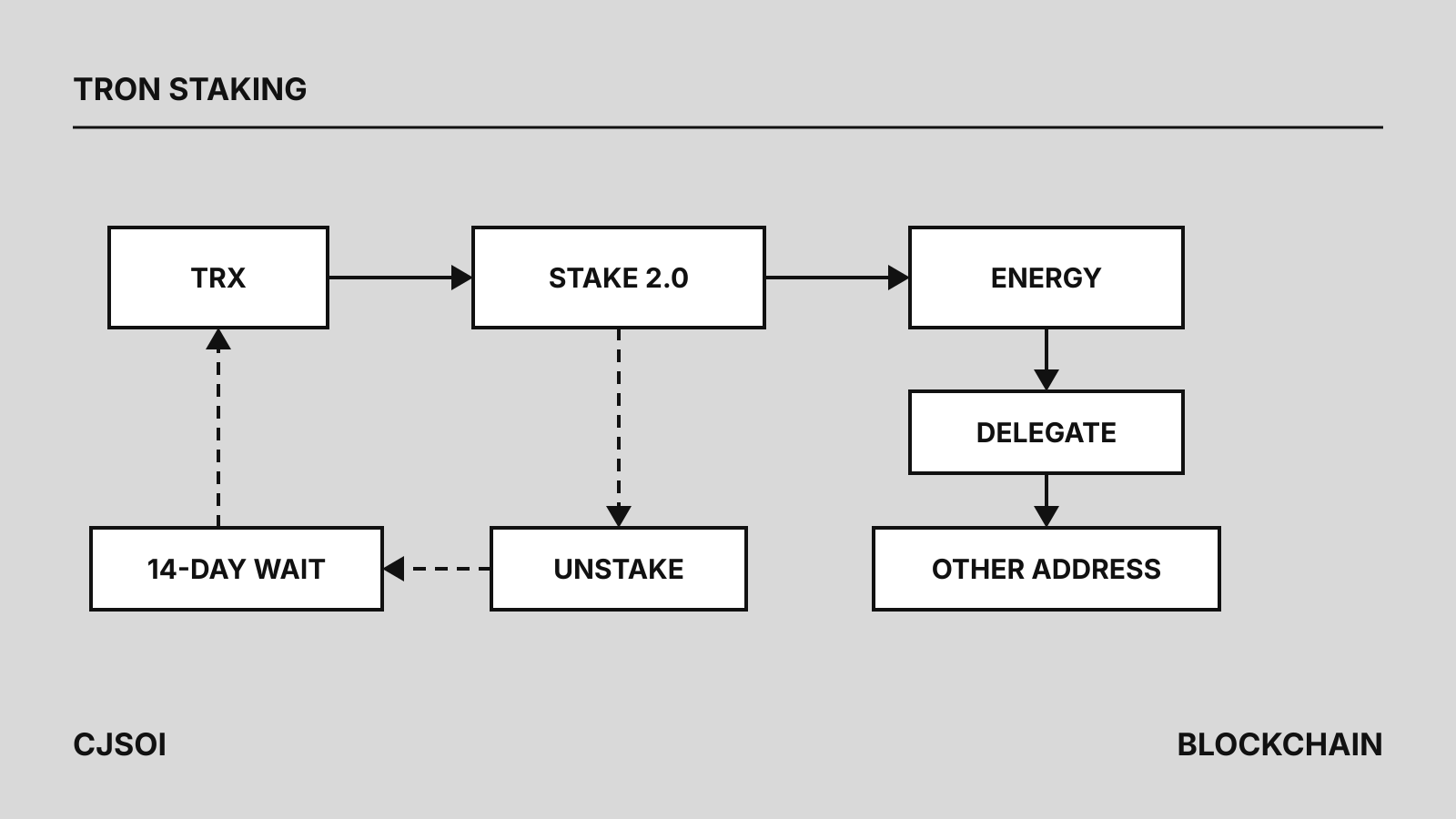
Line diagram of TRON staking: TRX flows to Stake 2.0 and then to energy, which can be delegated to another address; a dashed path shows unstaking, a 14-day wait and the TRX returning.
TRON ·

TRON Staking for Energy: How Much TRX a USDT Transfer Needs

How TRON staking provides energy, how much TRX transfers need and how unstaking works.

CJSOI

What are you looking for?

Search by headline, topic or keyword.