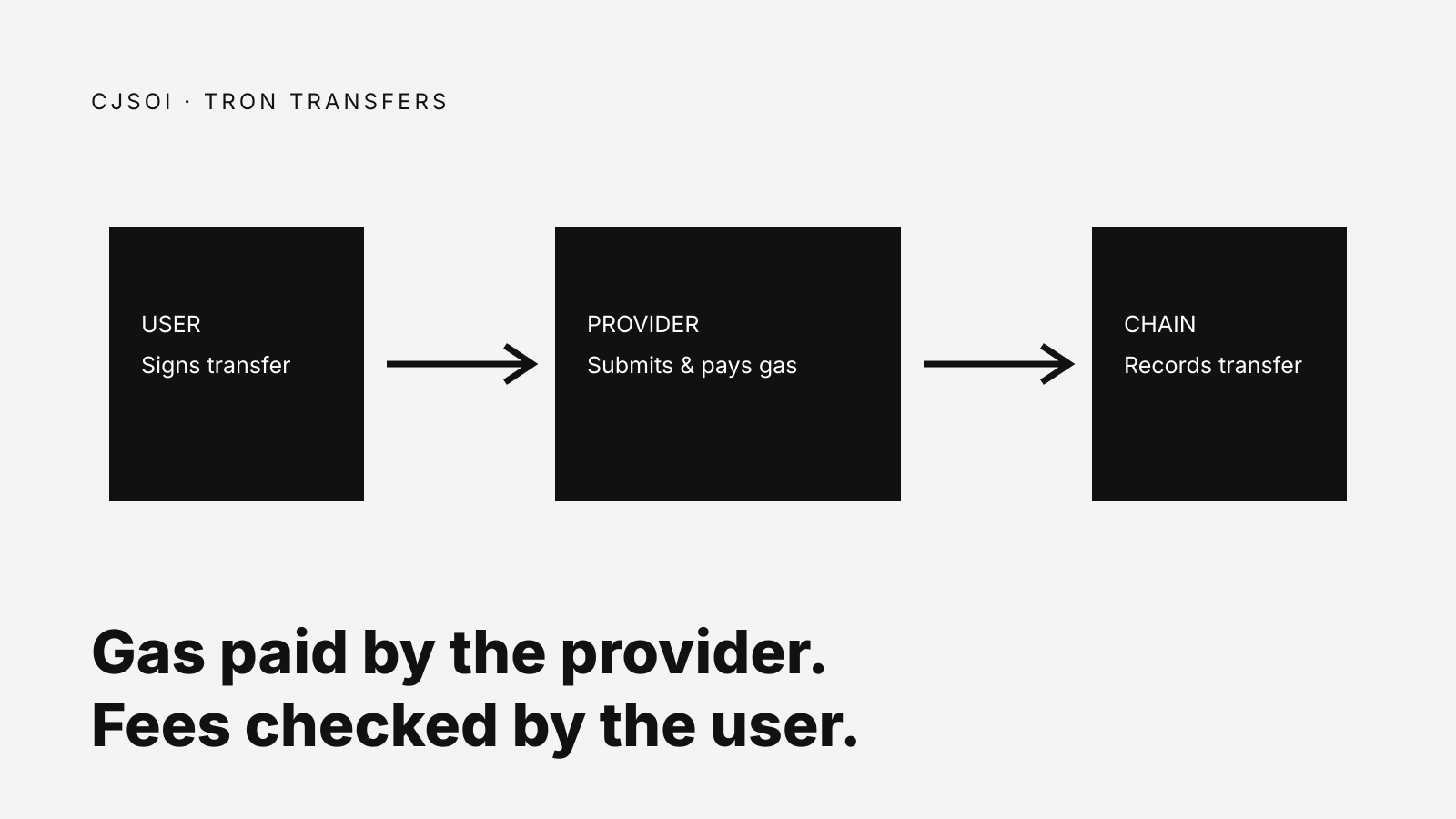
Gas free TRON transfers can let a user send supported tokens without holding TRX to pay the network fee. In the GasFree system, a service provider submits the authorised transfer and pays the blockchain’s gas cost. The user may still pay handling fees in the token being transferred.
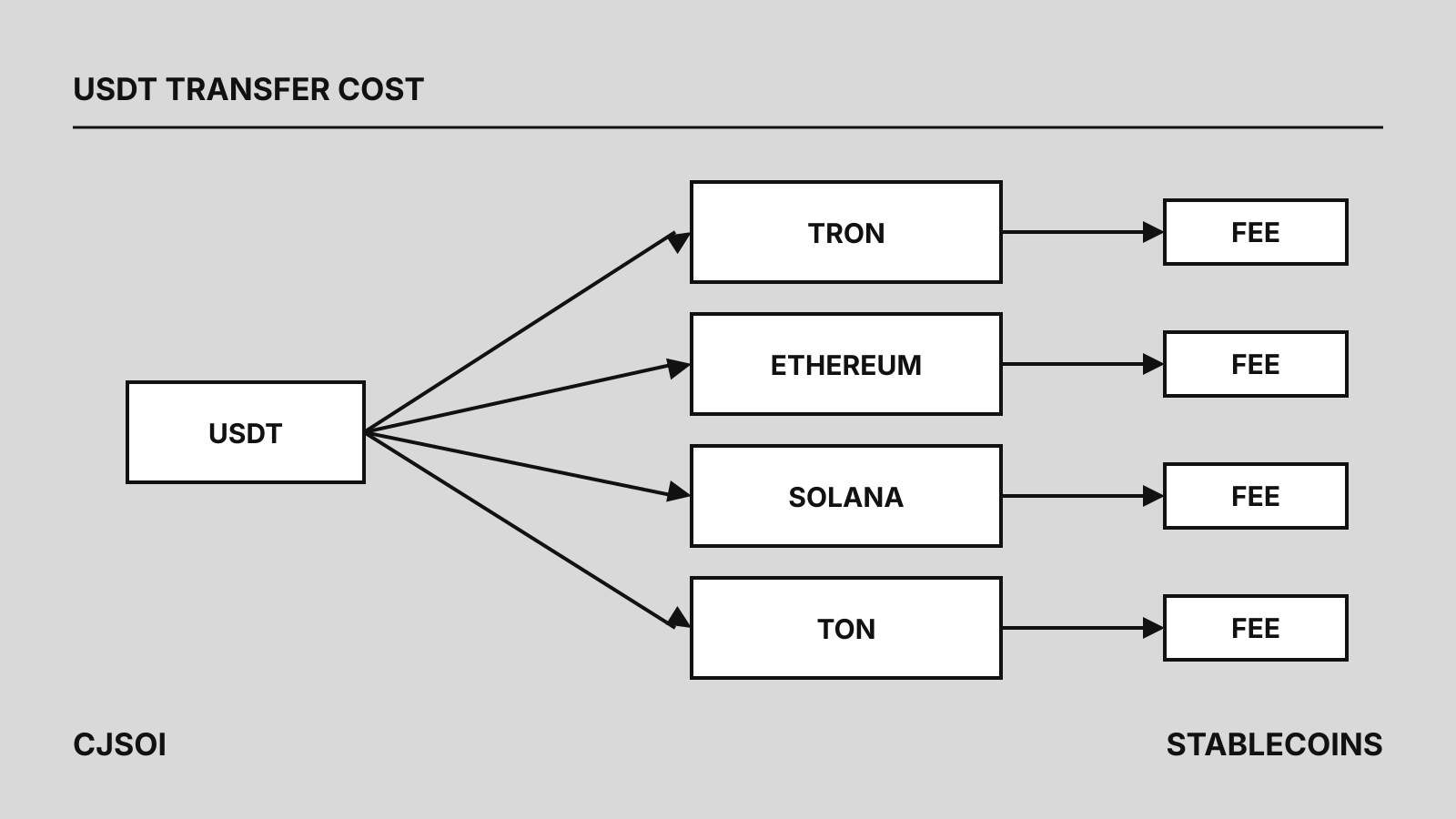
For USDT users, the useful distinction is between the asset needed for network fees and the total cost of the transfer. The GasFree name does not establish a zero-fee promise.
Who submits the transfer?
The GasFree developer documentation describes an account controlled through the user’s externally owned account, or EOA. A supporting wallet constructs a transfer authorisation, the user signs it, and a service provider verifies and submits it to the blockchain.
The provider pays the gas and may collect a handling fee. The wallet supplies the interface for inspecting funds and authorising the transfer.
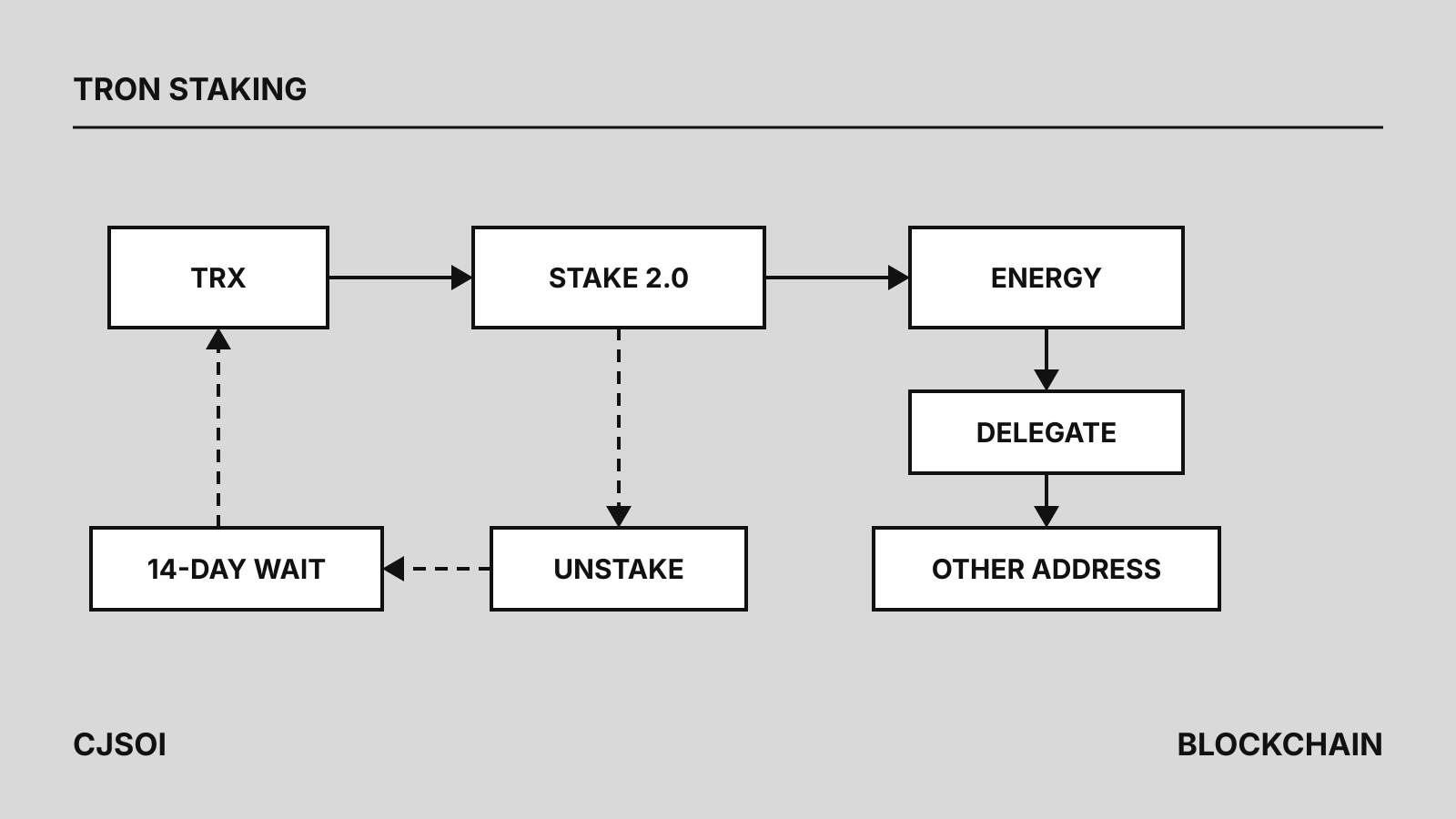
That arrangement differs from an ordinary transfer submitted directly from the user’s account. In the ordinary TRON resource model, insufficient resources can result in TRX being burned to pay transaction costs, as explained in TRON’s resource-payment documentation.
See CJSOI’s TRON energy reference for the resource model and related options. Compare the full price and the account arrangement before choosing between a provider-assisted transfer and a normal transfer using available resources.
The GasFree address and the controlling address differ
GasFree documentation distinguishes the user’s EOA address from the GasFree account address. The former controls permissions and signs the authorisation; the latter holds the assets being transferred through this mechanism.
A wallet integration needs to make that distinction visible. When receiving funds, use the receiving address shown for the intended account and flow. Do not assume that an ordinary wallet’s main balance and its GasFree balance are the same balance.
The provider’s account-information response identifies both addresses, activation status, supported assets and funds associated with transfers in progress. Those fields help the wallet show whether an authorisation can be submitted.
This is also why enabling a new feature does not mean that every existing USDT balance has moved into that feature’s account. Check which account holds the tokens before authorising an outgoing transfer.
First-use activation can add another charge
According to GasFree’s documentation, an inactive GasFree account is activated during its first GasFree transfer. An activation fee is charged alongside the transfer fee. Later authorisations incur the transfer fee without that first-use activation charge.
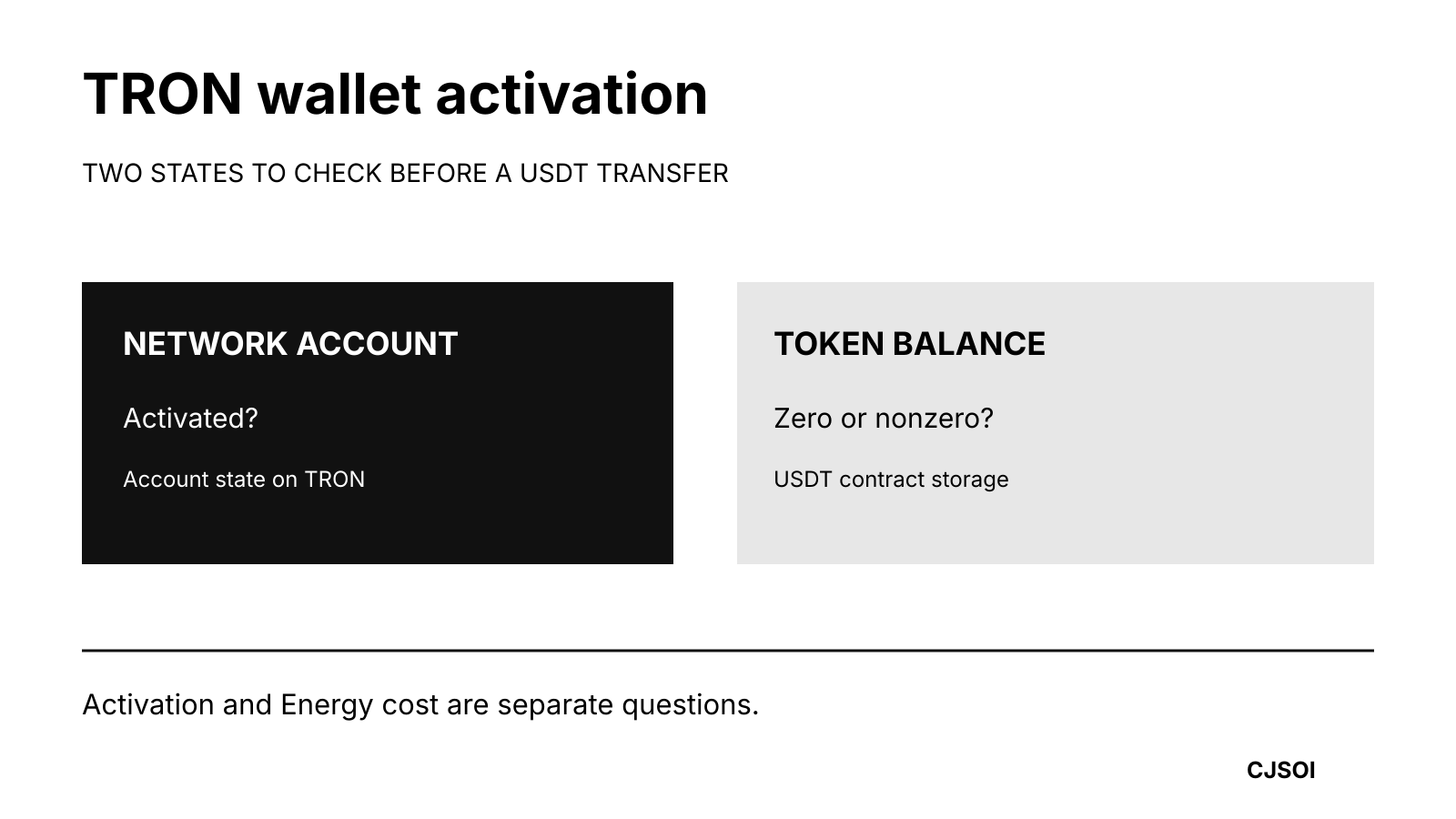
These provider handling fees should not be confused with the ordinary TRON account-creation costs described in the wallet activation guide. They concern different parts of the arrangement.
The documentation provides fields for activation and transfer fees and says they may be adjusted. Its example API responses are illustrations of a response format, not a current tariff to use in a price comparison.
Read the fee displayed by the chosen wallet or provider for the intended transfer. An old screenshot or a sample response cannot establish what will be charged today.
Calculate the full required balance
The provider reports estimated activation fees, transfer fees and total costs. The total cost includes the amount going to the recipient.
Consider a purely hypothetical example: a user wants a recipient to receive 100 USDT, while the displayed transfer fee is 1 USDT and a first-use activation fee is 2 USDT. The total required amount would be 103 USDT. For a later transfer without that activation fee, it would be 101 USDT.
These numbers illustrate addition only. They are not GasFree’s current prices, a wallet quote or the result of a tested transaction.
The signed authorisation also includes a maximum fee. That limit covers the transfer and activation fees. It is separate from the amount intended for the recipient, so a wallet should show both clearly before the user signs.
Read the authorisation before signing
The documented authorisation includes the token, service provider, controlling user address, receiver and transfer value. It also includes the maximum fee, an expiry deadline and a nonce used in the authorisation sequence.
For the user, the essential review is whether the recipient, token and amount match the intended payment, and whether the fee limit is acceptable. A signature is an instruction with economic consequences.
A wallet’s wording should distinguish approving the authorisation from confirming that funds have arrived. The provider first verifies the submitted authorisation, then processes the on-chain transfer.
An expired or rejected authorisation should be checked through its recorded status. Repeatedly signing new instructions without examining the earlier one can make the payment history harder to understand.
Provider acceptance is not on-chain completion
GasFree returns a trace identifier for tracking an accepted authorisation. Its documentation distinguishes that identifier from the blockchain transaction identifier.
The status response can describe waiting, processing, confirmation, success or failure. On-chain transaction fields are empty before submission to the chain or when pre-submission verification fails.
A useful record therefore retains the provider trace identifier and, when available, the transaction hash. The former tracks the provider’s handling of the instruction; the latter supports inspection of the blockchain transaction.
For the blockchain stage, use CJSOI’s TRONSCAN guide. A provider acknowledgement alone does not show a completed recipient payment.
Check token and network support
The documentation says providers expose their supported-token list. A token arriving at a GasFree account does not by itself mean that the provider supports transferring it through this flow.
GasFree also documents an official withdrawal route for unsupported tokens to the controlling EOA. That is a separate operation; inspect its requirements before relying on it as a recovery plan.
The current documentation describes service on TRON, with other EVM-compatible networks as a possible extension. A description of the protocol’s broader design should not be read as proof of current support on every named network.
Use the mainnet flow for actual funds. The documentation explicitly separates the Nile testing environment and advises against exposing it as an ordinary user transfer route.
Sources
GasFree developer documentation and TRON: paying for resources, consulted October 7, 2026. The arithmetic example is hypothetical.