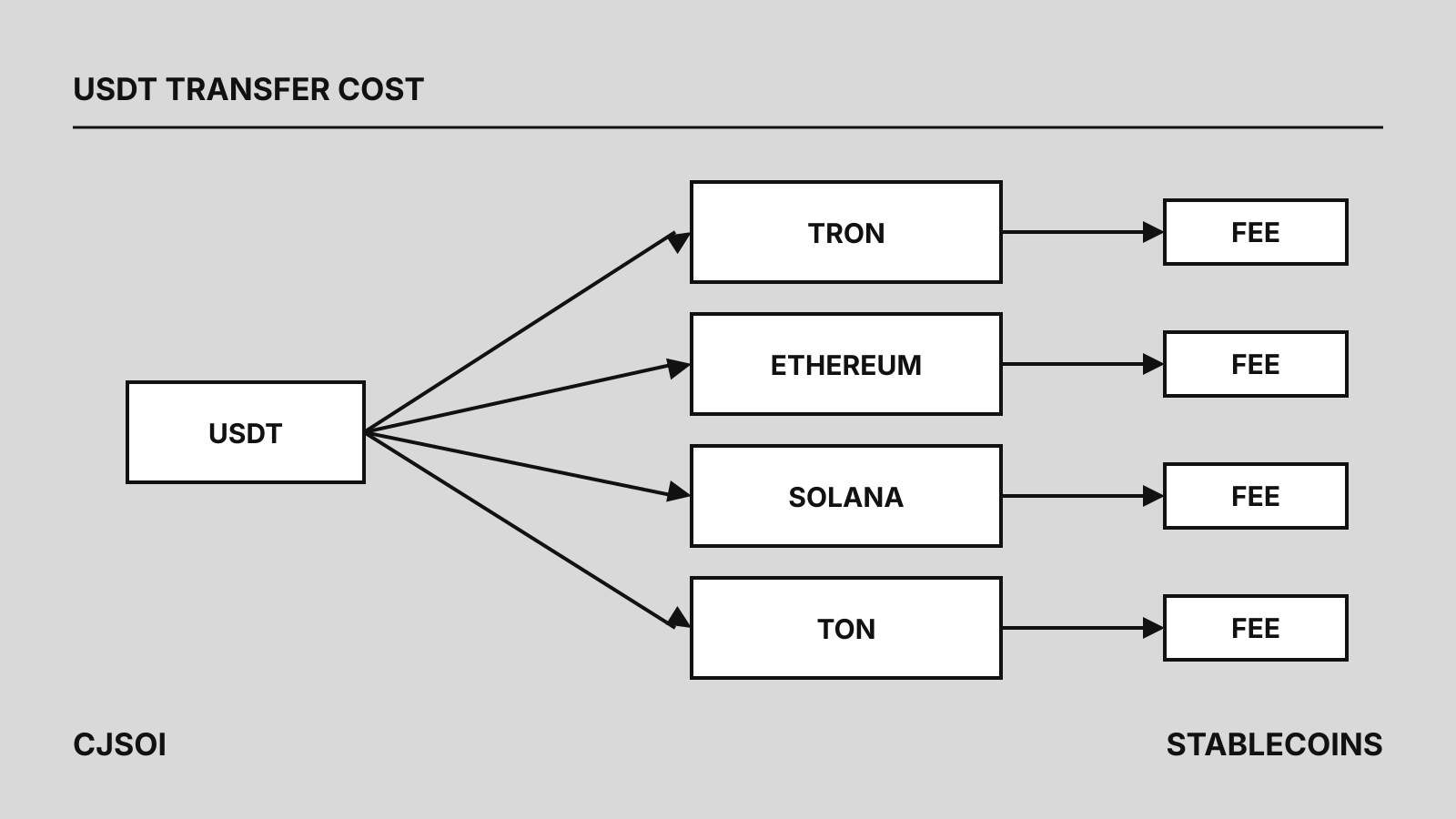
The cheapest way to send USDT is on a network the recipient supports, from a wallet that pays the network fee as cheaply as that network allows: with staked or rented energy on TRON, at a low gas price on Ethereum, with a single signature on Solana. USDT itself charges nothing to move; each network charges in its own token, TRX, ETH, SOL or TON. On TRON, renting energy for one transfer cost 1.1 to 3.1 TRX in late September 2026, against about 6.4 TRX burned without it (see our TRON energy page).
Below are each network’s official fee rules and example costs we calculated on October 5, 2026 from on-chain data, in each network’s own token: we have no official, dated price source for dollar conversions.
The short answer
- TRON (TRC-20): never let the wallet burn TRX if you send often. Rented energy cost a fraction of the burn in late September 2026, and staked energy costs no TRX at all, only locked capital.
- Ethereum: on October 5, 2026 the base fee was about 0.12 gwei, so a USDT transfer needed only a few millionths of an ETH. The tip your wallet adds can cost more than the base fee.
- Solana: a transfer signed by one key pays a base fee of 0.000005 SOL. Sending to a wallet that has no USDT account yet adds a deposit for that account.
- From an exchange: you pay the exchange’s own withdrawal fee instead, shown before you confirm.
Tether issues USDT natively on 13 networks, including TRON, Ethereum, Solana and TON, according to its supported protocols page; our USDT profile lists them all.
What decides the cost on each network
The token the network charges in, the work a USDT transfer takes, and whether the recipient already holds USDT: on TRON, Ethereum and Solana a first transfer to a new holder costs more, because a new balance must be stored. The amount sent makes no difference.
TRON: burned, staked or rented energy
USDT on TRON is a smart contract, so a transfer uses energy for running the contract and bandwidth for its size. Background: what TRC-20 is.
TRONSCAN’s chain parameters on October 5, 2026 put energy at 100 sun (0.0001 TRX) per unit and bandwidth at 1,000 sun per byte, with 600 free bandwidth per account a day. The two example transfers TRON’s developer docs link to used 64,285 energy (to an address that already held USDT) and 130,285 (to one that never had). Three ways to pay:
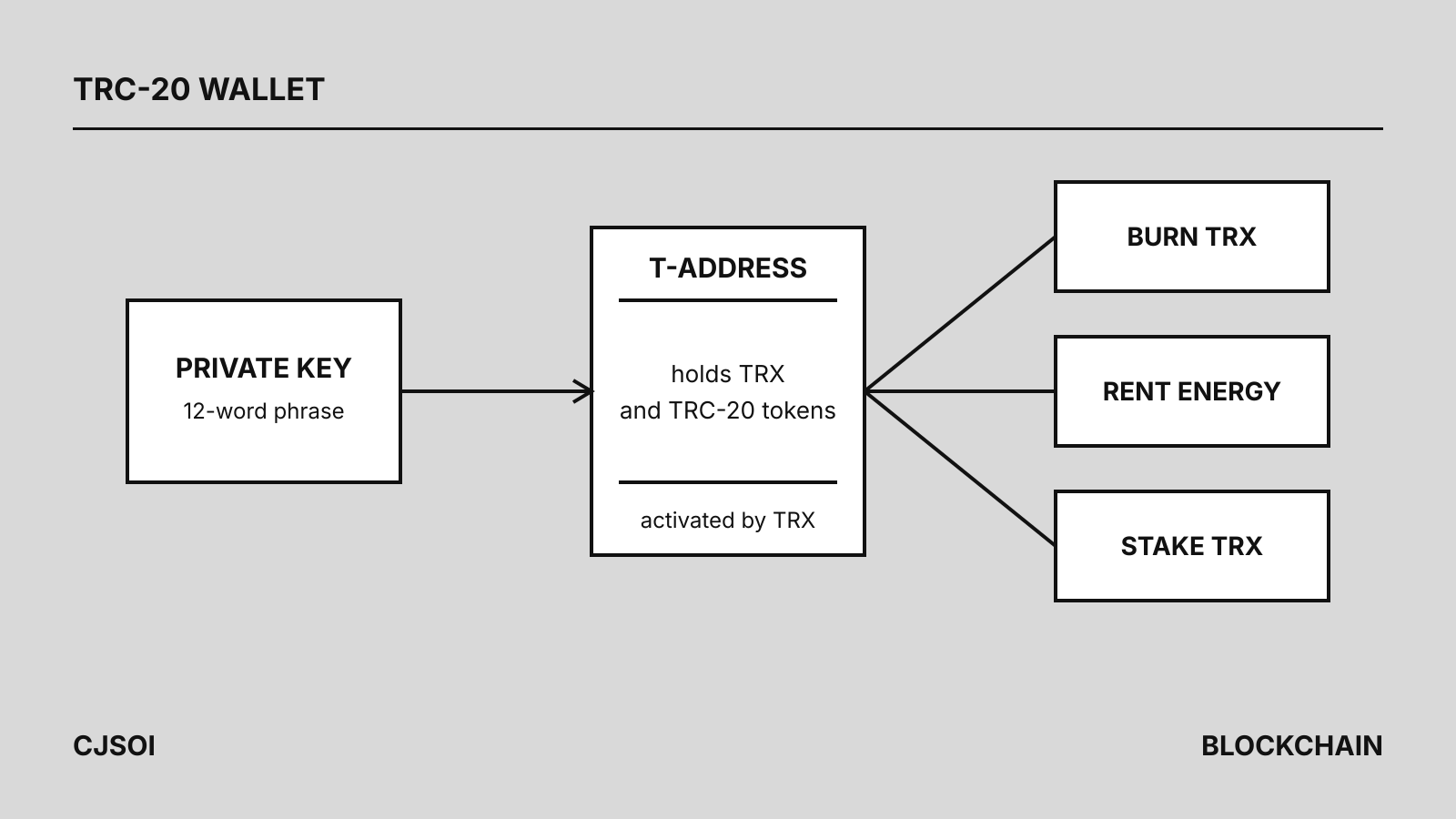
- Burn TRX: about 6.43 TRX or 13.03 TRX (calculation: energy × 100 sun). If the day’s free bandwidth is used up, add about 0.345 TRX for the 345-byte transaction.
- Rent energy: 65,000 energy for an hour cost 1.1 to 3.1 TRX on September 30, 2026, across the services on our TRON energy comparison; a first transfer to a new holder needs about 131,000.
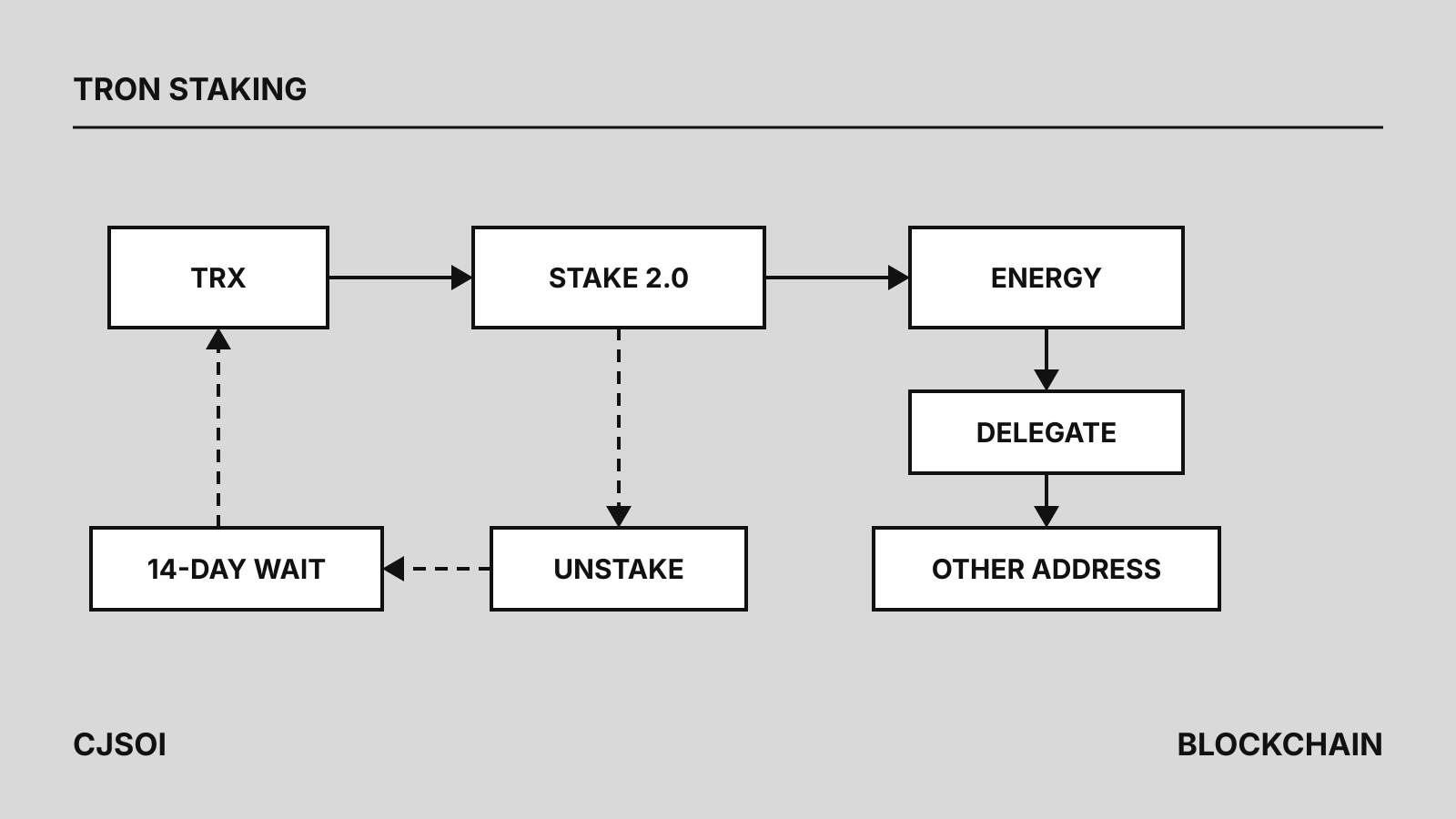
- Stake TRX: no TRX is spent, but one transfer a day to an existing holder took about 6,665 TRX staked in early October 2026, and unstaking takes 14 days. See TRON staking for energy.
The full routine is in how to send USDT on TRON.
Ethereum gas for a USDT transfer
On Ethereum, the fee is the gas a transaction uses multiplied by the base fee plus a priority fee (tip), paid in ETH, as ethereum.org explains. The protocol sets and burns the base fee; the sender sets the tip. A failed transaction still pays.
Two USDT transfers in Ethereum block 26,125,227 on October 5, 2026 show the gas involved. A transfer to an address that already held USDT used 46,109 gas; one to an address with no USDT balance used 63,209 gas.
Etherscan’s gas oracle proposed 0.119 gwei at 09:19 UTC that day. At that price the two transfers come to about 0.0000055 ETH and 0.0000075 ETH (calculation: gas × 0.119 gwei). Their senders actually paid 2.12 and 1.12 gwei per unit of gas because they added a tip of 1 gwei or more, for fees of about 0.000098 ETH and 0.000071 ETH, as Etherscan shows.
Gas prices change by the block: the base fee can rise up to 12.5% per block when blocks are full, per ethereum.org.
Other networks with official figures
Solana. Solana’s fee documentation sets a base fee of 5,000 lamports (0.000005 SOL) per signature, half burned and half paid to the validator, plus an optional prioritization fee. USDT sits in a token account; if the recipient has none, one must be created and funded with a minimum storage balance, which the token account docs say not to hard-code. On October 5, 2026, Solana’s public RPC endpoint returned 1,488,440 lamports (about 0.0015 SOL) for a 165-byte token account, the size used by the token program USDT runs on. That balance comes back only when the account is closed, to whatever address its owner names.
TON. USDT on TON is a jetton, and a transfer is a chain of messages between contracts, per TON’s jetton documentation. The sender attaches TON to pay for them and names an address for the unused remainder, and the first transfer to a new holder deploys the recipient’s jetton wallet, which costs more. Validators set the fee rates through network configuration, per TON’s fee documentation. We found no official, dated per-transfer figure, so we give none.
Fees compared, October 5, 2026
| Network | Fee paid in | How the fee is set | To an existing USDT holder (calculation) | To a new USDT holder (calculation) |
|---|---|---|---|---|
| TRON | TRX | 100 sun per energy, 1,000 sun per byte, or staked or rented energy | 6.43 TRX burned; 1.1 to 3.1 TRX rented (September 30) | 13.03 TRX burned |
| Ethereum | ETH | gas used × (base fee + tip) | 46,109 gas: about 0.0000055 ETH at 0.119 gwei | 63,209 gas: about 0.0000075 ETH |
| Solana | SOL | 5,000 lamports per signature, optional priority fee | 0.000005 SOL | 0.000005 SOL plus about 0.0015 SOL for the token account |
| TON | TON | compute, forwarding and storage fees set by validators | no official figure | higher: recipient’s jetton wallet is deployed |
The rows cannot be ranked without each token’s price on the day; multiply by the price your exchange shows.
When the cheapest network is the wrong choice
Start from the recipient’s deposit page, which names the networks it accepts, and compare fees among those only. Our guide to choosing a network covers compatibility, confirmations and exit routes, and USDT vs USDC shows how the two tokens’ native networks differ.
How to cut the cost
- On TRON, get energy before you send. Rent it for one-off transfers or stake TRX if you send daily; compare current prices on our TRON energy page.
- On Ethereum, check the tip your wallet sets. Per ethereum.org, a lower tip is valid but makes validators less likely to include the transaction quickly.
- Send fewer, larger transfers. The network fee does not grow with the amount.
- Mind first transfers. A new USDT holder costs more on TRON, Ethereum and Solana; a small test transfer absorbs that cost and confirms the address.
- Compare the exchange’s withdrawal fee with sending from your own wallet. Our payment cost explainer adds funding and conversion costs to the picture.
Other stablecoins and their networks are in our stablecoin list.