CJSOI

Stablecoins, Banking & Blockchain

Lee Ji-ho — CJSOI

Lee Ji-ho

Blockchain and regulation coverage at CJSOI. Topics include wallets, network infrastructure and the rules governing digital assets.

Latest

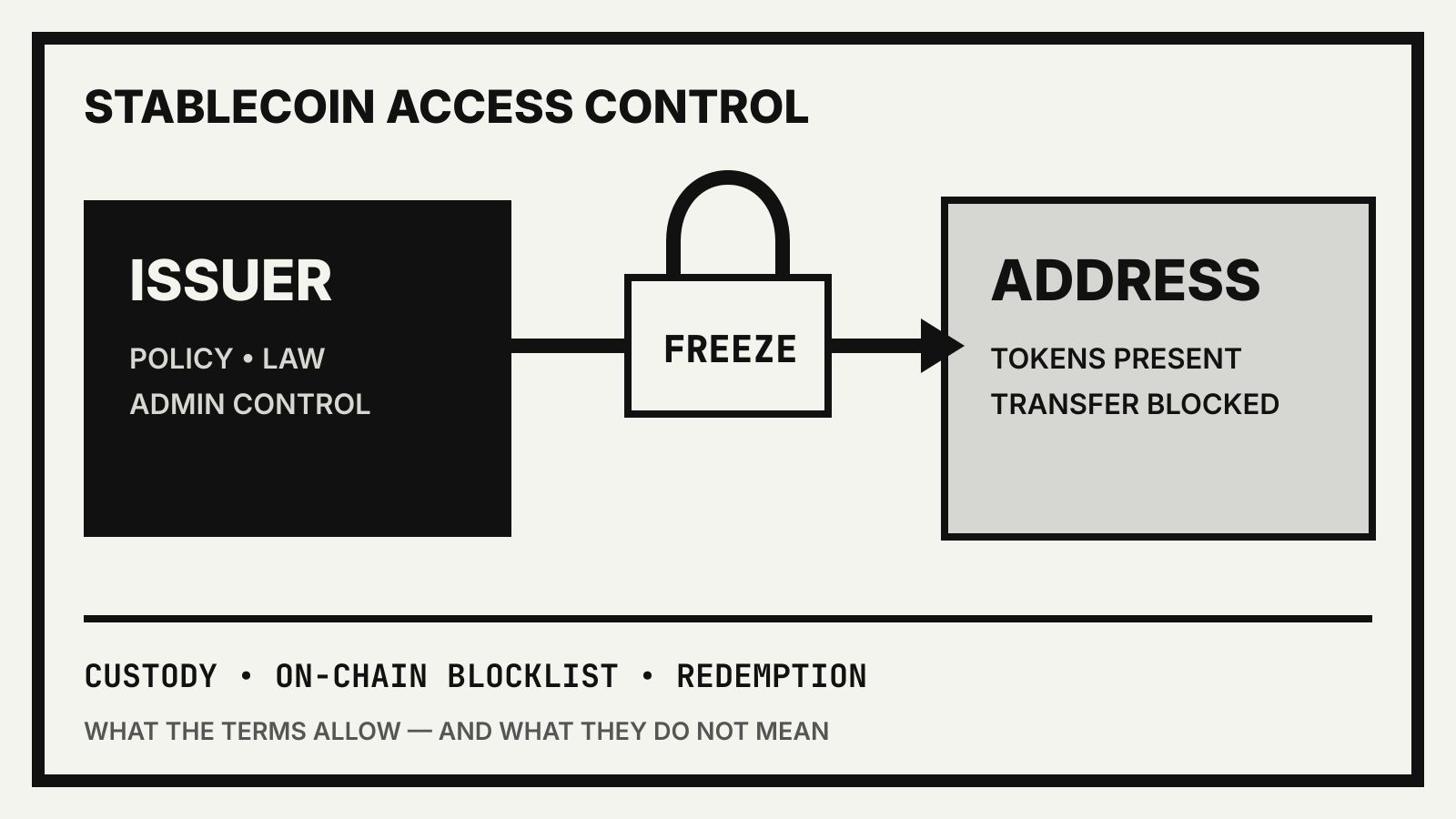
Monochrome diagram on how a stablecoin issuer can restrict an account, freeze custodial balances or blocklist an address
Stablecoins ·

Can Stablecoin Issuers Freeze Funds? USDC and USDT Rules

Issuer controls can block stablecoin transfers, custodial balances or redemption. Here is how USDC and USDT differ.
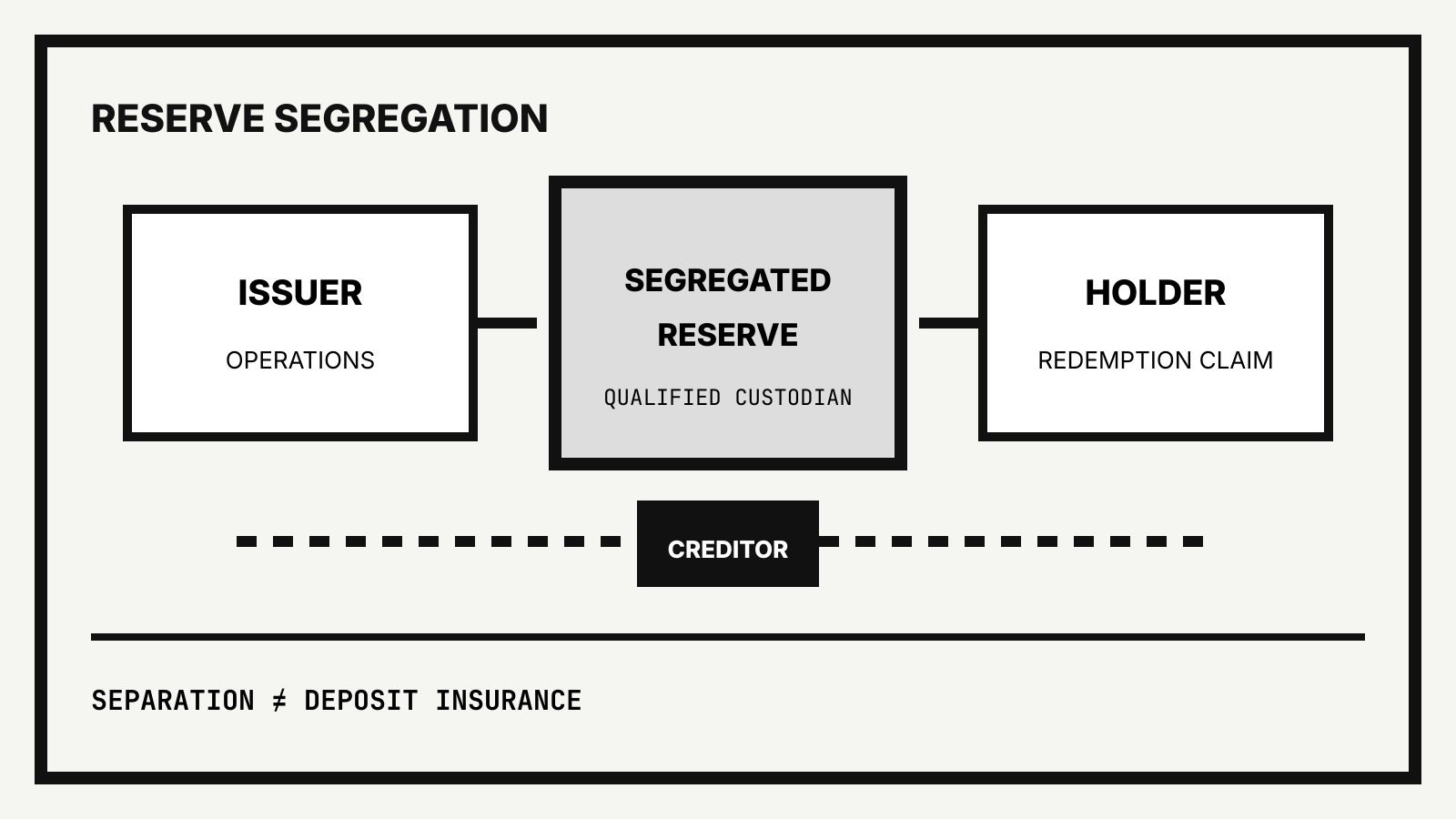
Diagram showing an issuer, a segregated stablecoin reserve at a custodian, and the holder's redemption claim
stablecoins ·

Stablecoin Reserve Segregation: Protections and Limits

What reserve segregation protects in a stablecoin insolvency, and why it cannot guarantee liquidity or insurance.
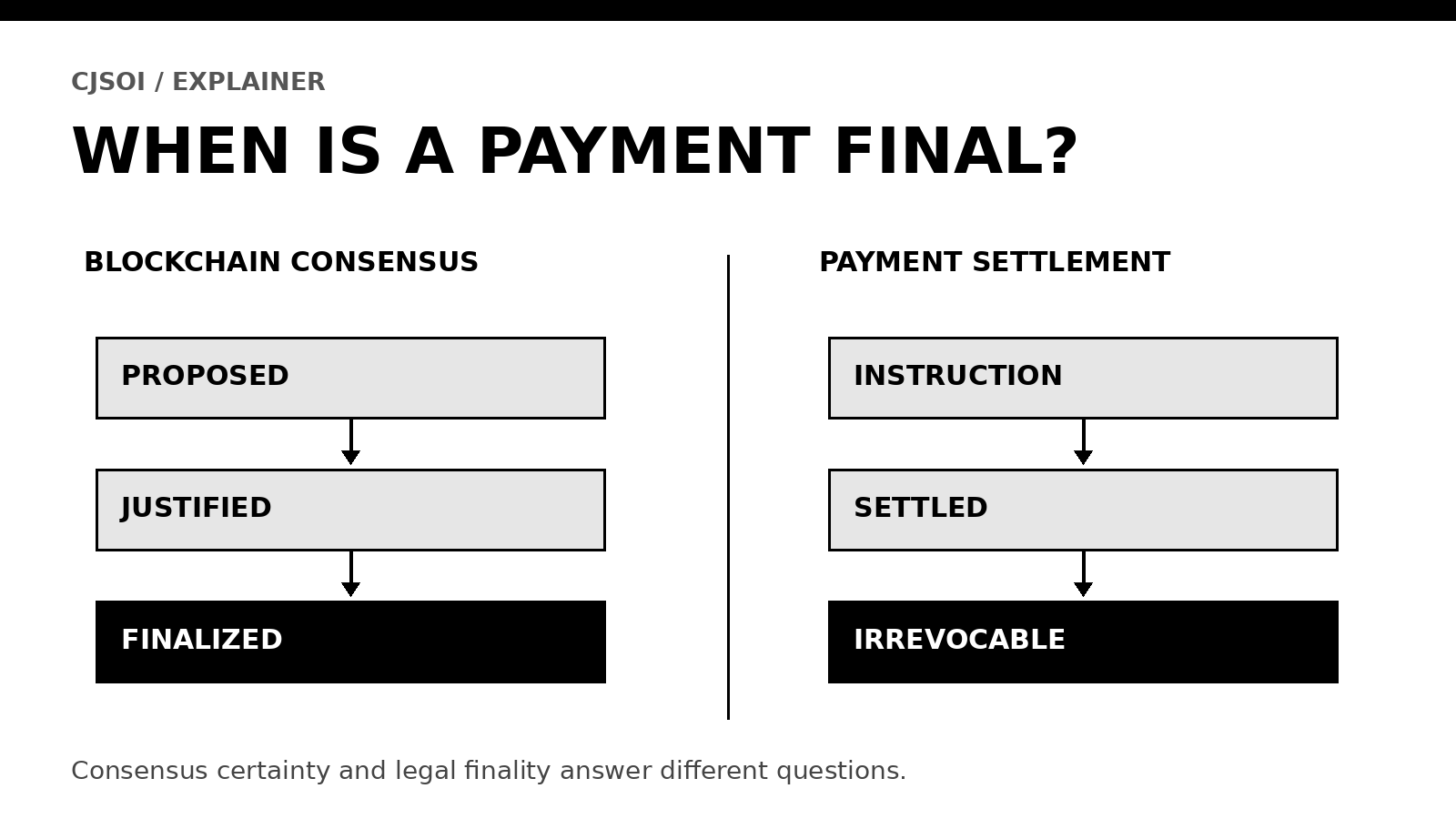
Two columns compare blockchain consensus steps (proposed, justified, finalized) with payment settlement steps (instruction, settled, irrevocable)
blockchain ·

Blockchain Finality vs Settlement Finality

Why a finalized block and a legally final payment are different states, and how to design for both.
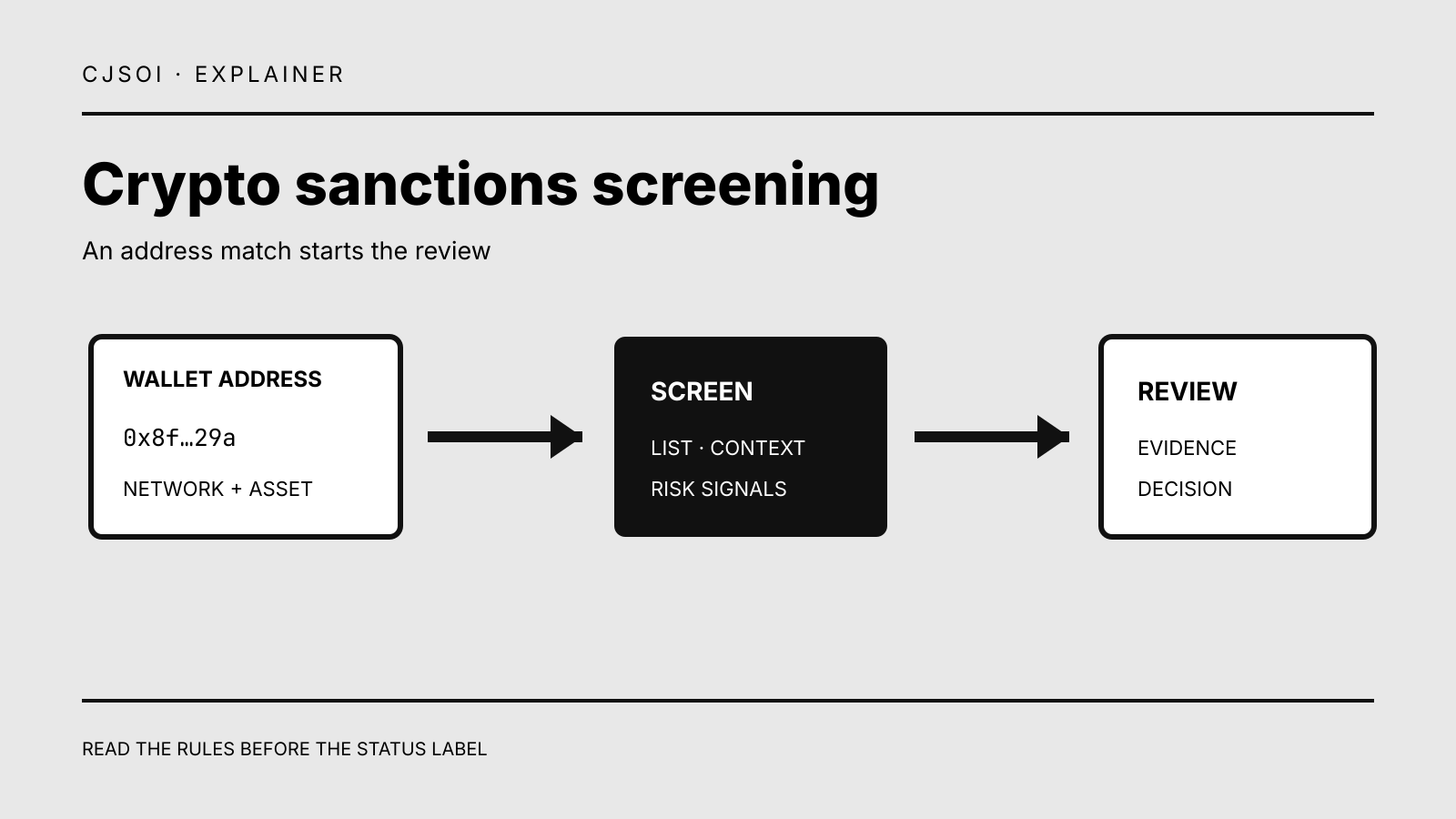
Three-step flow for crypto sanctions screening: a wallet address with its network and asset goes to screening against lists, context and risk signals, then to a review that records evidence and a decision.
sanctions ·

Crypto Sanctions Screening: Addresses, Alerts and Review

Treat wallet matches as evidence to review, with network context, current lists and a recorded decision.
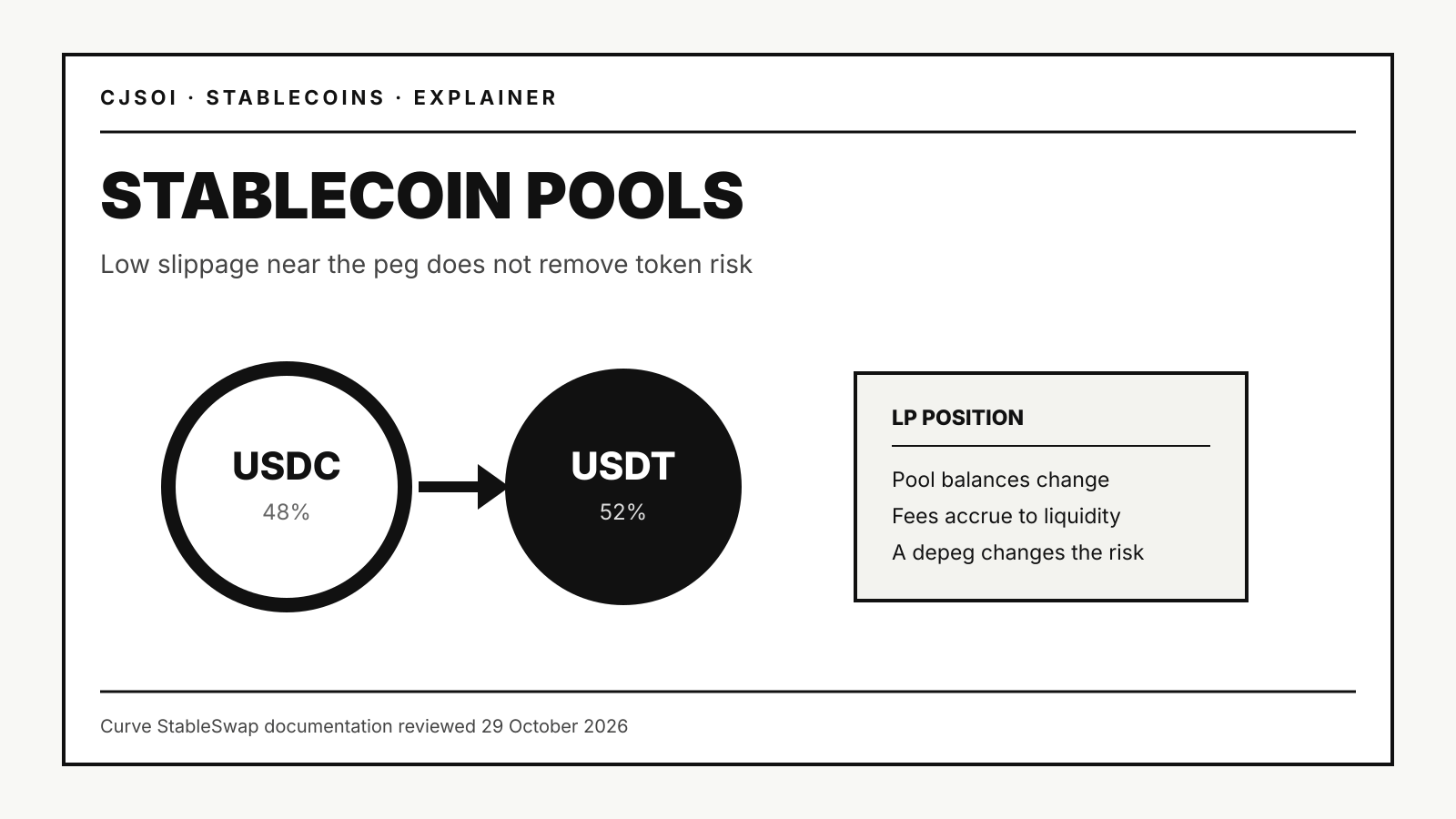
Monochrome CJSOI diagram of a stablecoin liquidity pool balancing USDC and USDT, with notes on changing balances, fees and depeg risk.
stablecoins ·

Stablecoin Liquidity Pools: How Swaps and LP Risk Work

How stablecoin liquidity pools price swaps, change an LP's token mix and concentrate depeg risk.
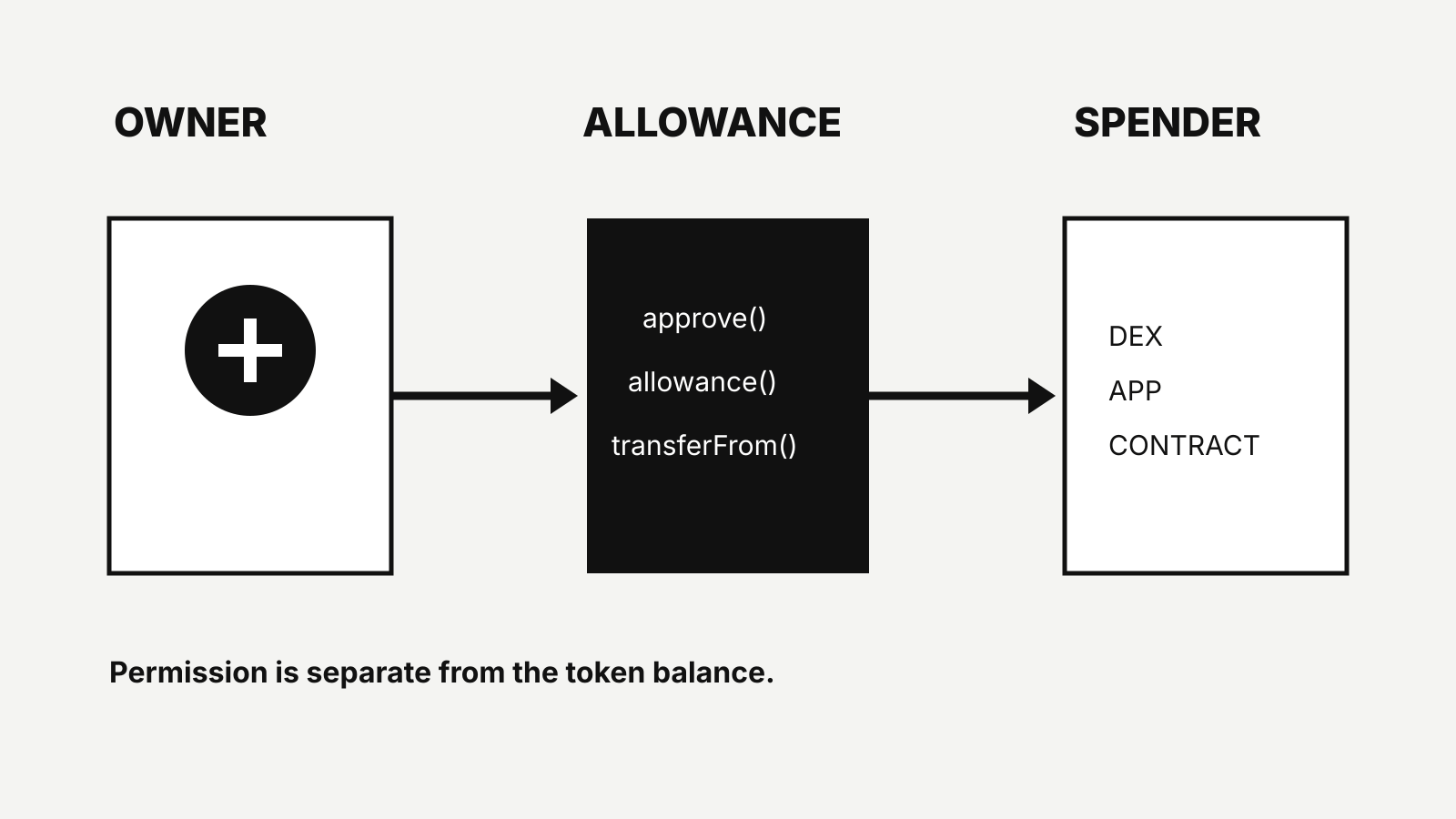
CJSOI diagram showing an ERC-20 token owner granting an allowance to a spender contract through approve, allowance and transferFrom
ERC-20 ·

ERC-20 Token Allowances: What Stablecoin Users Approve

Understand ERC-20 approvals, unlimited allowances, permit signatures and how to revoke stablecoin access.
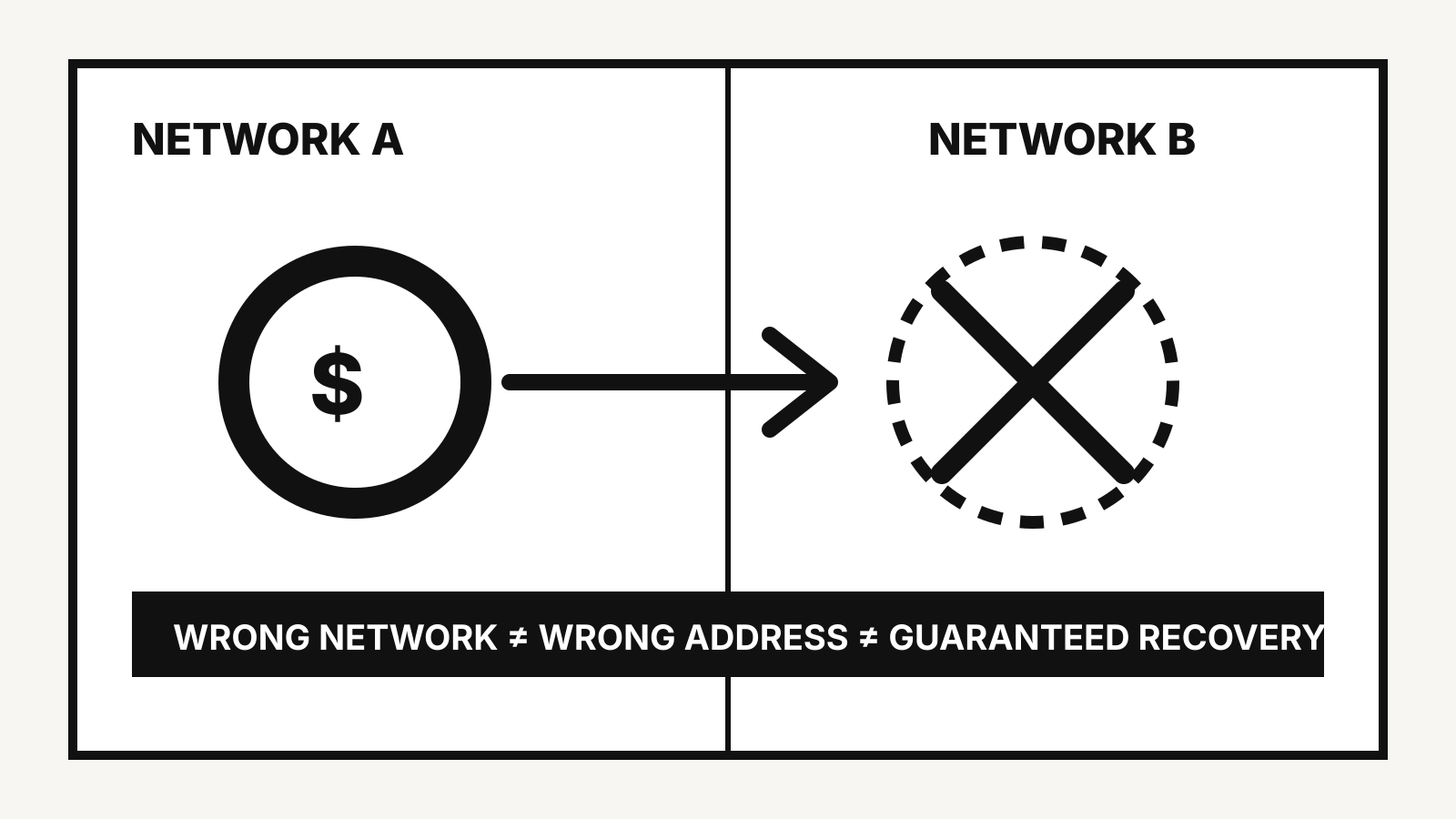
Diagram showing a stablecoin sent from Network A to an incompatible Network B address
stablecoins ·

Stablecoin Sent to the Wrong Network: What Can Be Recovered?

Wrong-network stablecoin transfers may be recoverable only when you or a supporting custodian controls the destination.
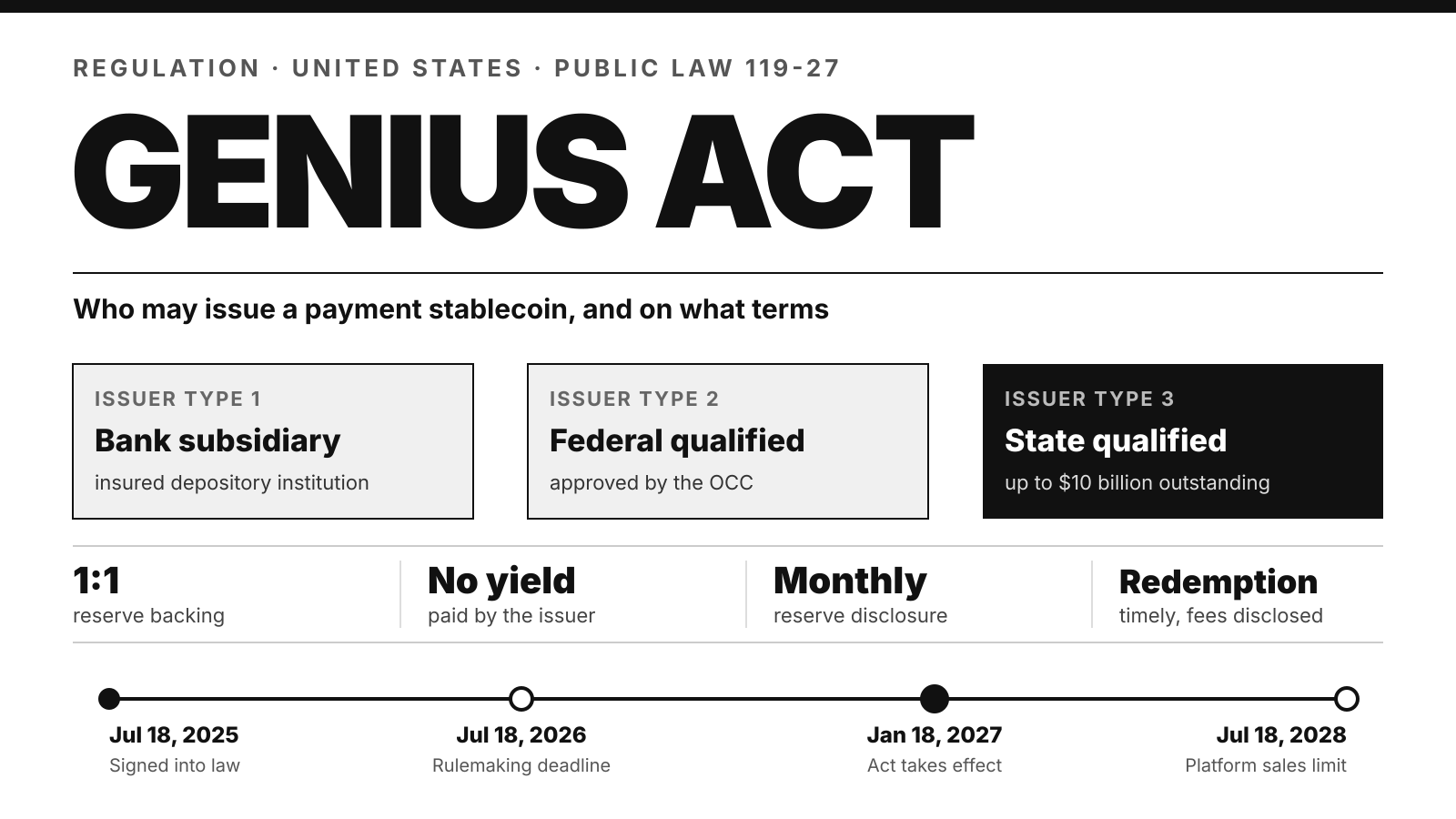
GENIUS Act diagram: three types of permitted payment stablecoin issuer, the core rules on reserves, yield, disclosure and redemption, and a timeline from July 18, 2025 to July 18, 2028
GENIUS Act ·

GENIUS Act Explained: What the US Stablecoin Law Requires

The GENIUS Act limits who may issue a US payment stablecoin and sets reserve, redemption and disclosure rules.
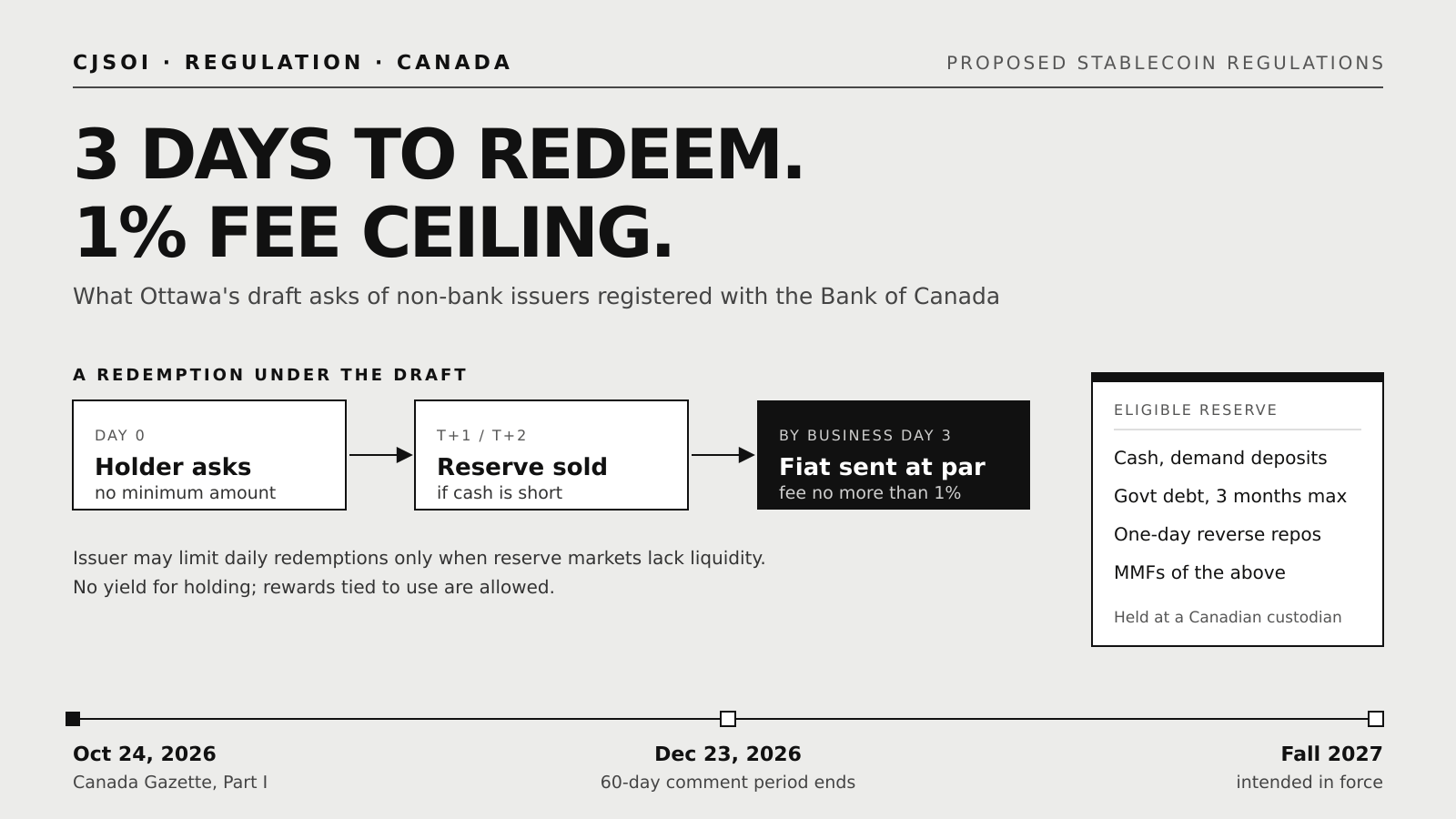
Diagram of Canada's proposed stablecoin regulations: a redemption paid at par within three business days with a fee of no more than 1%, the four eligible reserve asset types held at a Canadian custodian, and a timeline from the October 24, 2026 Gazette notice to the December 23, 2026 comment deadline and fall 2027.
Canada ·

Canada Publishes Draft Stablecoin Regulations: Three-Day Redemption, 1% Fee Cap

Canada's draft stablecoin rules: redemption within three business days, a 1% fee cap and no yield for holding.
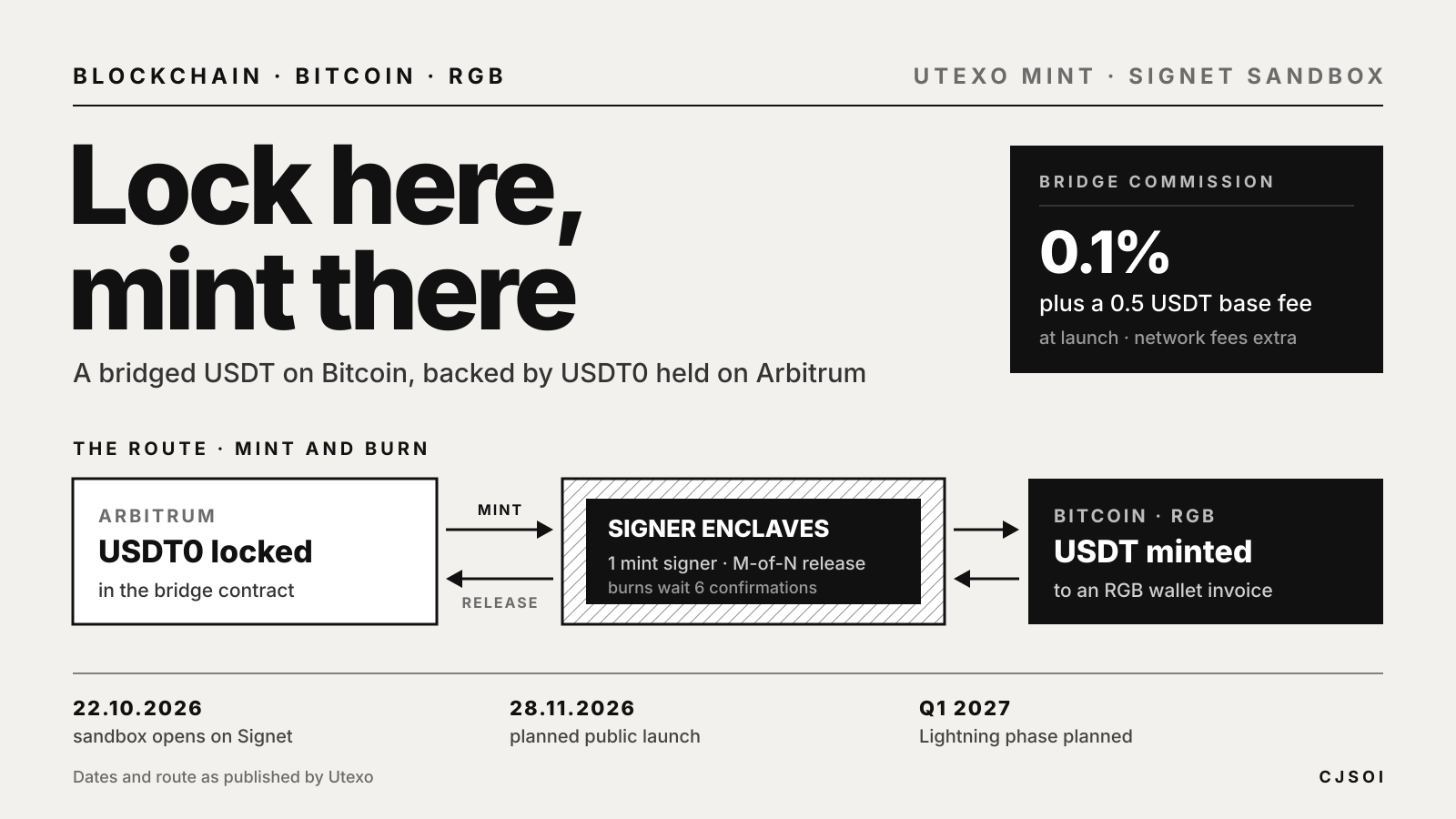
Diagram of Utexo's USDT on Bitcoin route: USDT0 locked on Arbitrum, signer enclaves, USDT minted to an RGB wallet on Bitcoin, with a 0.1% plus 0.5 USDT commission and the October 22, November 28 and Q1 2027 dates
Utexo ·

USDT on Bitcoin: Utexo Opens Mint Sandbox Before November 28 Launch

Utexo opened a Signet sandbox for its bridged USDT on Bitcoin on October 22; the public launch is set for November 28.
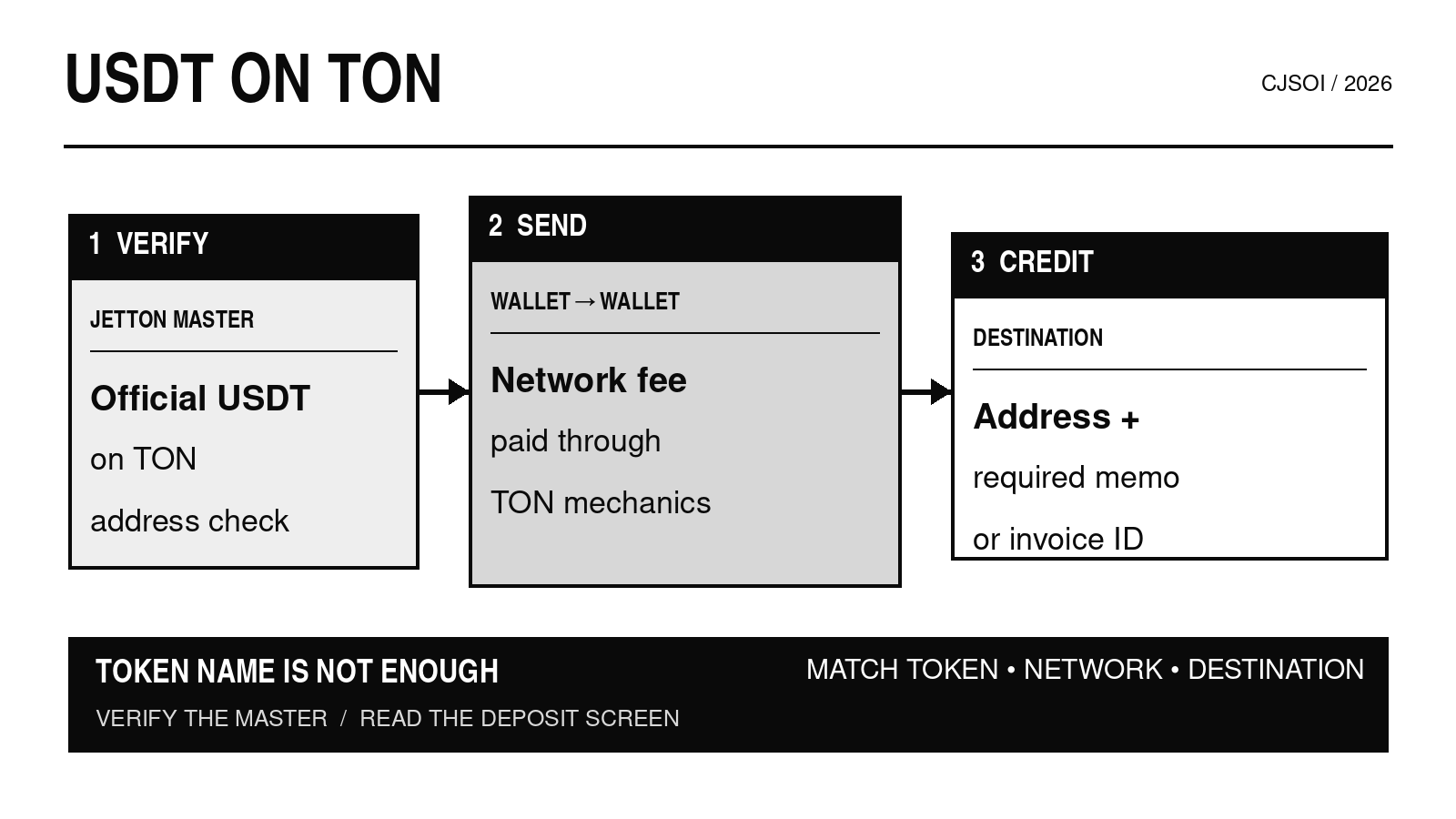
Monochrome USDT on TON transfer diagram showing the official jetton check, TON fee path and destination memo requirement
USDT ·

USDT on TON: Fees, Jettons and Exchange Memos

Send USDT on TON by verifying the jetton master, matching the deposit network and following any memo requirement.
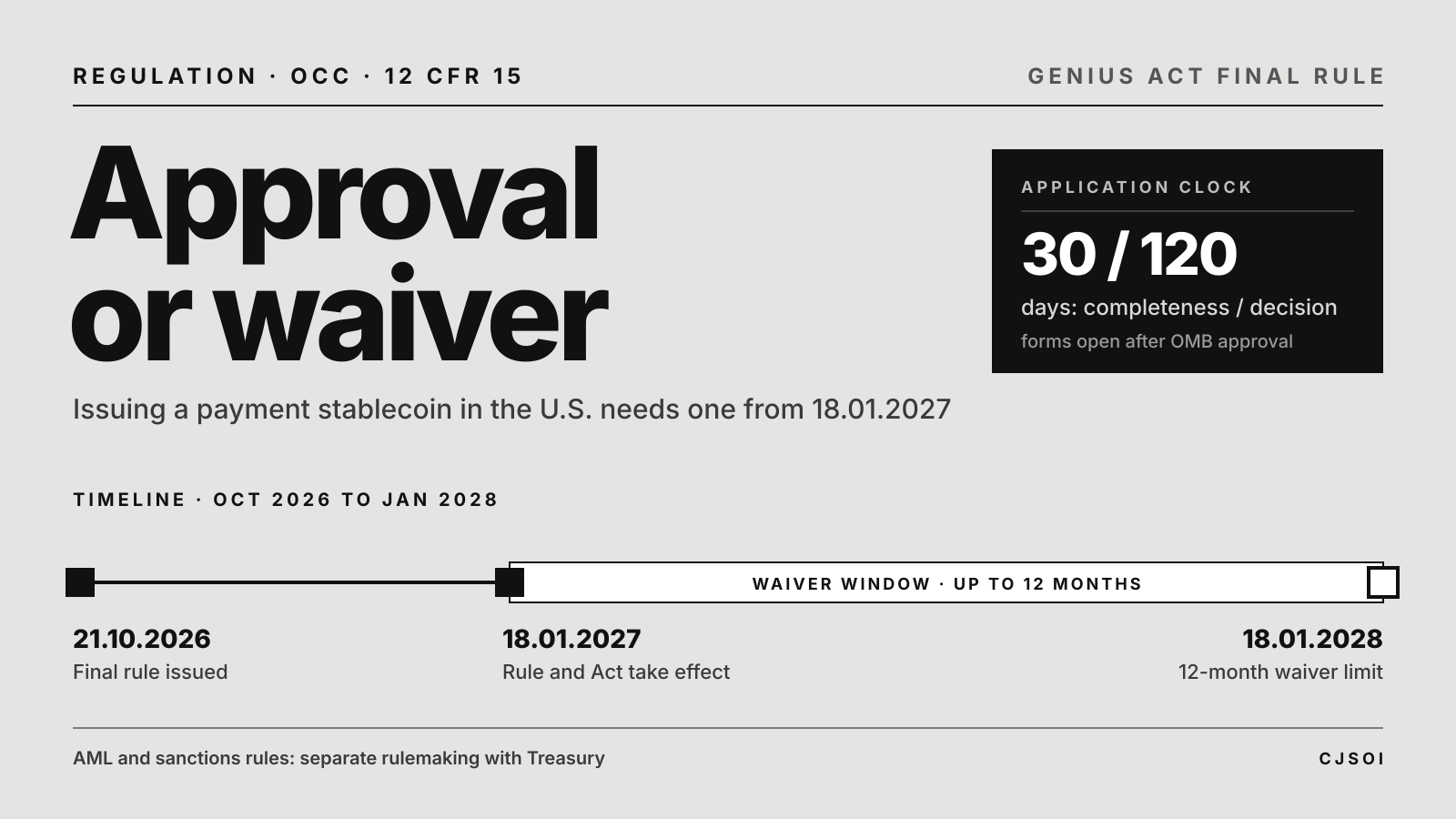
Diagram of the OCC GENIUS Act final rule timeline: rule issued October 21, 2026, effective January 18, 2027, and a waiver window of up to 12 months, with 30-day completeness and 120-day decision periods for applications.
OCC ·

OCC Finalizes GENIUS Act Rule for Payment Stablecoin Issuers

The OCC's GENIUS Act final rule takes effect January 18, 2027, with waivers expected for existing U.S. issuers.
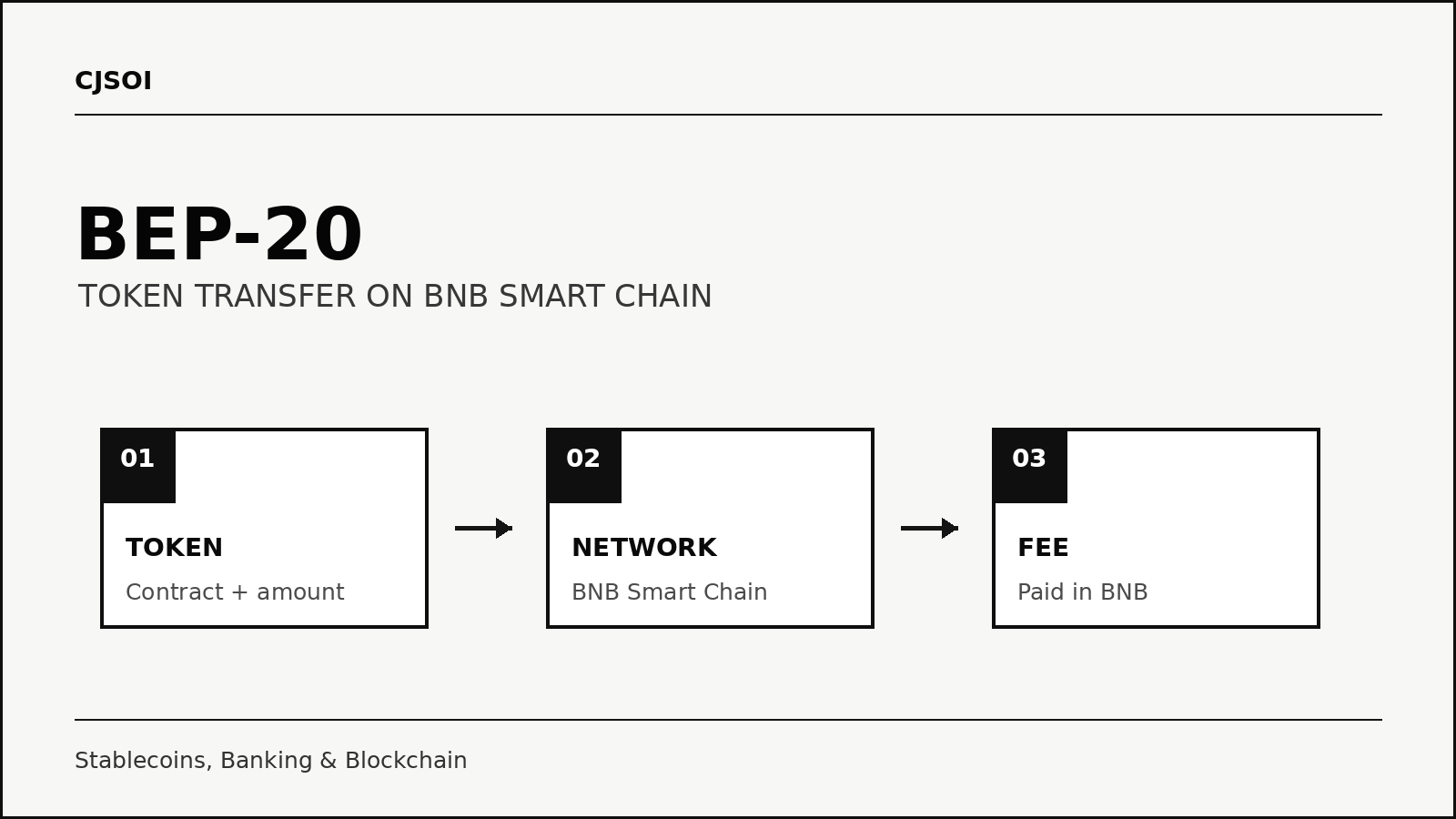
Monochrome three-step BEP-20 transfer diagram: token contract and amount, BNB Smart Chain network, and transaction fee paid in BNB.
BEP-20 ·

BEP-20: BNB Smart Chain Tokens and BNB Gas

BEP-20 tokens run on BNB Smart Chain. Check the contract, BNB gas, network and destination before sending.
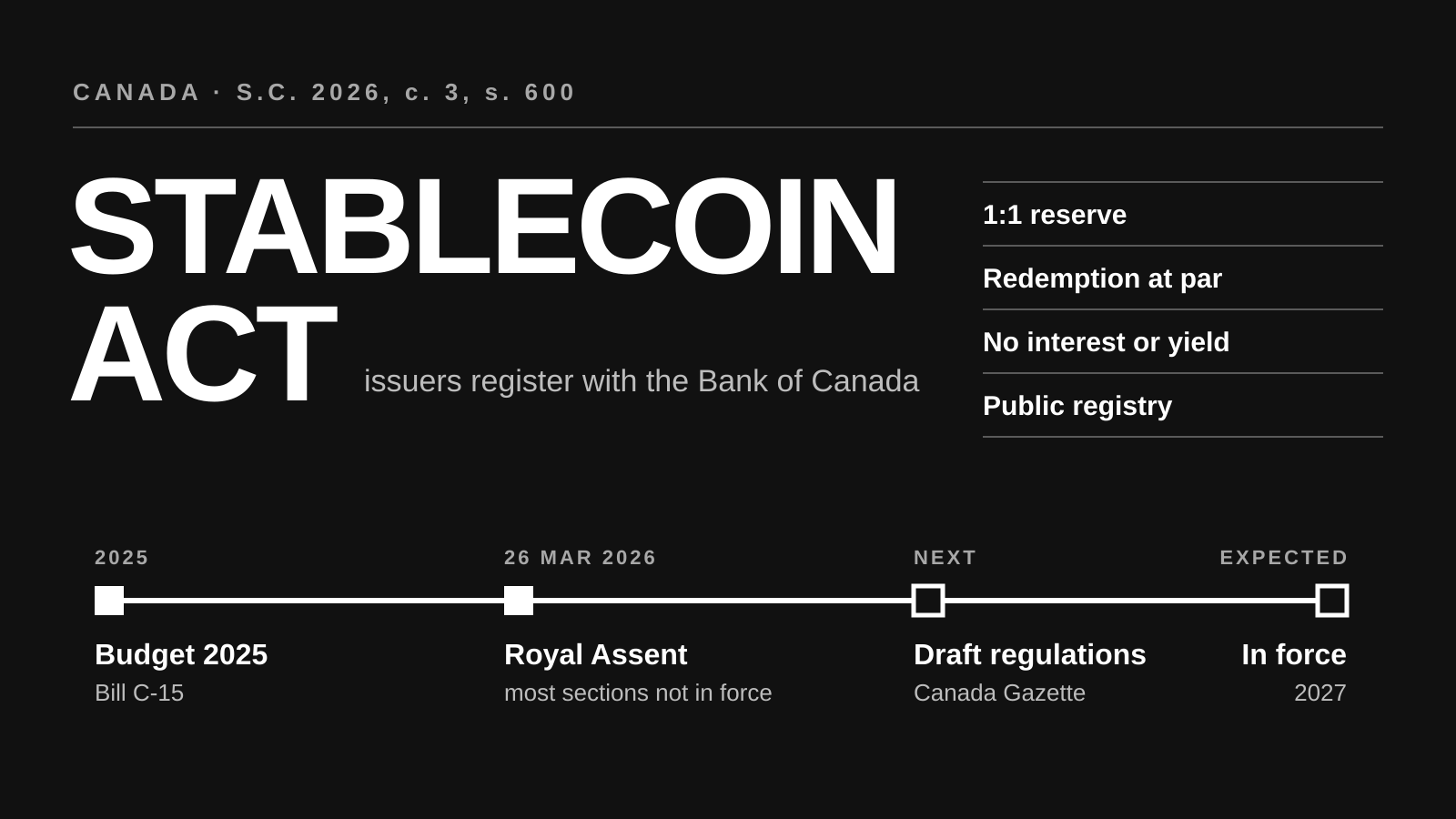
Canada's Stablecoin Act: four issuer rules and a timeline from Budget 2025 and Royal Assent on March 26, 2026 to draft regulations and expected entry into force in 2027
Canada ·

Canada's Stablecoin Act: How the Bank of Canada Will Regulate Issuers

Canada's Stablecoin Act puts non-bank issuers under the Bank of Canada: registration, a full reserve, redemption at par and no interest. Most of it is expected in force in 2027.
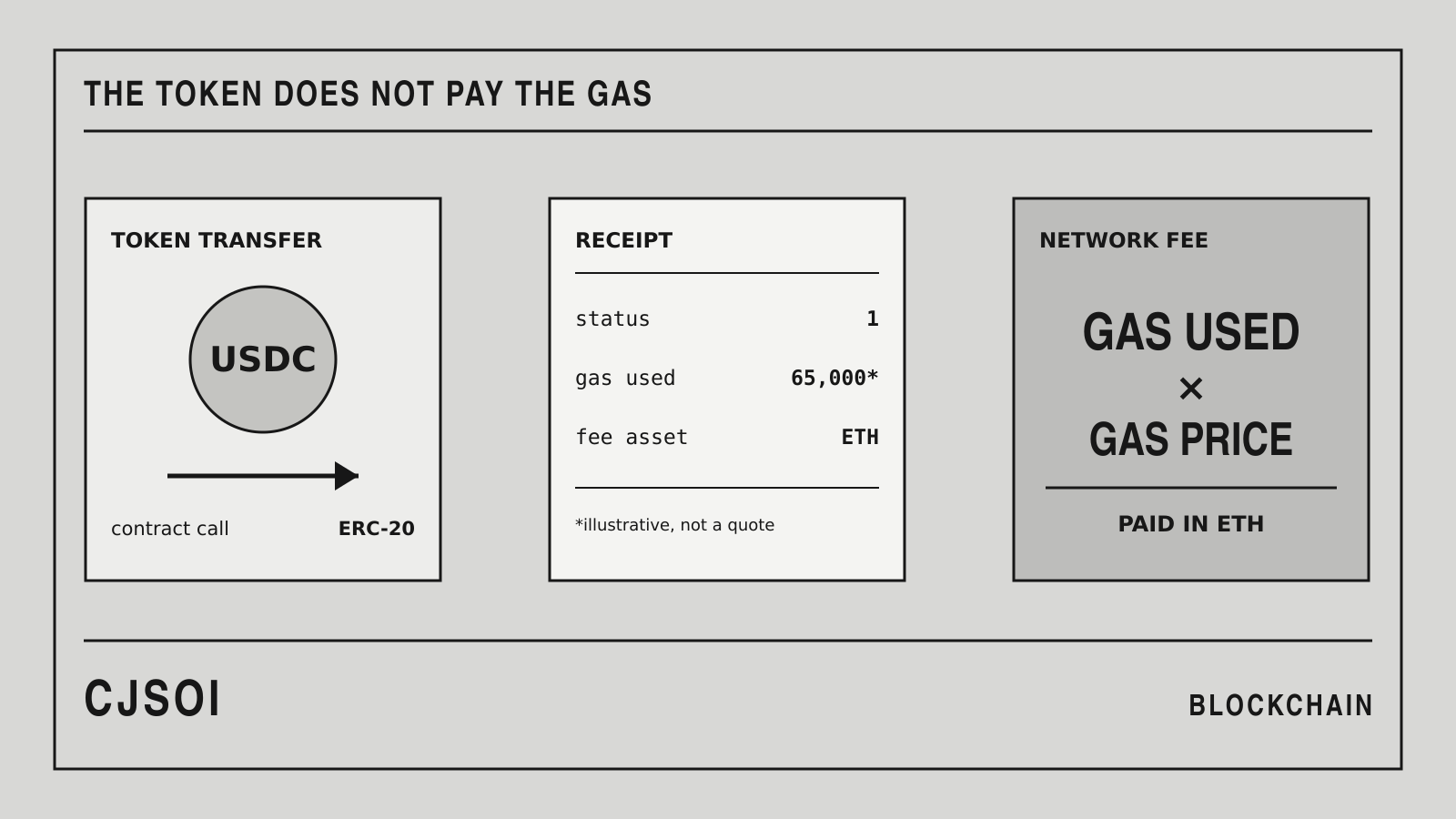
Ethereum stablecoin transfer receipt showing gas used, gas price and ETH as the fee asset
Ethereum ·

Ethereum Gas Fees for USDT and USDC Transfers

Ethereum gas fees for USDT and USDC are paid in ETH. See the fee formula, gas limits and failed transfers.
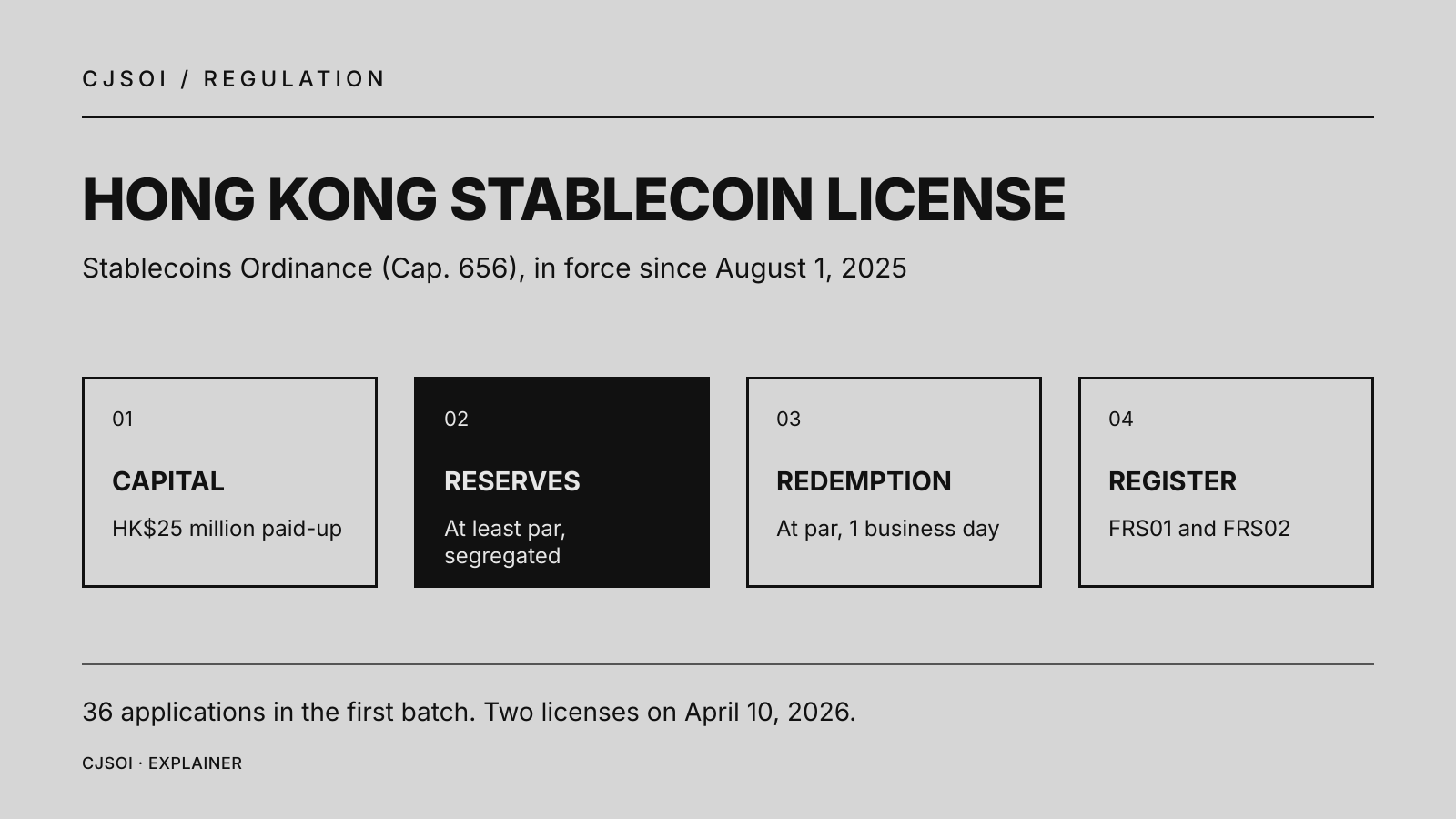
Four requirements of Hong Kong's stablecoin issuer license: HK$25 million paid-up capital, segregated reserves of at least par value, redemption at par within one business day, and the HKMA register listing licenses FRS01 and FRS02.
Hong Kong ·

Hong Kong Stablecoin License: How the HKMA Regime Works

Who needs an HKMA stablecoin license, what it requires on capital, reserves and redemption, and which issuers hold one.
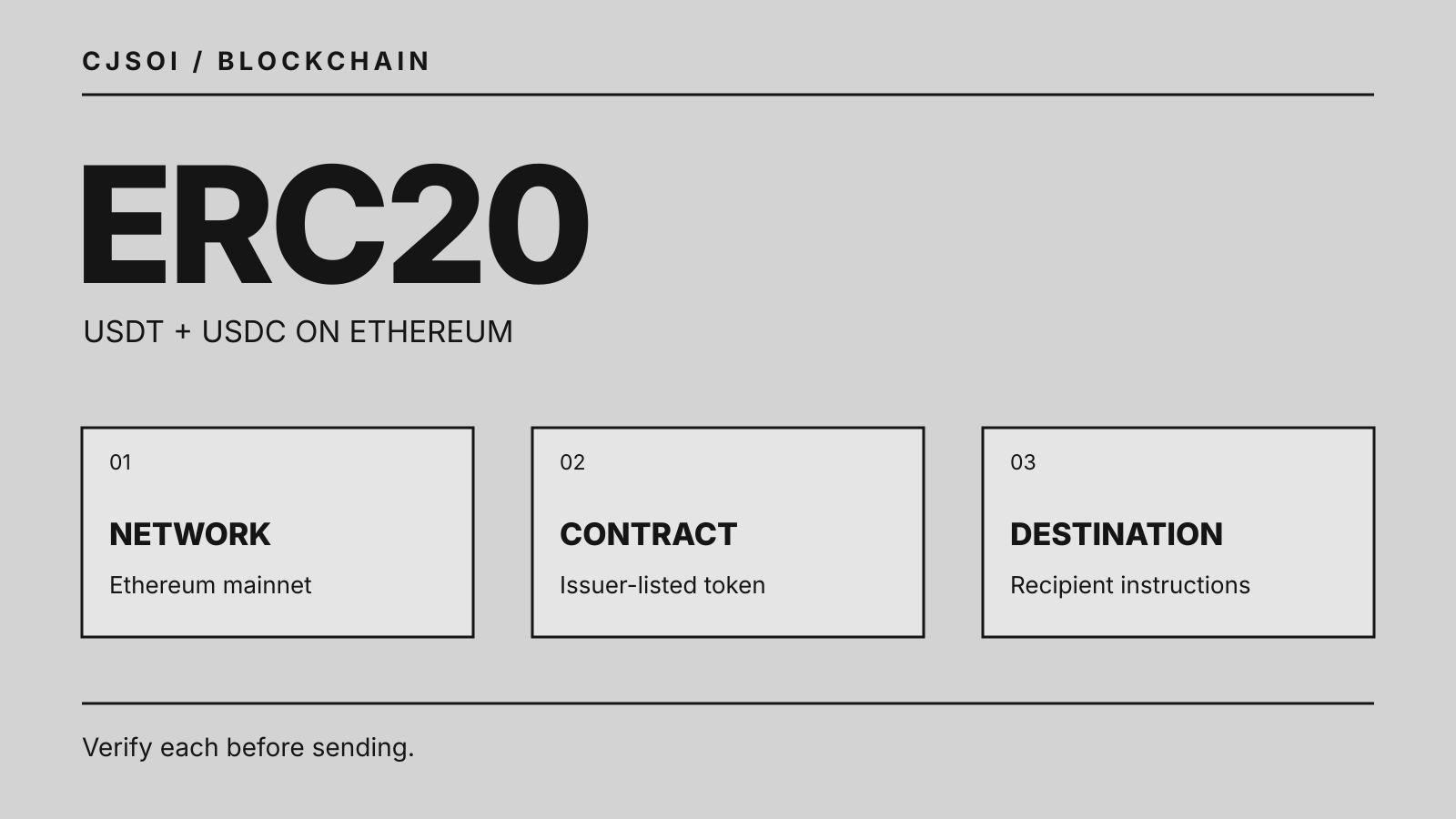
ERC20 transfer checks: network, token contract and recipient destination.
ERC-20 ·

ERC20: USDT and USDC on Ethereum Explained

ERC20 defines token functions. For USDT or USDC, verify the network, issuer contract and recipient before sending.
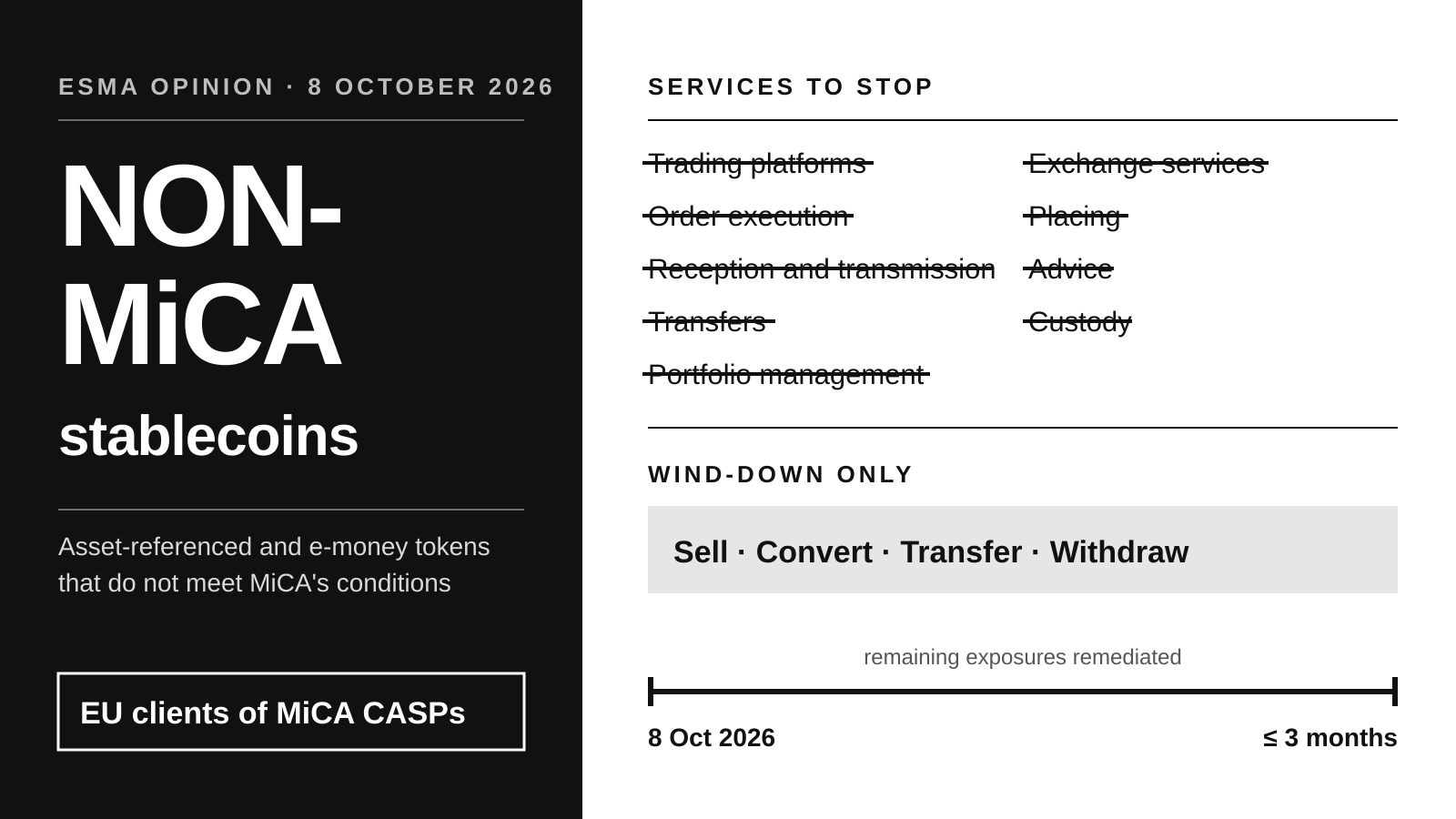
Diagram of ESMA's October 8, 2026 opinion on non-MiCA stablecoins: the crypto-asset services MiCA-licensed firms should stop for EU clients, from trading platforms to custody and transfers, and the wind-down limited to selling, converting, transferring or withdrawing within three months.
ESMA ·

ESMA Tells MiCA-Licensed Firms to Stop Services in Non-MiCA Stablecoins

ESMA's opinion covers every MiCA service, including custody and transfers, and gives regulators three months to clear remaining client holdings.
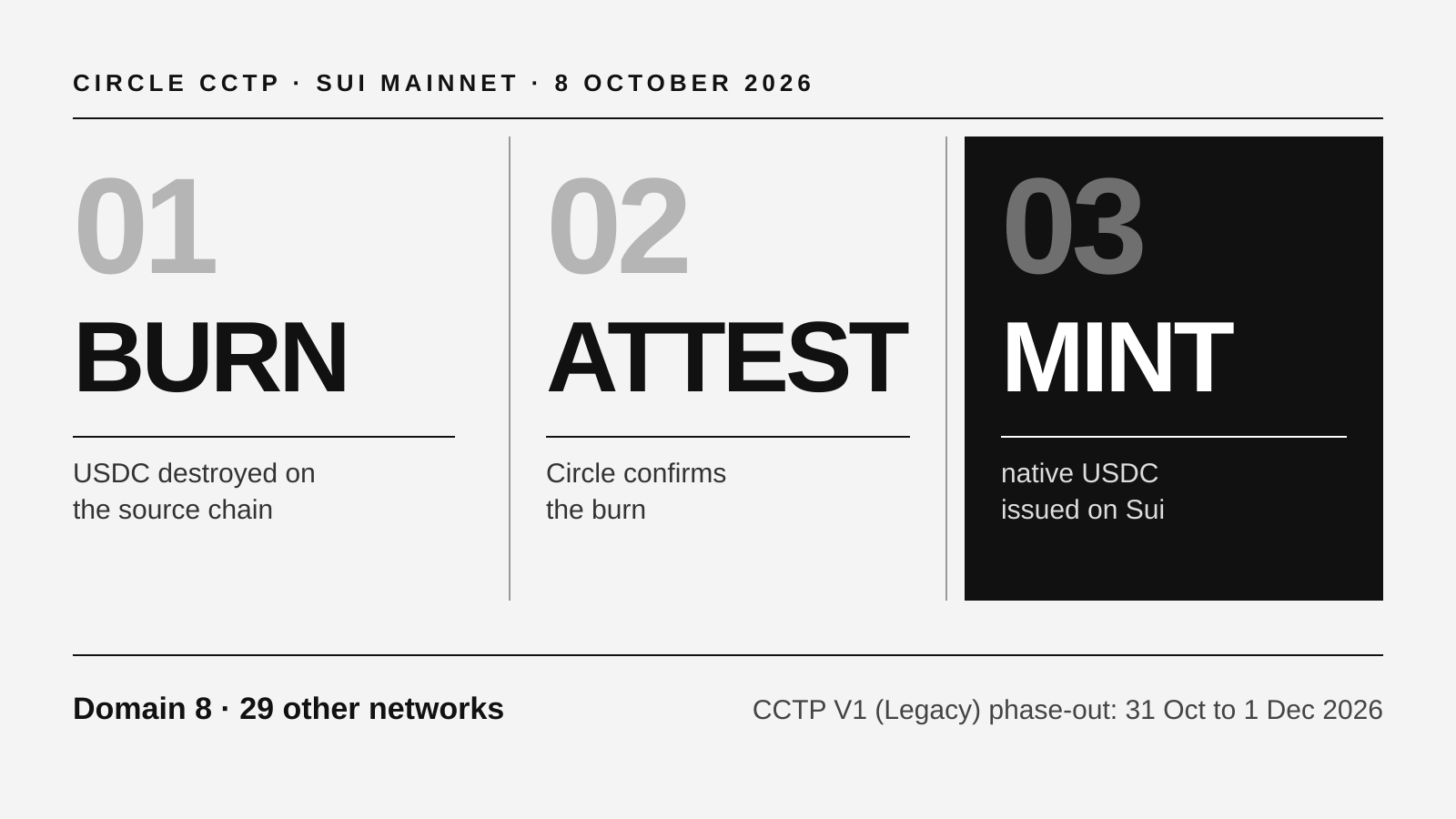
Three-step diagram of a CCTP transfer to Sui: USDC burned on the source chain, the burn attested by Circle, native USDC minted on Sui
Circle ·

Circle CCTP Goes Live on Sui for Native USDC Transfers

Circle added Sui as CCTP domain 8 on October 8, so native USDC can be burned on one network and minted on Sui, weeks before the old V1 protocol is switched off.
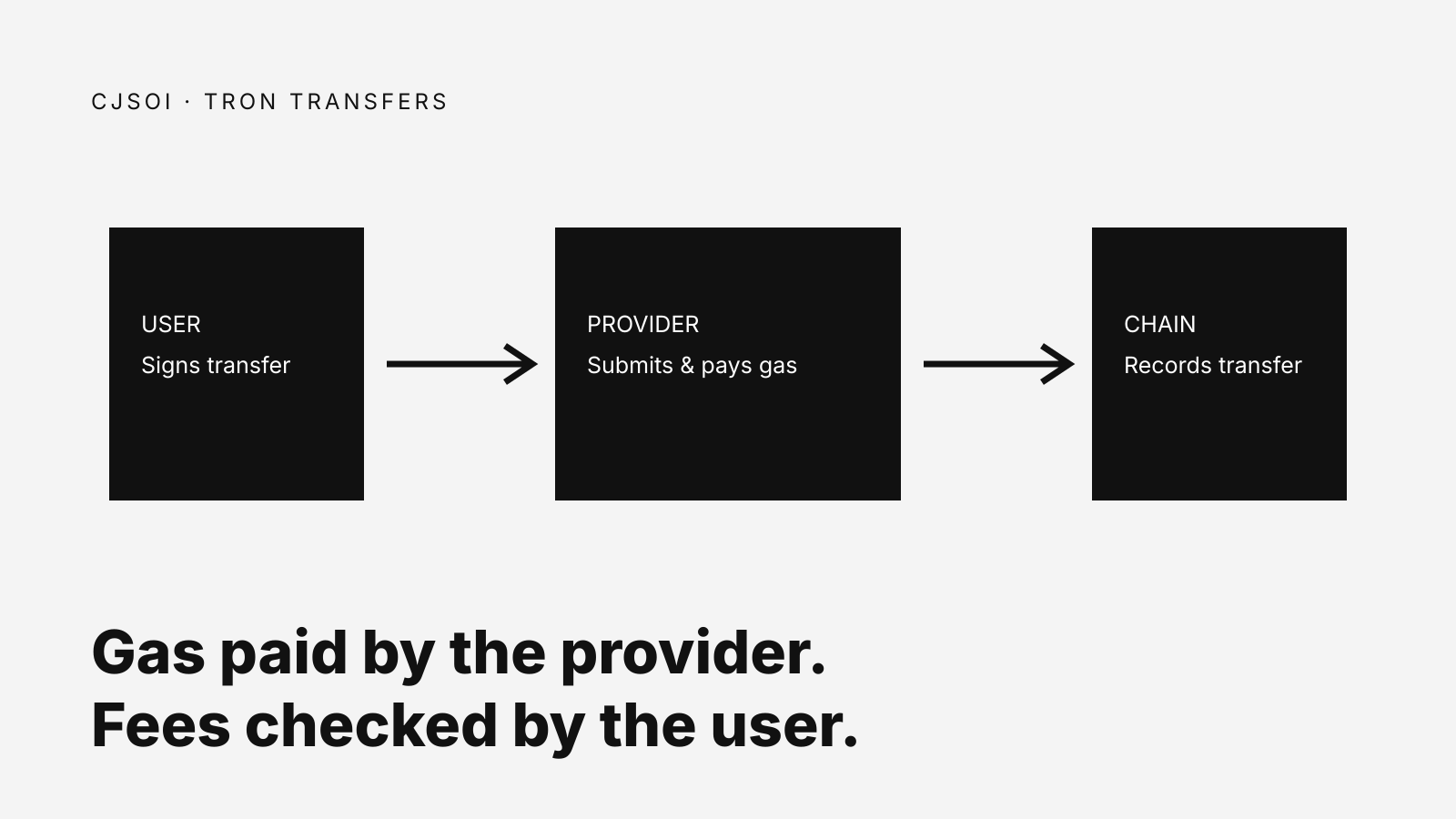
GasFree flow from user authorisation through provider submission to a blockchain record.
TRON ·

Gas-Free TRON Transfers: USDT Fees and Provider Payments

GasFree removes the need to hold TRX for gas, while activation and transfer handling fees can still apply.
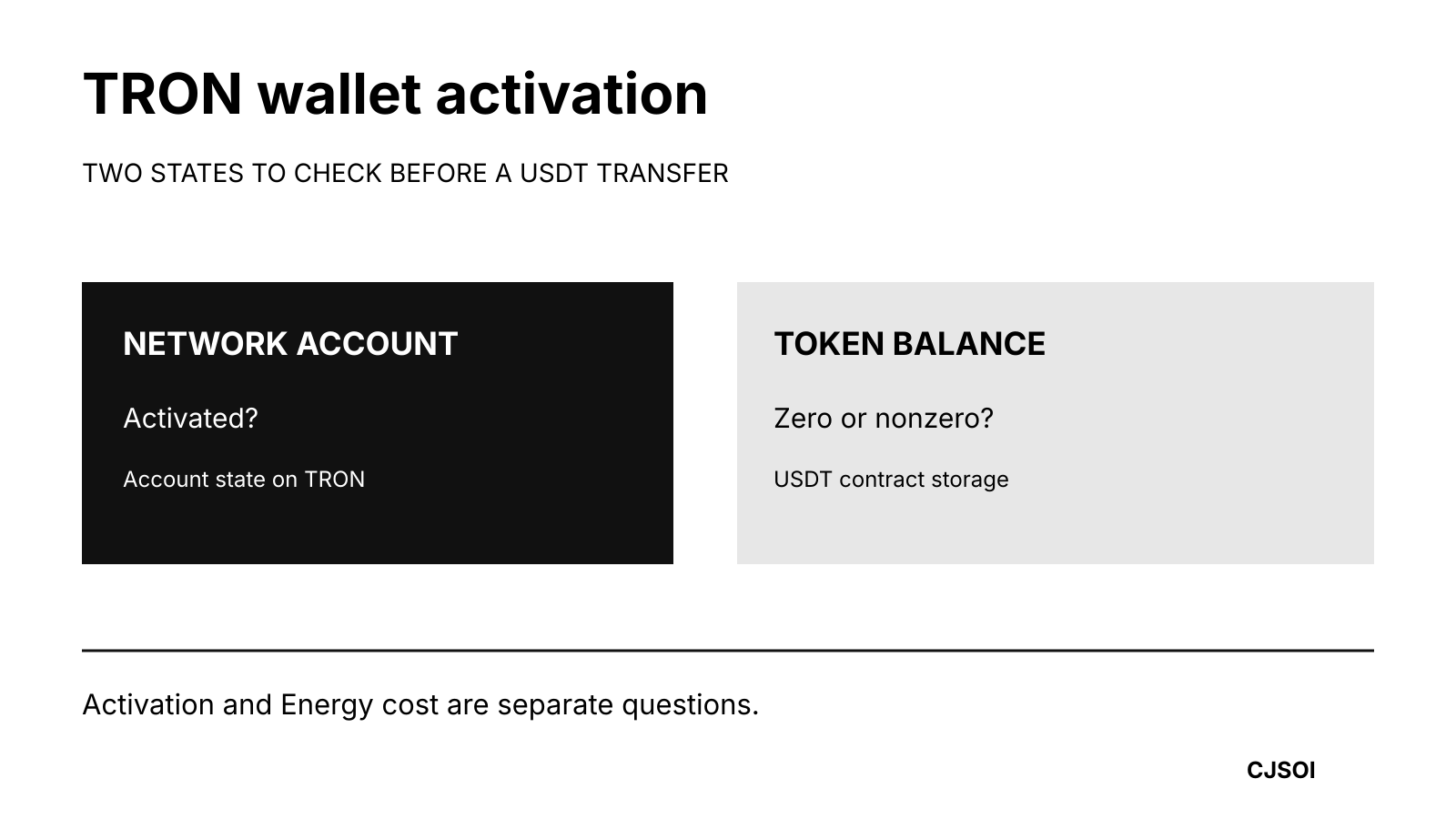
Separate panels show TRON network account activation and a zero or nonzero USDT balance in token storage.
TRON ·

TRON Wallet Activation: Account State and First USDT Transfer Costs

Account activation and a recipient's USDT balance are separate inputs to a TRON transfer.
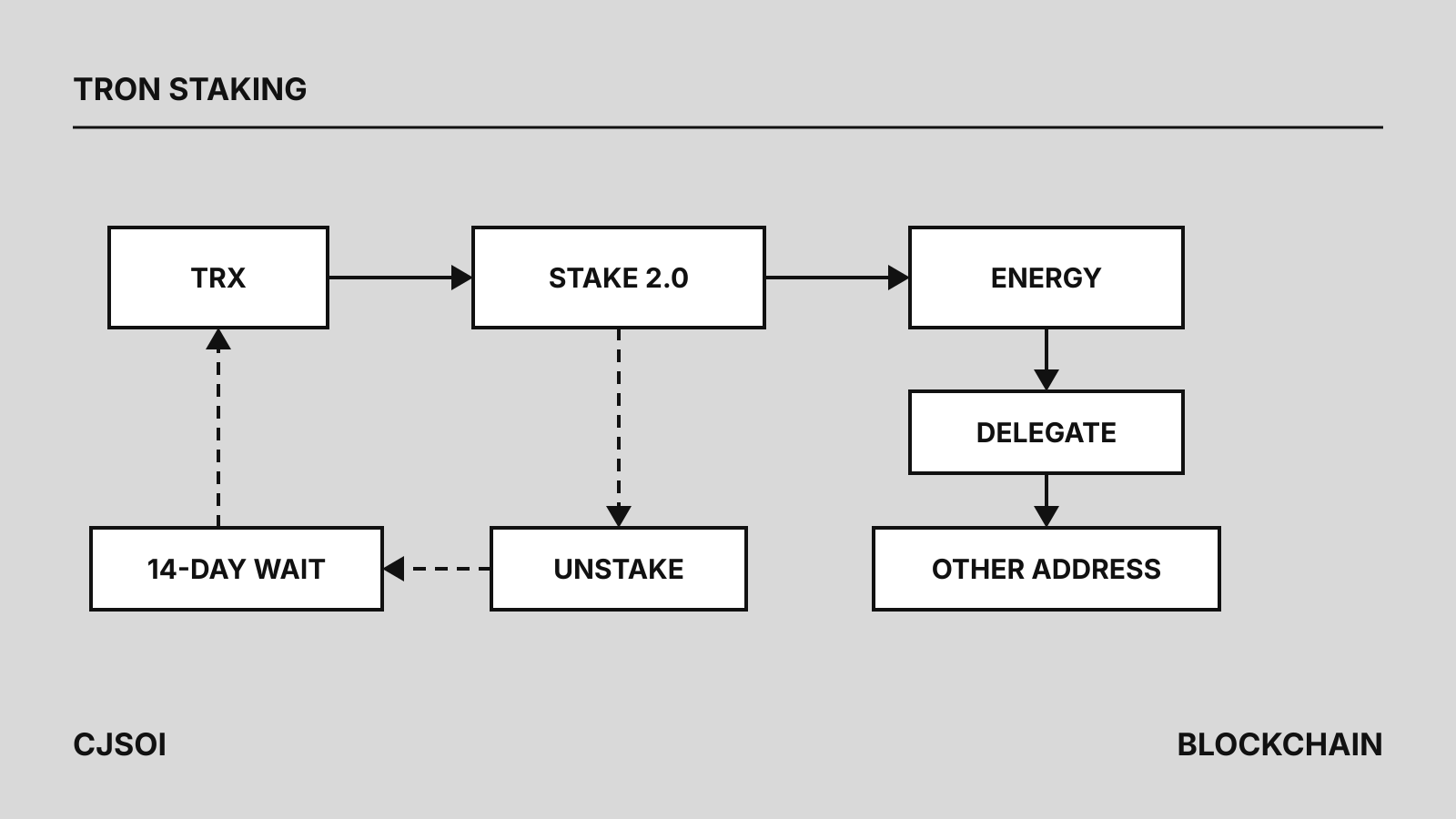
Line diagram of TRON staking: TRX flows to Stake 2.0 and then to energy, which can be delegated to another address; a dashed path shows unstaking, a 14-day wait and the TRX returning.
TRON ·

TRON Staking for Energy: How Much TRX a USDT Transfer Needs

How TRON staking provides energy, how much TRX transfers need and how unstaking works.
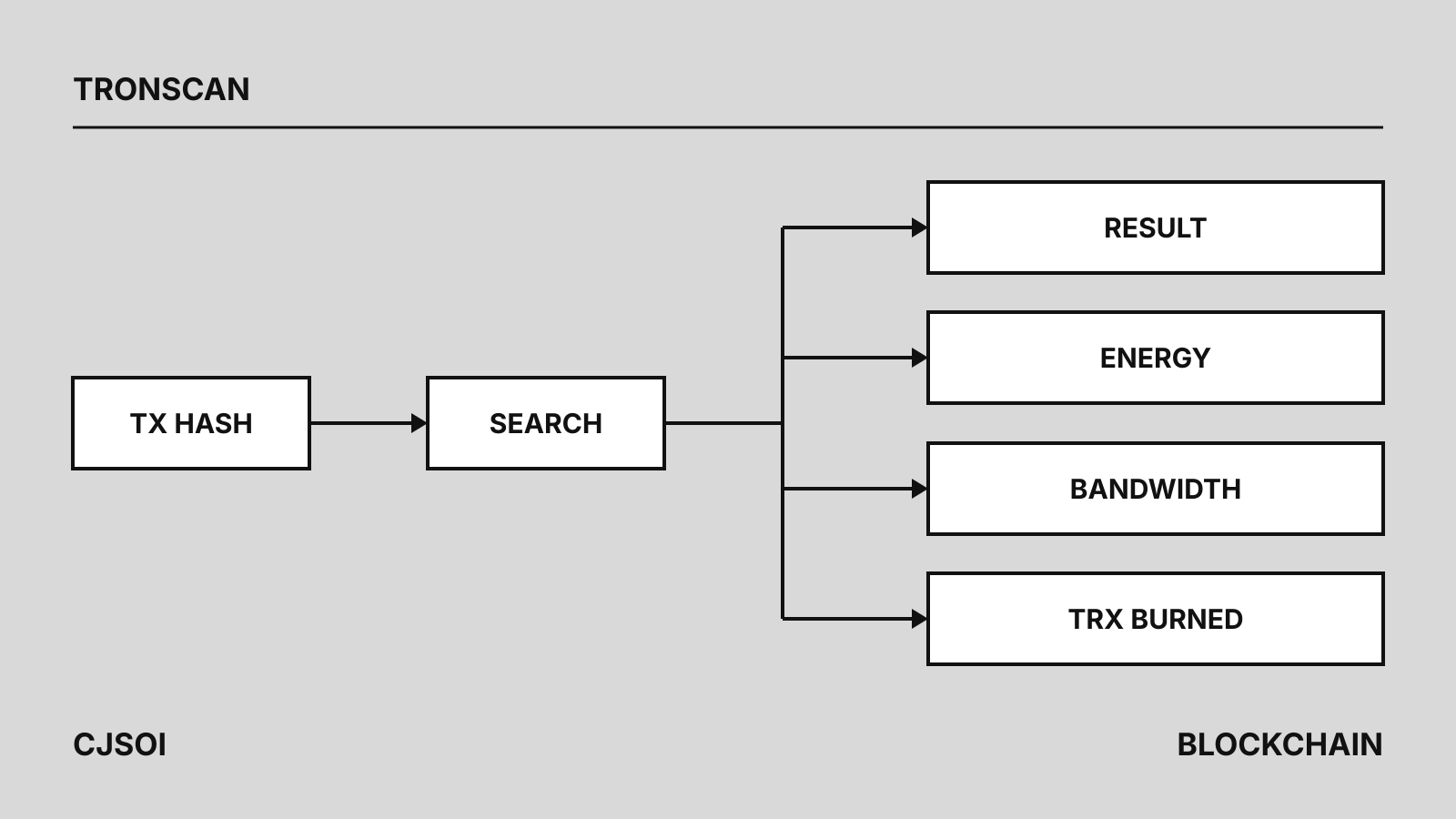
Line diagram: a TX HASH box leads to SEARCH, which branches into four boxes labeled RESULT, ENERGY, BANDWIDTH and TRX BURNED, under a TRONSCAN label.
TRON ·

TRX Scan: How to Track a TRON Transaction on TRONSCAN

Track a TRON transaction on TRONSCAN and read its status, energy, bandwidth and fees.
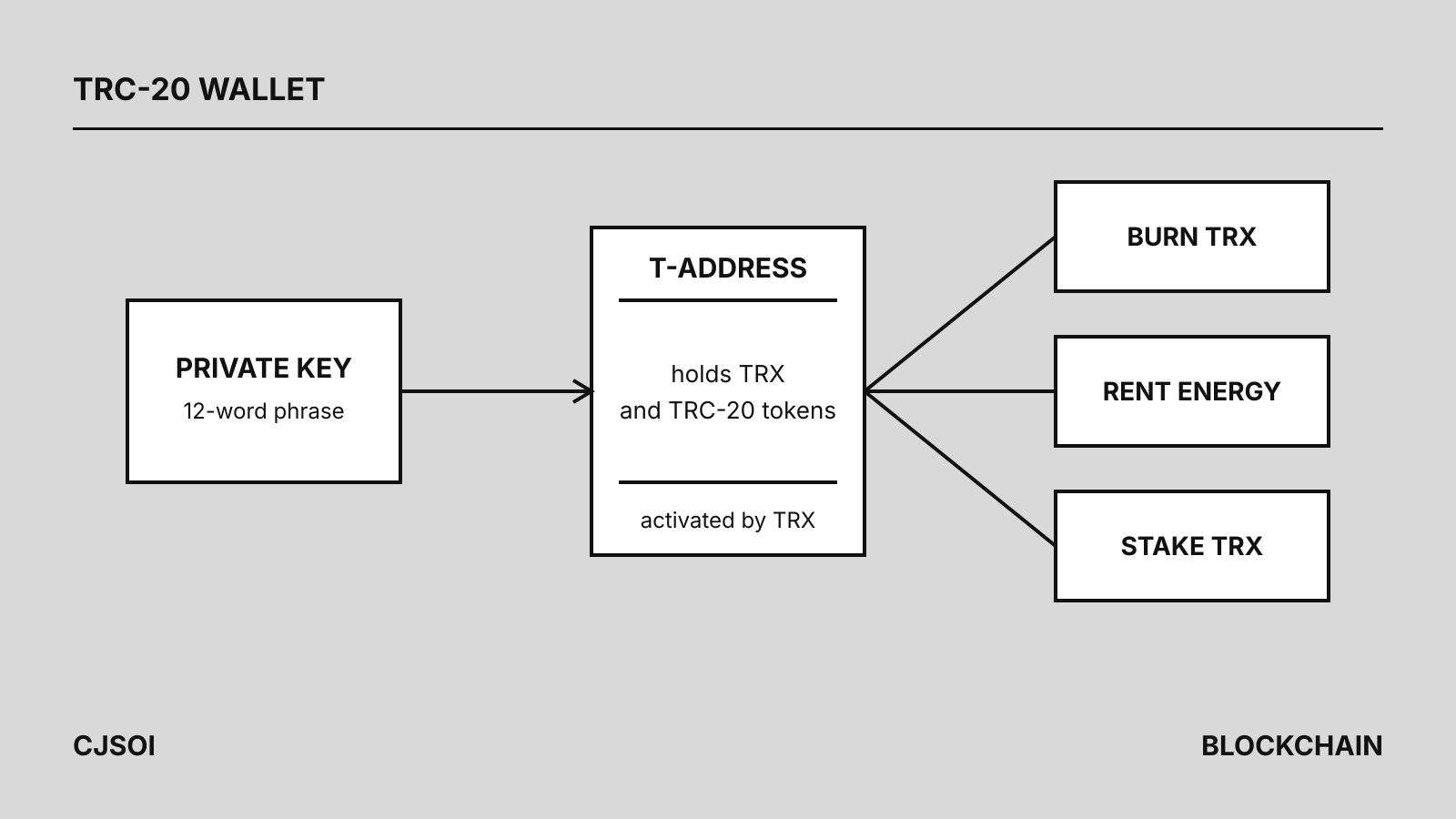
Line diagram: a private key box with a 12-word phrase points to a TRON T-address that holds TRX and TRC-20 tokens, which branches to three ways of paying USDT fees: burn TRX, rent energy or stake TRX.
TRON ·

TRC-20 Wallet: How to Open One and Cut USDT Fees

A TRC20 wallet is any TRON wallet: one T-address holds TRX, USDT and every other TRC-20 token.

CJSOI

What are you looking for?

Search by headline, topic or keyword.