Converting USDC to USDT means exchanging one stablecoin for another. It is not the same as sending a token to a different wallet, and it is not the same as bridging a token to another blockchain.
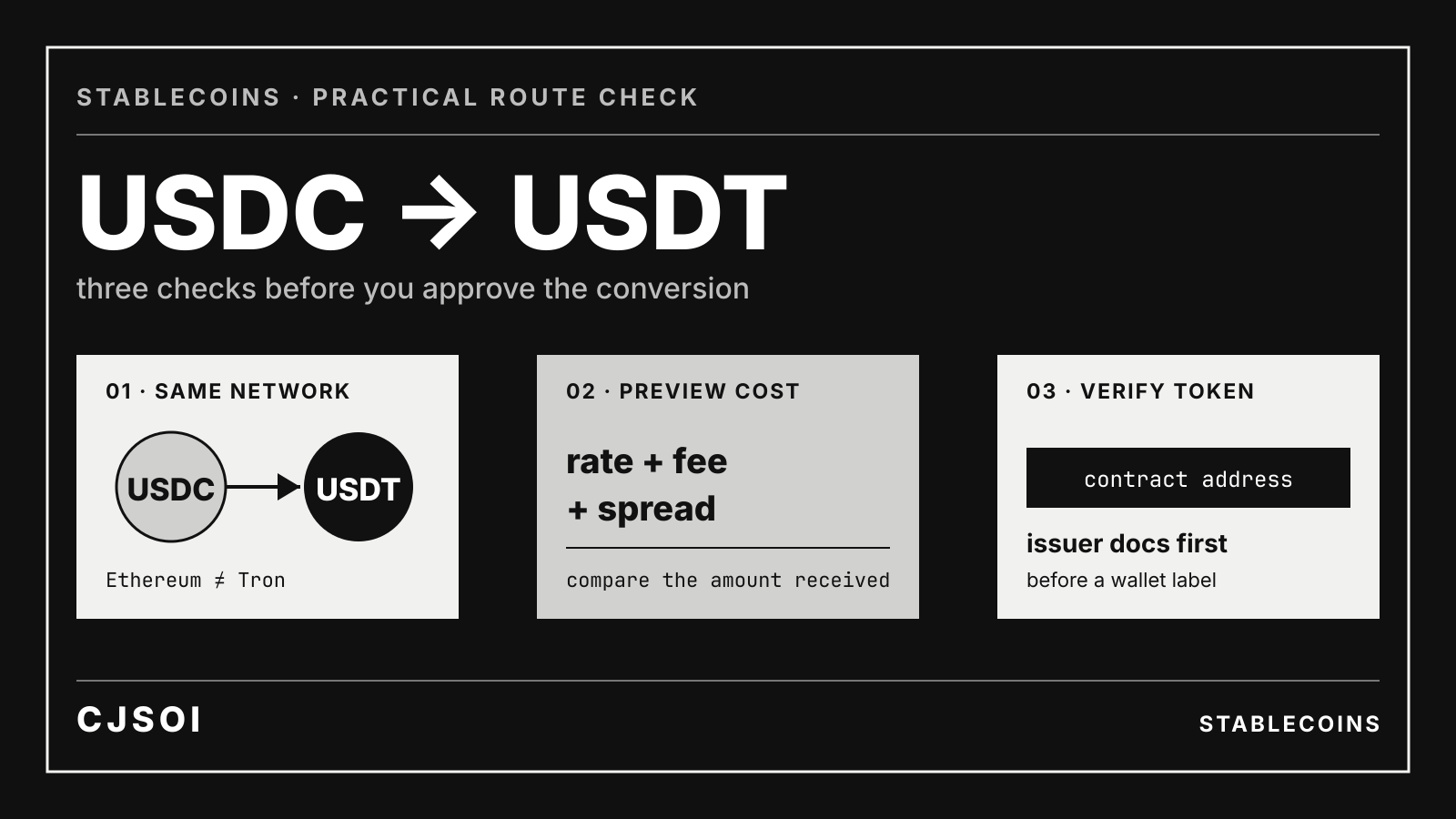
The safest workflow is to keep the asset, network and destination separate in your head. First choose where the conversion will happen. Then verify that both tokens are on the same supported network. Finally, compare the amount you will receive after fees, spread, slippage and network costs.
Two common ways to convert USDC to USDT
Use a centralized exchange
A centralized exchange can convert the balance inside your account. The platform chooses the available market or conversion route, then shows a preview before you confirm.
Check these items before accepting:
- The exact pair or conversion route is USDC to USDT.
- The preview shows the amount of USDT you will receive.
- Any trading fee or spread is visible.
- The withdrawal network you plan to use is supported for USDT.
- The receiving wallet supports USDT on that same network.
Coinbase, for example, says a simple buy, sell or conversion may include fees and spread in the quoted price. Its fee disclosure also explains that off-platform sends can carry network fees and that some stablecoin withdrawals have additional processing fees. Other exchanges set their own schedules, so use the live preview rather than assuming a universal price.
Swap in a self-custody wallet
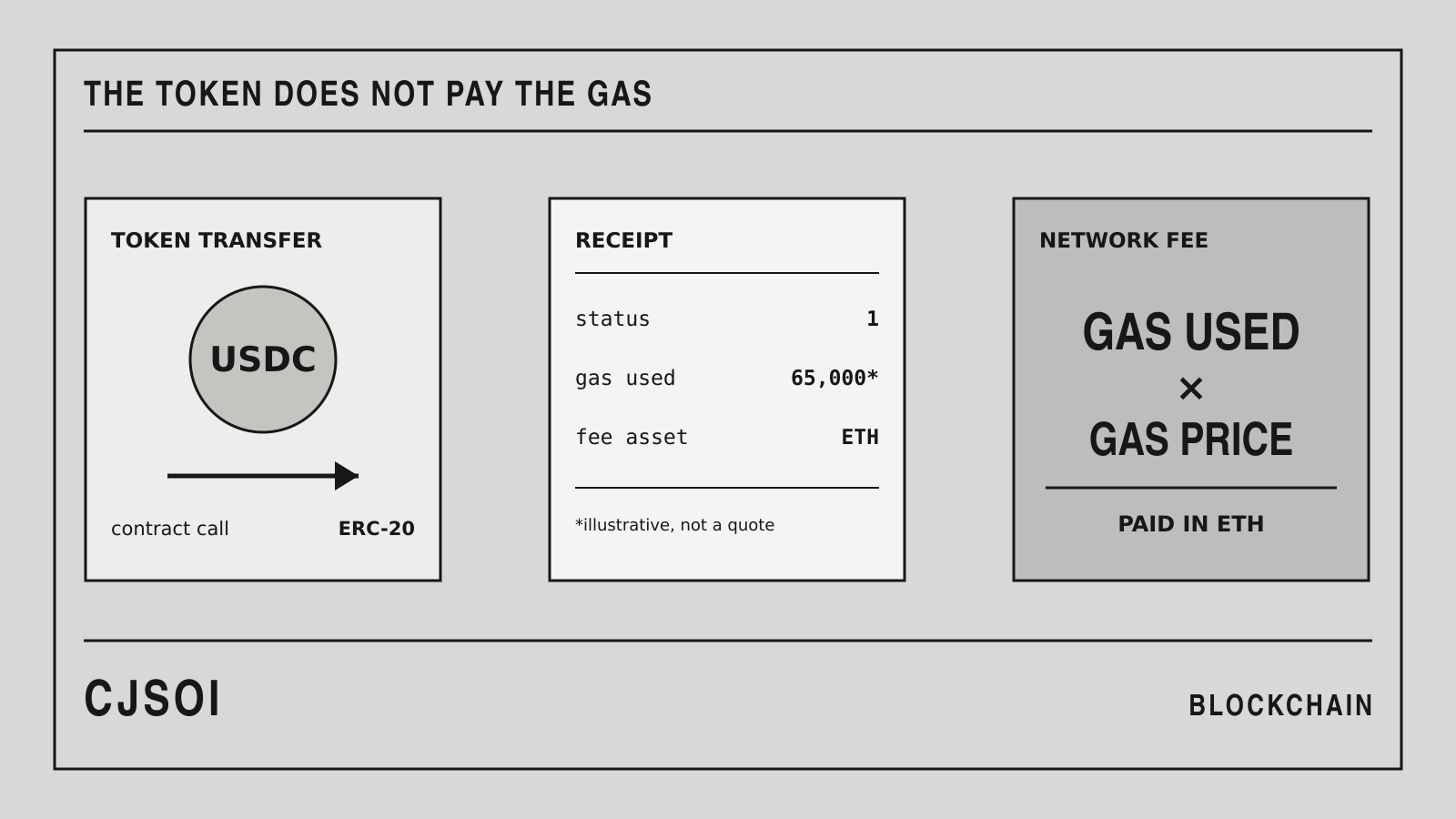
A wallet swap usually routes the trade through a decentralized exchange. Both token contracts must exist on the selected network, and your wallet needs that network’s native asset to pay gas.
A typical flow is:
- Select the network in the wallet.
- Choose USDC as the token to sell and USDT as the token to receive.
- Enter the amount.
- Review the route, minimum amount received, price impact and network cost.
- Approve USDC if the application needs permission to spend it.
- Submit the swap and wait for confirmation.
Uniswap’s wallet instructions tell users to select the network and tokens, review the swap, set slippage when needed, and then submit. A token approval and the swap may be separate transactions.
Match the network before you do anything
USDC and USDT exist on several networks. A token name alone is not enough. The sending platform, swap application and receiving wallet must agree on the network.
Circle’s official USDC contract list identifies native USDC on Ethereum at 0xA0b86991c6218b36c1d19D4a2e9Eb0cE3606eB48. Tether’s supported protocols page identifies Ethereum USDT at 0xdAC17F958D2ee523a2206206994597C13D831ec7.
Do not copy a contract from an advertisement, search snippet or unsolicited message. Verify it against the issuer and the wallet or exchange you are actually using. Tether’s Ethereum integration guide also warns users to confirm the correct transport protocol.
Our ERC-20 guide explains token contracts, and the network selection guide covers the deposit-network check in more detail.
Sending does not convert
If you send USDC to a USDT deposit address, the blockchain does not automatically change it into USDT. The destination may not credit the deposit, even when both tokens use the same network.
Use the exchange or swap first. After the balance has become USDT, make a small test withdrawal to the correct USDT address and network when the destination or route is unfamiliar.
A bridge is not a swap
A bridge moves an asset between networks. A swap changes one asset into another. Some applications combine both actions, but that adds another route, more contracts and another fee layer.
If the goal is simply to convert USDC to USDT, look for a same-network swap before considering a cross-chain route. Bridging is only relevant when the destination must be on a different network.
Compare the amount received, not the headline rate
USDC and USDT are both designed to track the US dollar, but the final amount can still differ because of:
- exchange trading fees or spread;
- decentralized-exchange liquidity and price impact;
- slippage limits;
- token approval and swap gas;
- withdrawal or processing fees;
- network fees for the final transfer.
A quote marked “zero fee” may still include spread or a worse execution price. Compare the net USDT amount shown in the final preview.
A practical checklist
Before confirming the conversion:
- Verify the official USDC and USDT contracts for the selected network.
- Confirm the destination supports USDT on that network.
- Read the exchange or swap preview in full.
- Keep enough native gas token for approval and swap transactions.
- Set a reasonable slippage limit rather than accepting an unlimited one.
- Save the transaction hash.
- Send a small test amount when using a new destination.
If a transfer is still pending or a fee seems unusually high, the Ethereum gas guide explains why network conditions matter.