
Stablecoins & Markets
Kim Min-jun
Coverage focuses on reserves, redemption and the flow of money through digital-asset markets.
View articles
Stablecoins, Banking & Blockchain
Search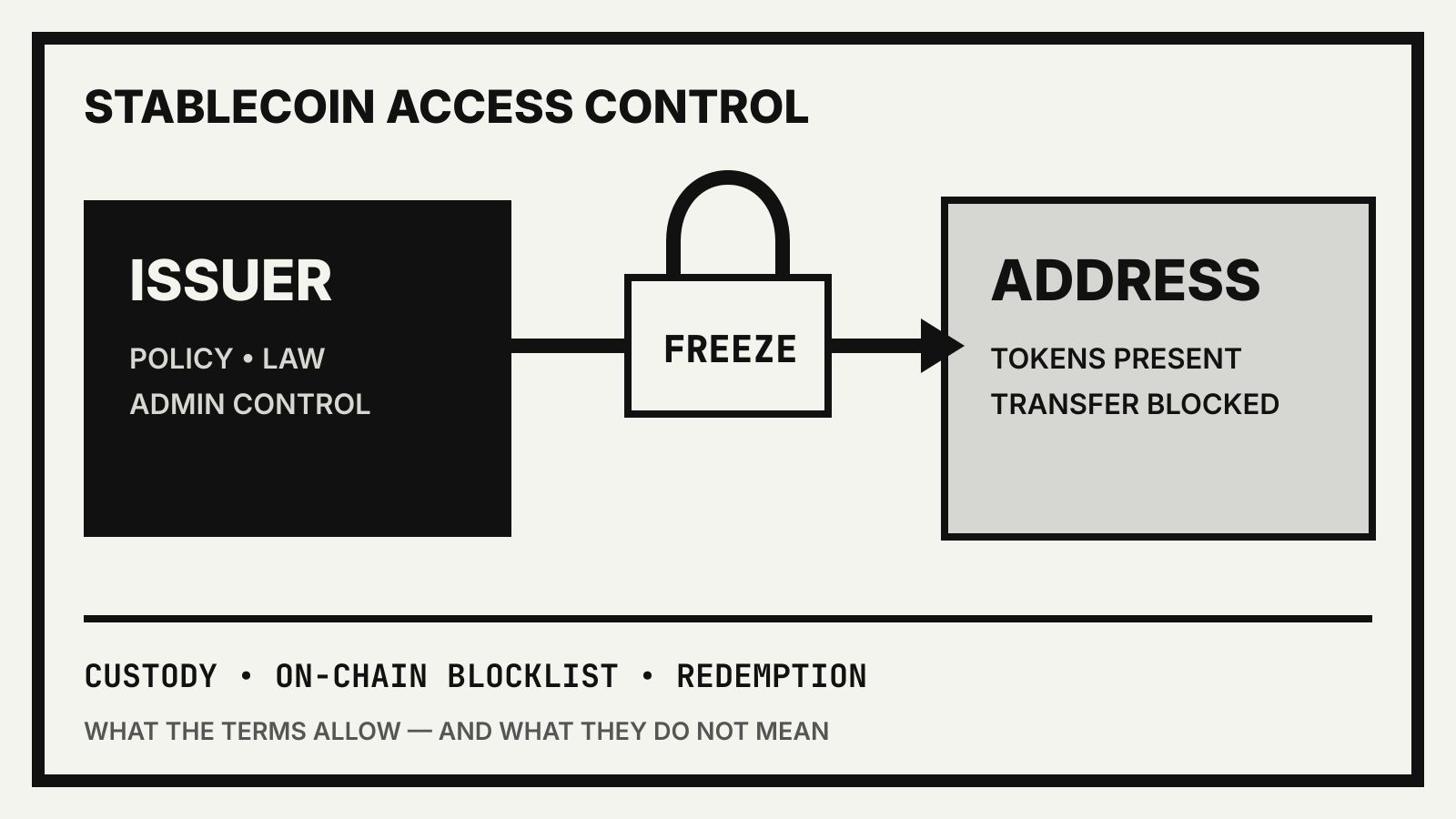
Issuer controls can block stablecoin transfers, custodial balances or redemption. Here is how USDC and USDT differ.
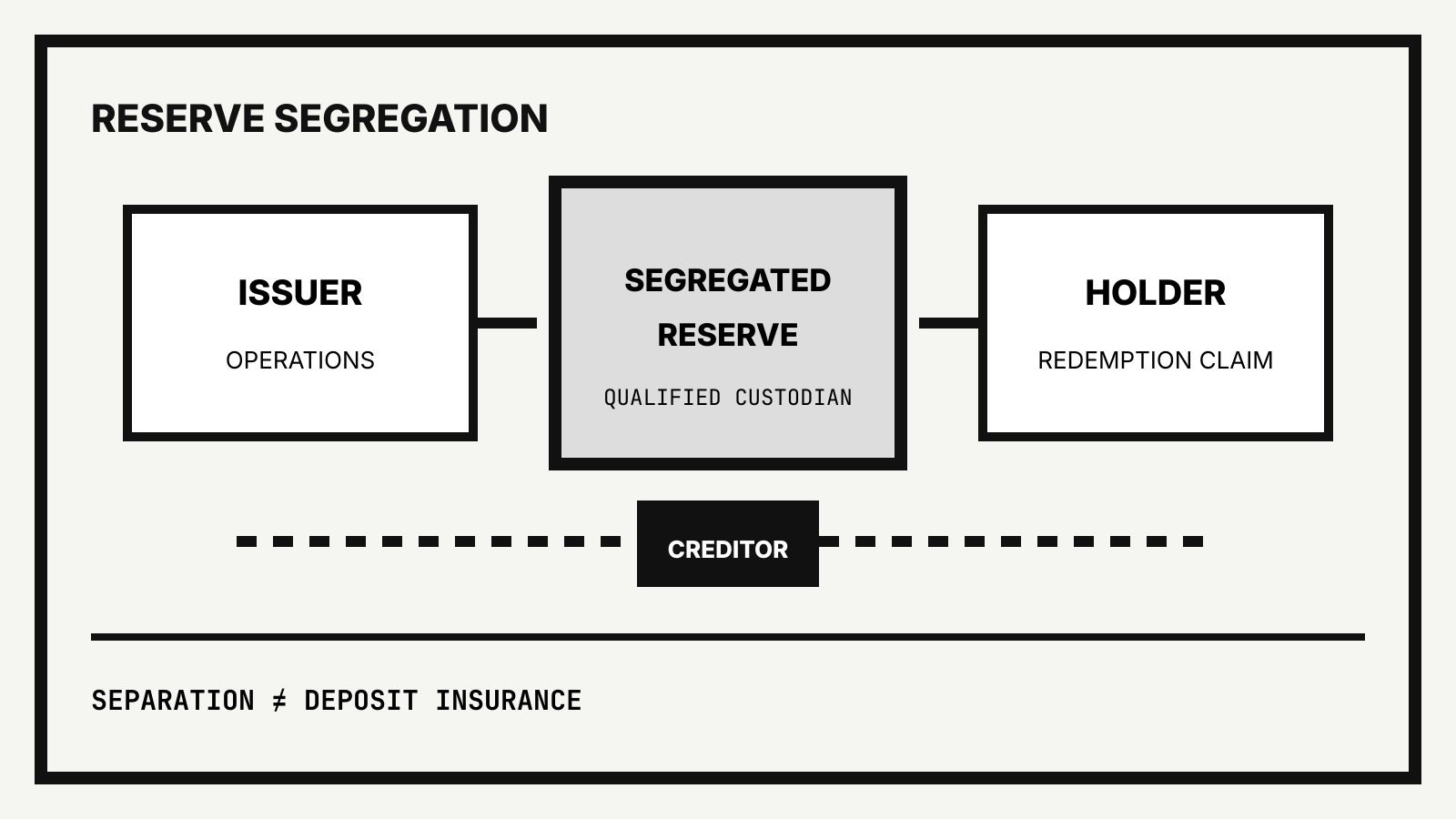
What reserve segregation protects in a stablecoin insolvency, and why it cannot guarantee liquidity or insurance.
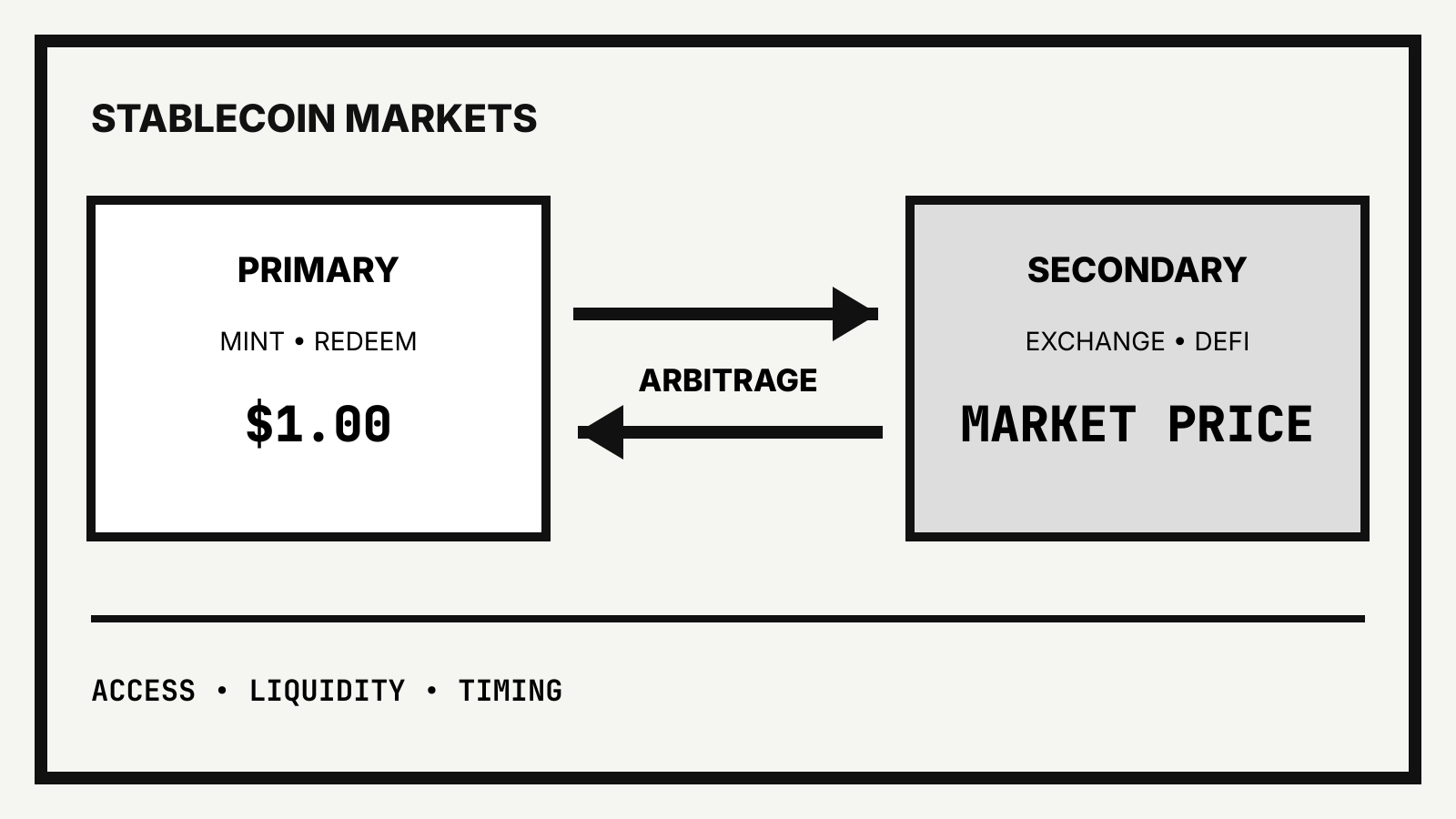
How minting, redemption and arbitrage link stablecoin primary and secondary markets—and why a depeg can persist.
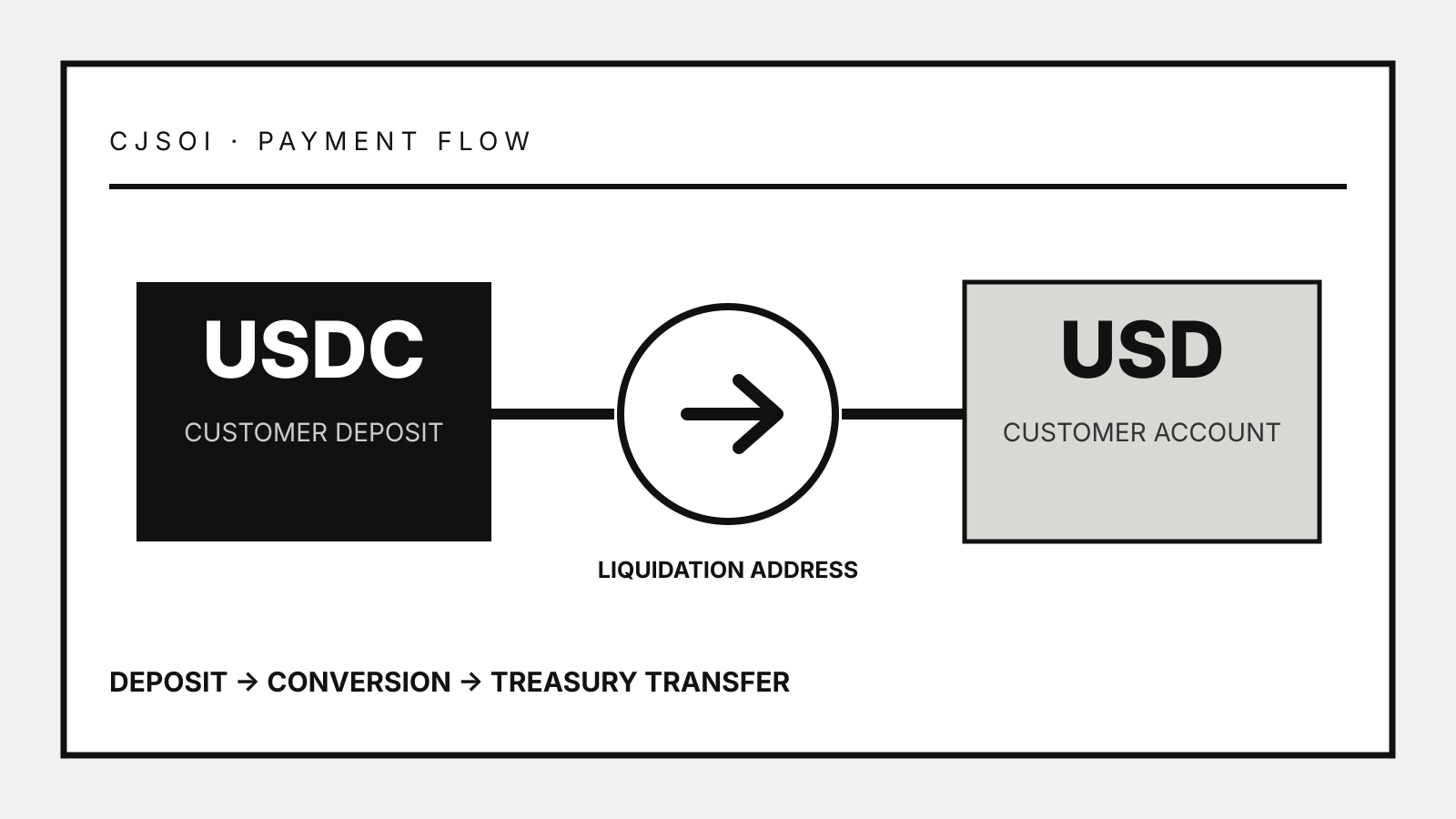
How a USDC liquidation address, customer account and treasury transfer form a stablecoin-to-USD settlement flow.
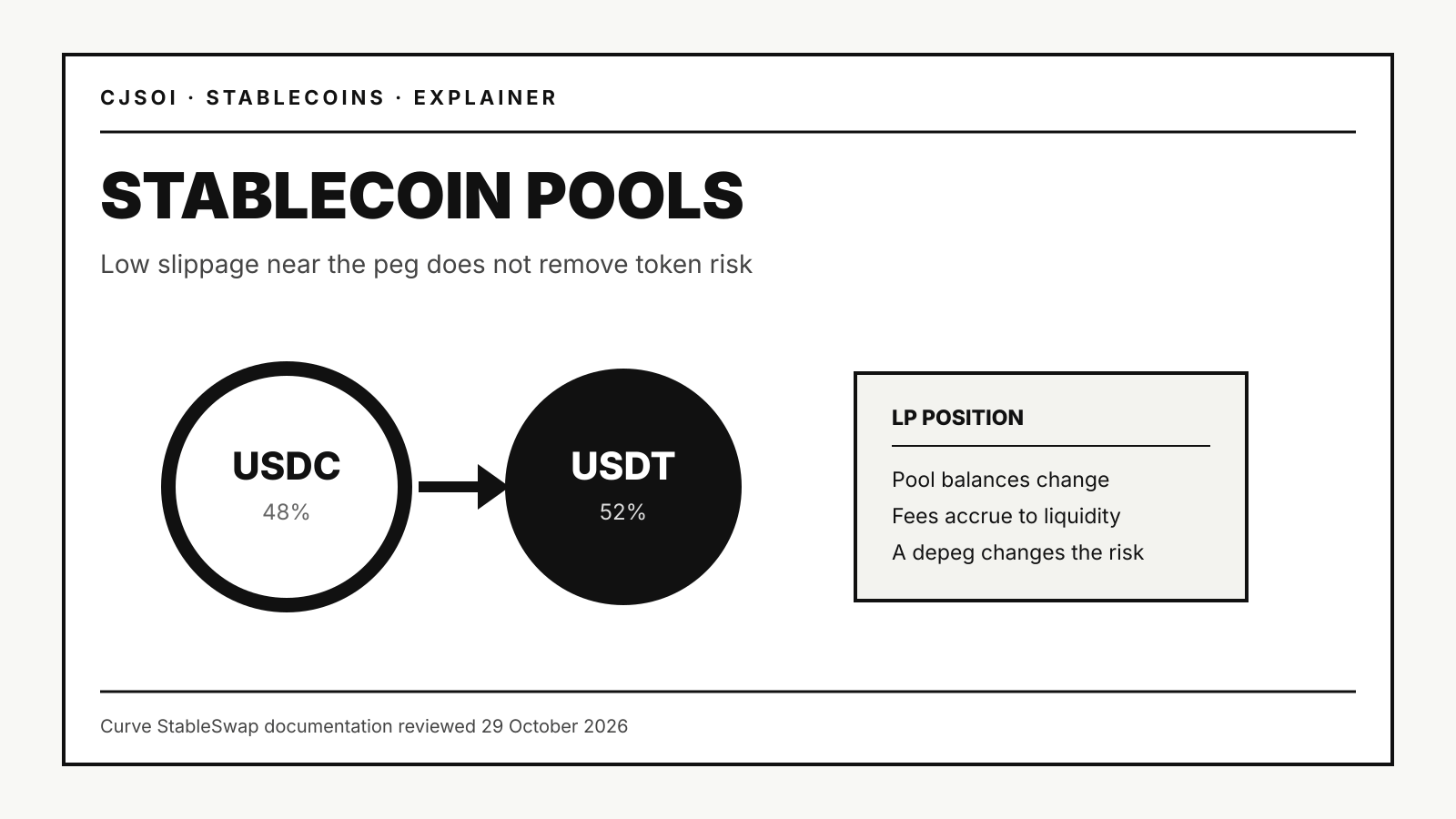
How stablecoin liquidity pools price swaps, change an LP's token mix and concentrate depeg risk.
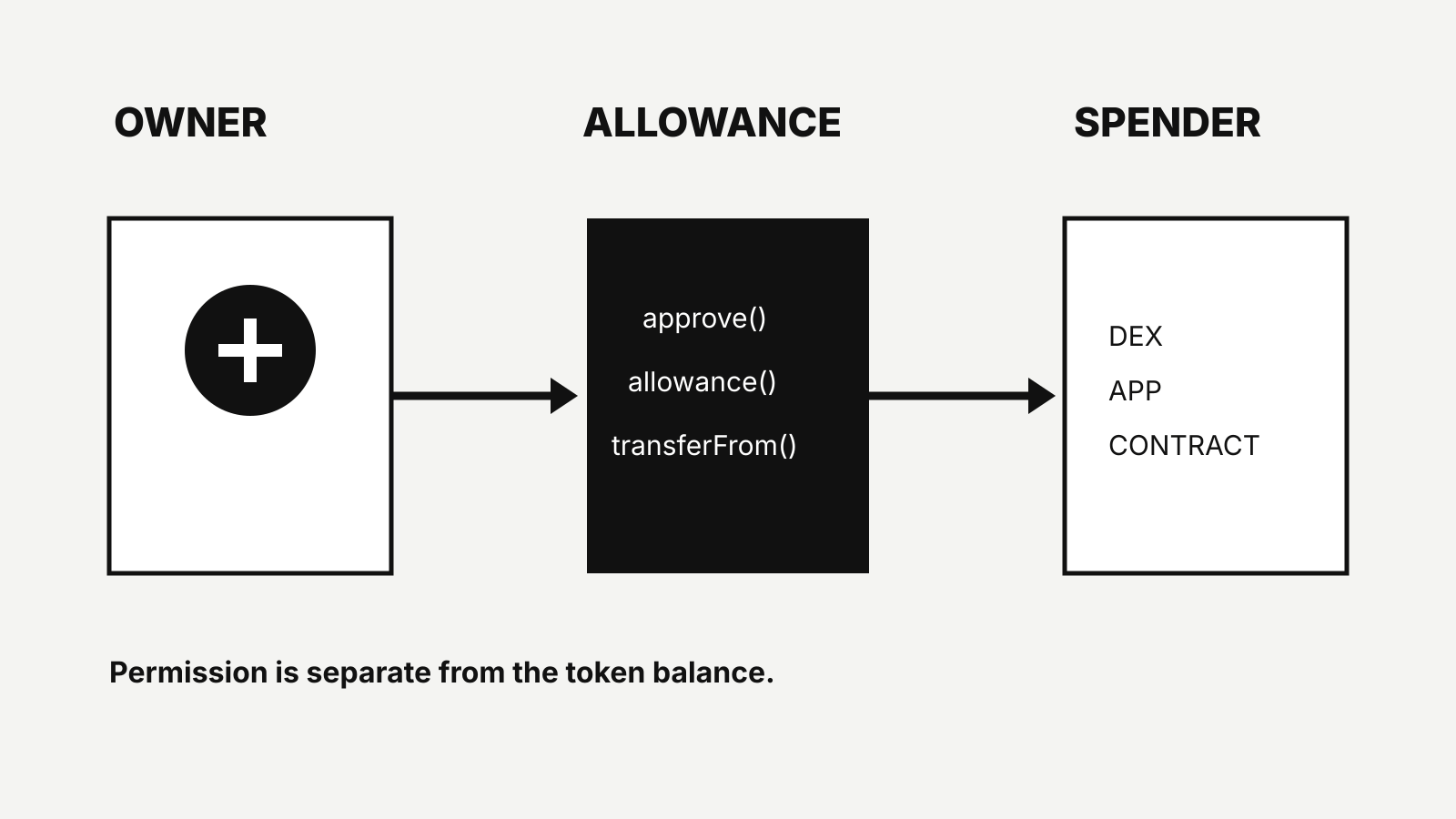
Understand ERC-20 approvals, unlimited allowances, permit signatures and how to revoke stablecoin access.
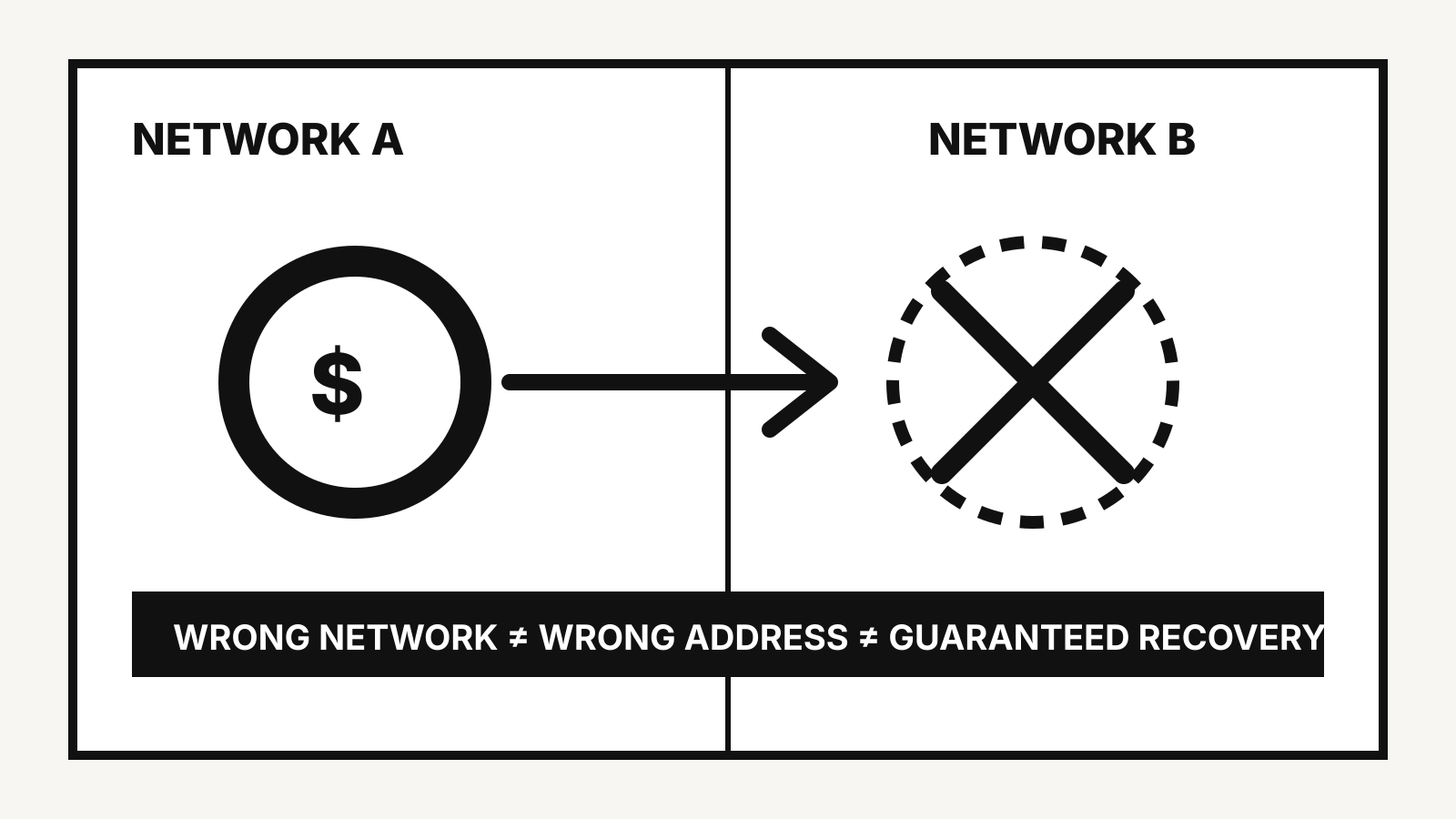
Wrong-network stablecoin transfers may be recoverable only when you or a supporting custodian controls the destination.
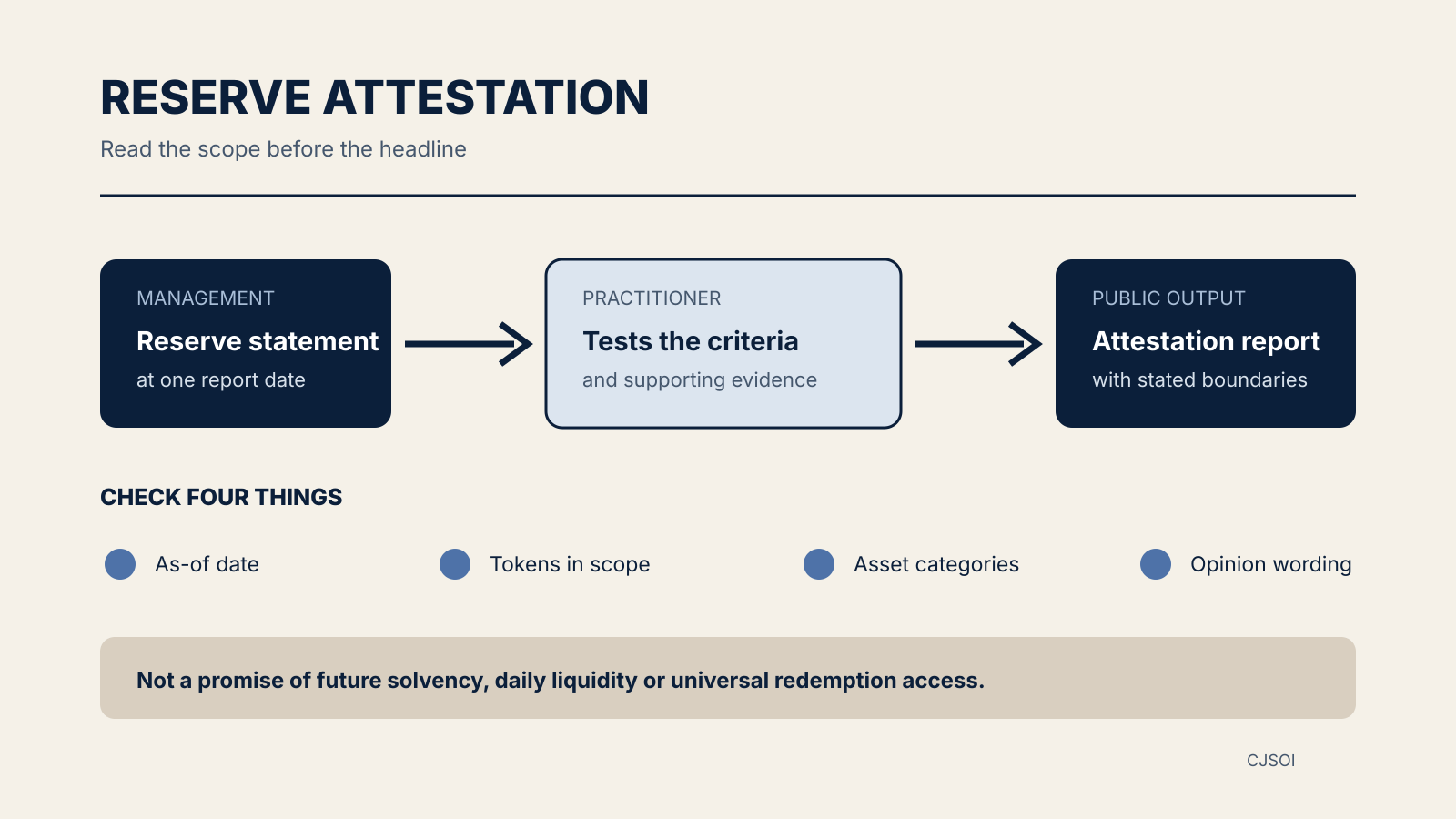
Read a stablecoin reserve attestation by its date, scope, asset categories and opinion without overclaiming.
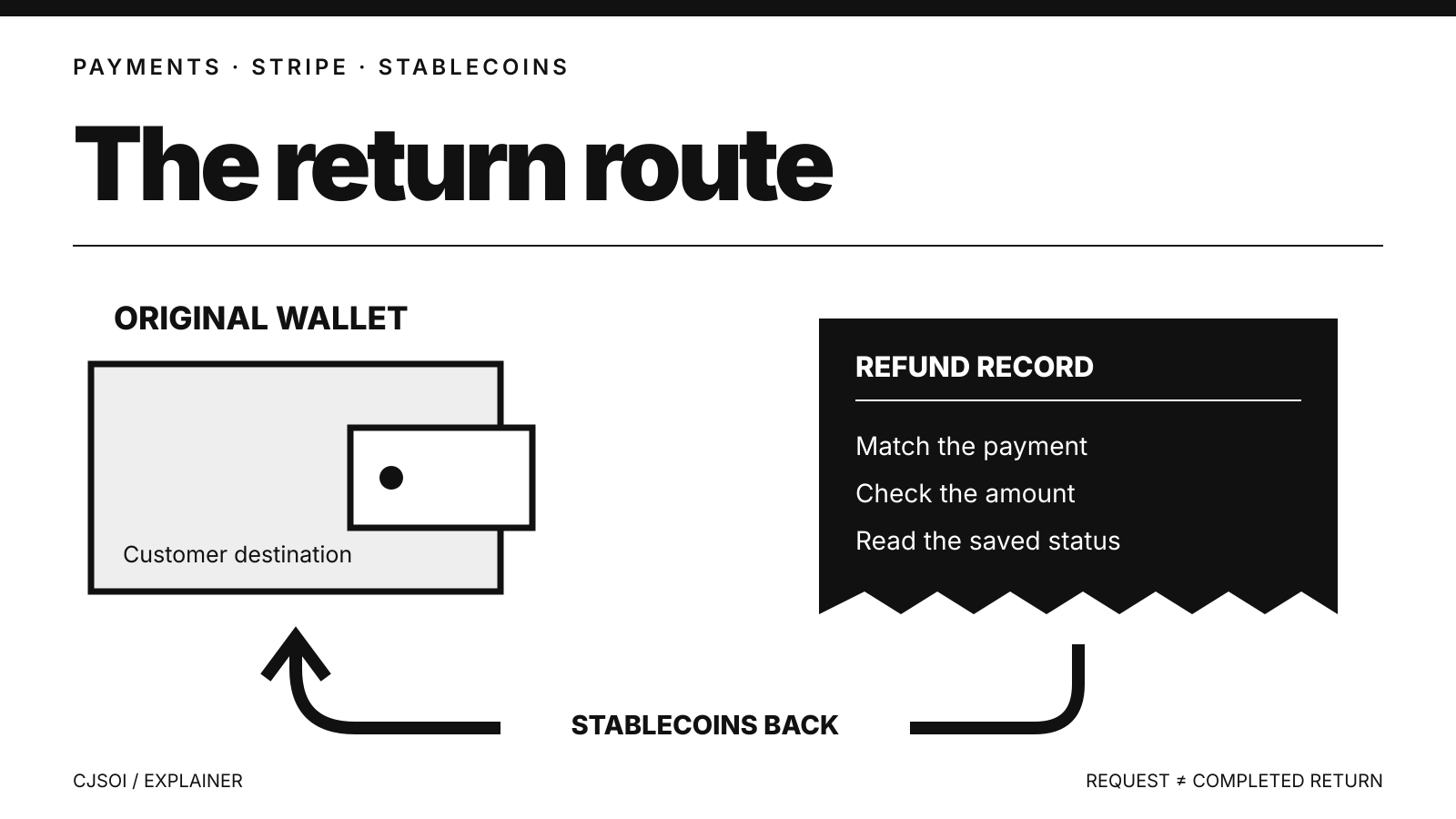
Where Stripe stablecoin refunds go, how partial amounts add up and what the saved status actually establishes.
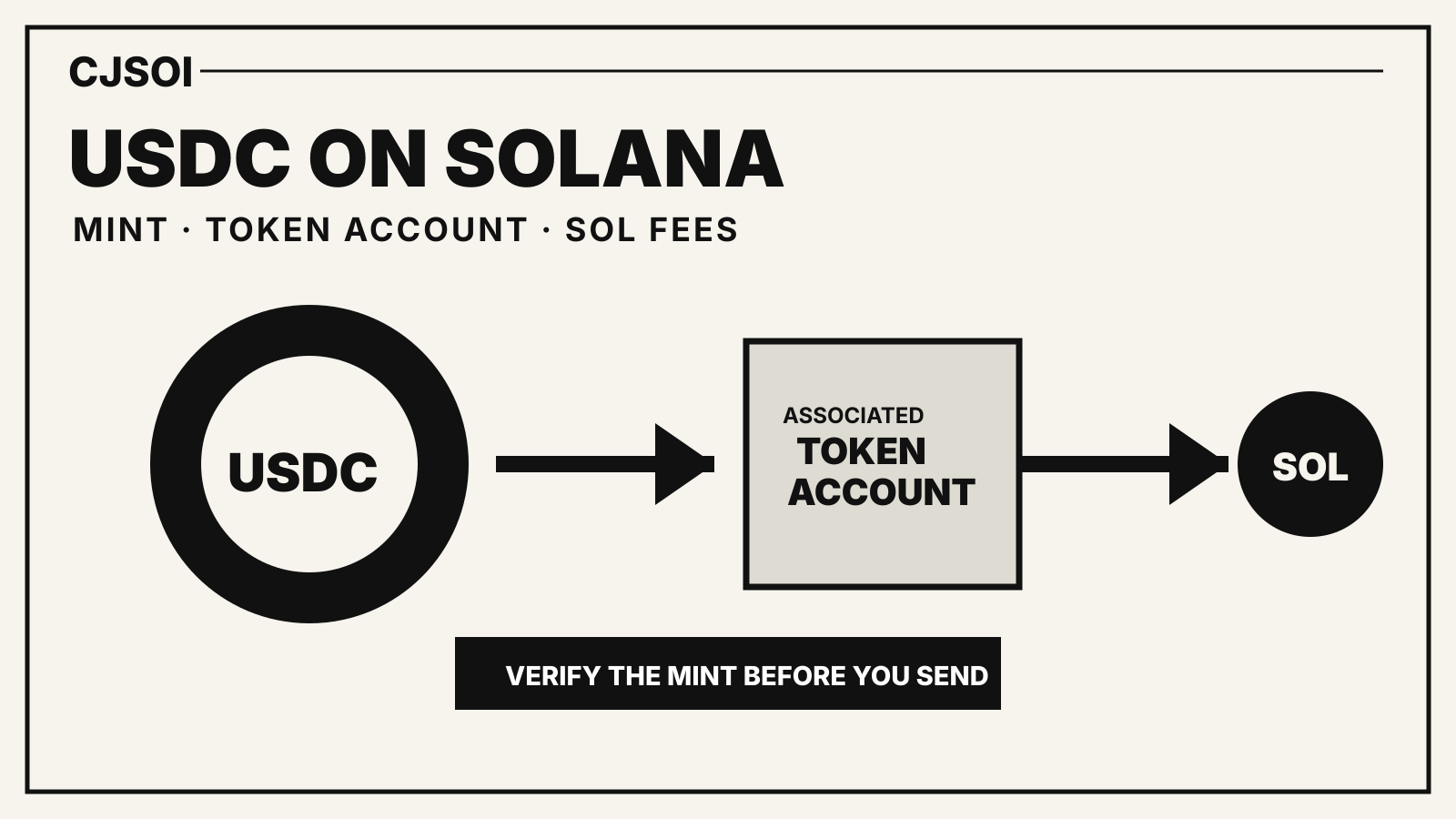
How native USDC works on Solana: verify the mint, understand token accounts, keep SOL for fees and avoid network errors.
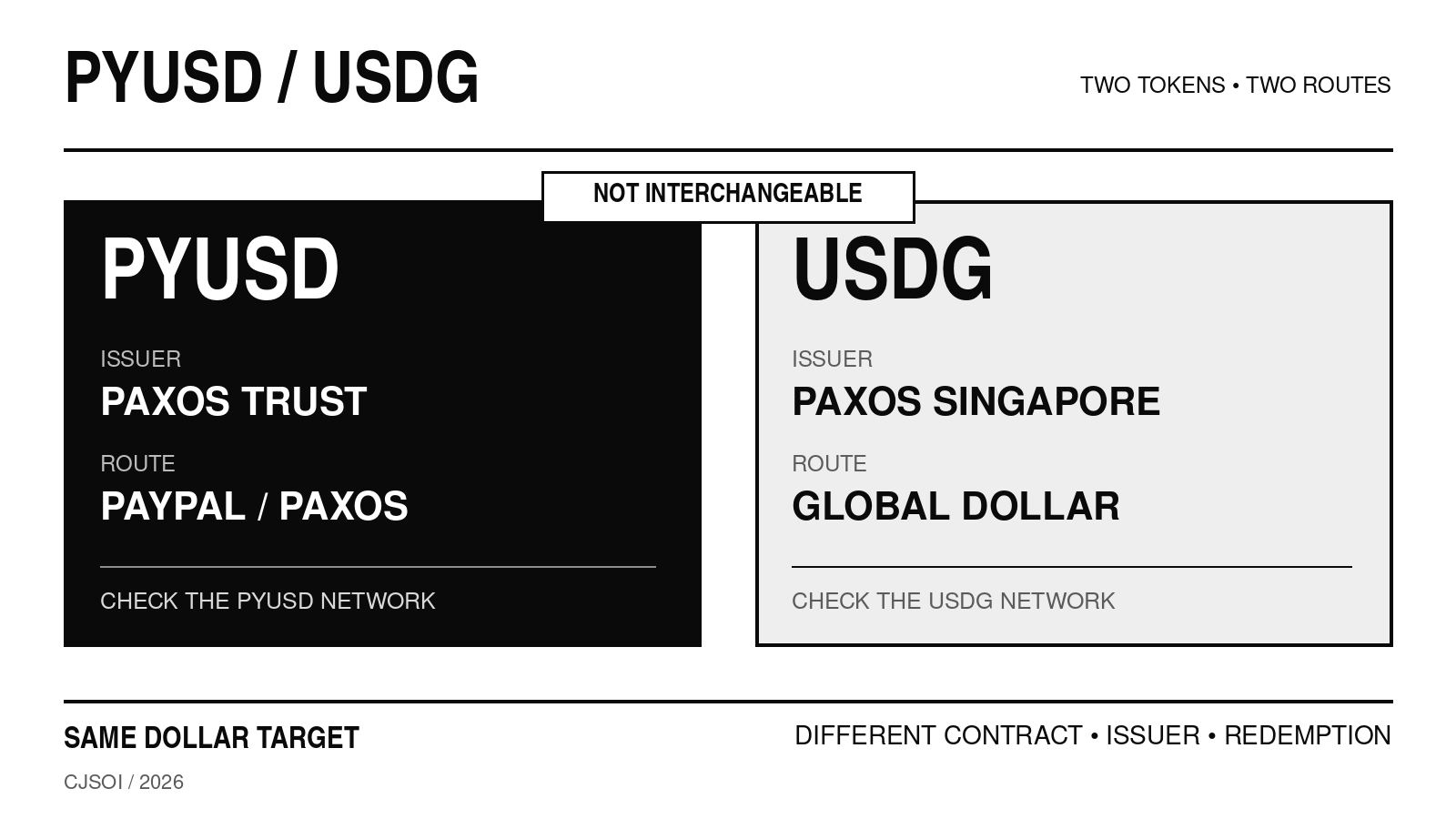
PYUSD and USDG share a dollar target but differ in issuer, networks, product access and direct redemption routes.
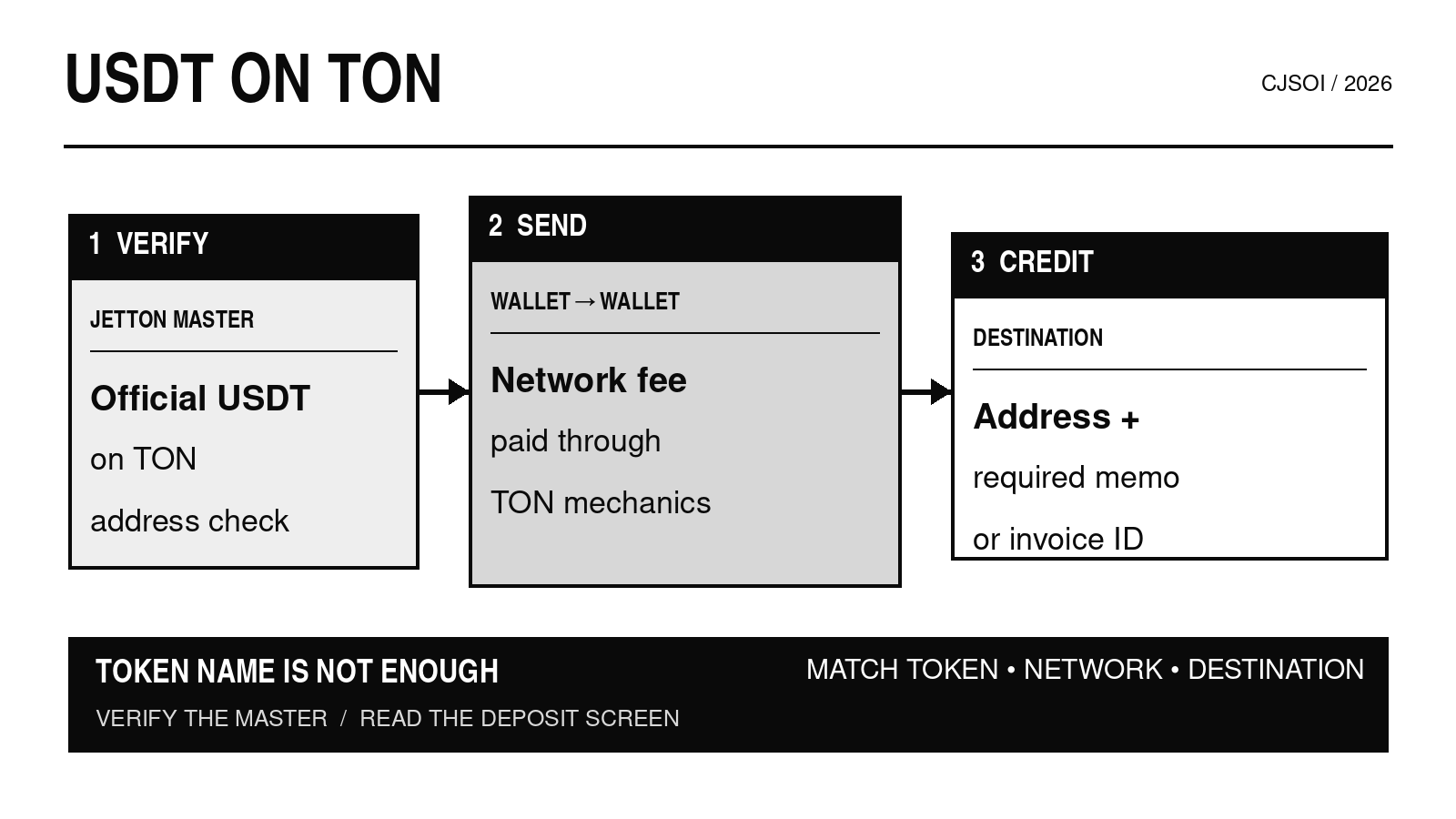
Send USDT on TON by verifying the jetton master, matching the deposit network and following any memo requirement.
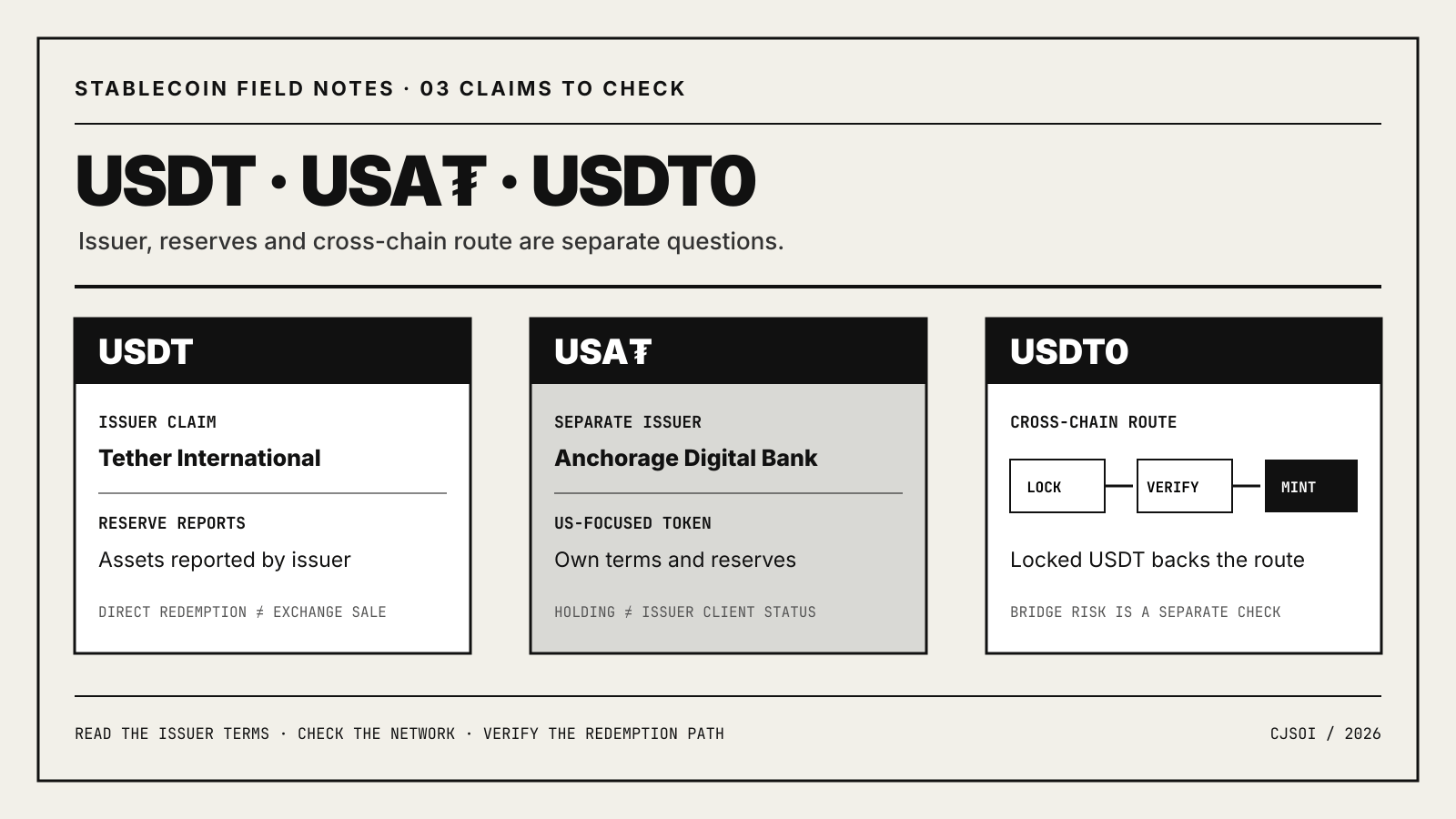
USDT, USA₮ and USDT0 share a dollar target but differ in issuer, redemption rights and cross-chain risk.
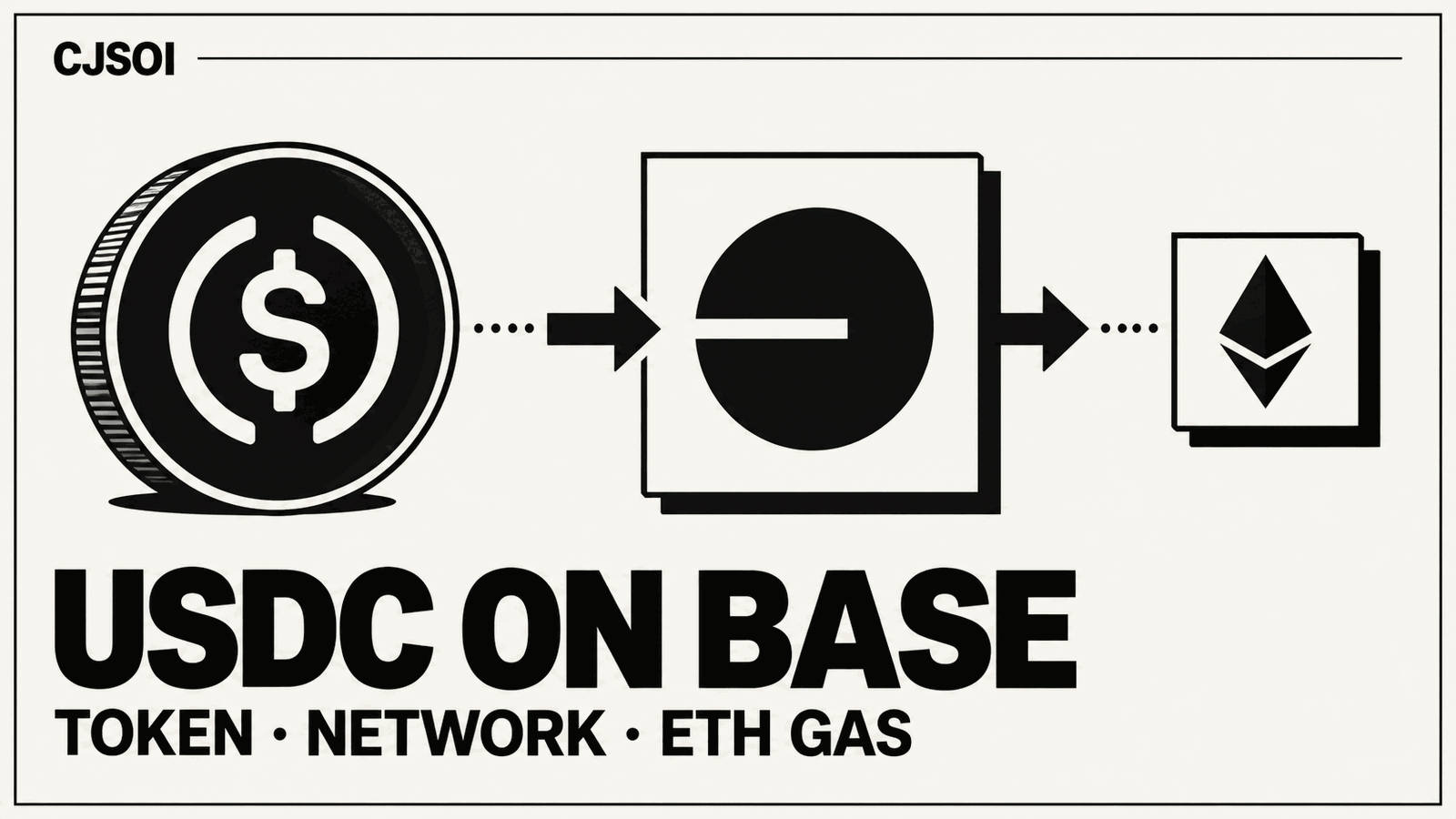
How to send USDC on Base, verify the contract and network, keep ETH for gas, and avoid unsupported deposits.
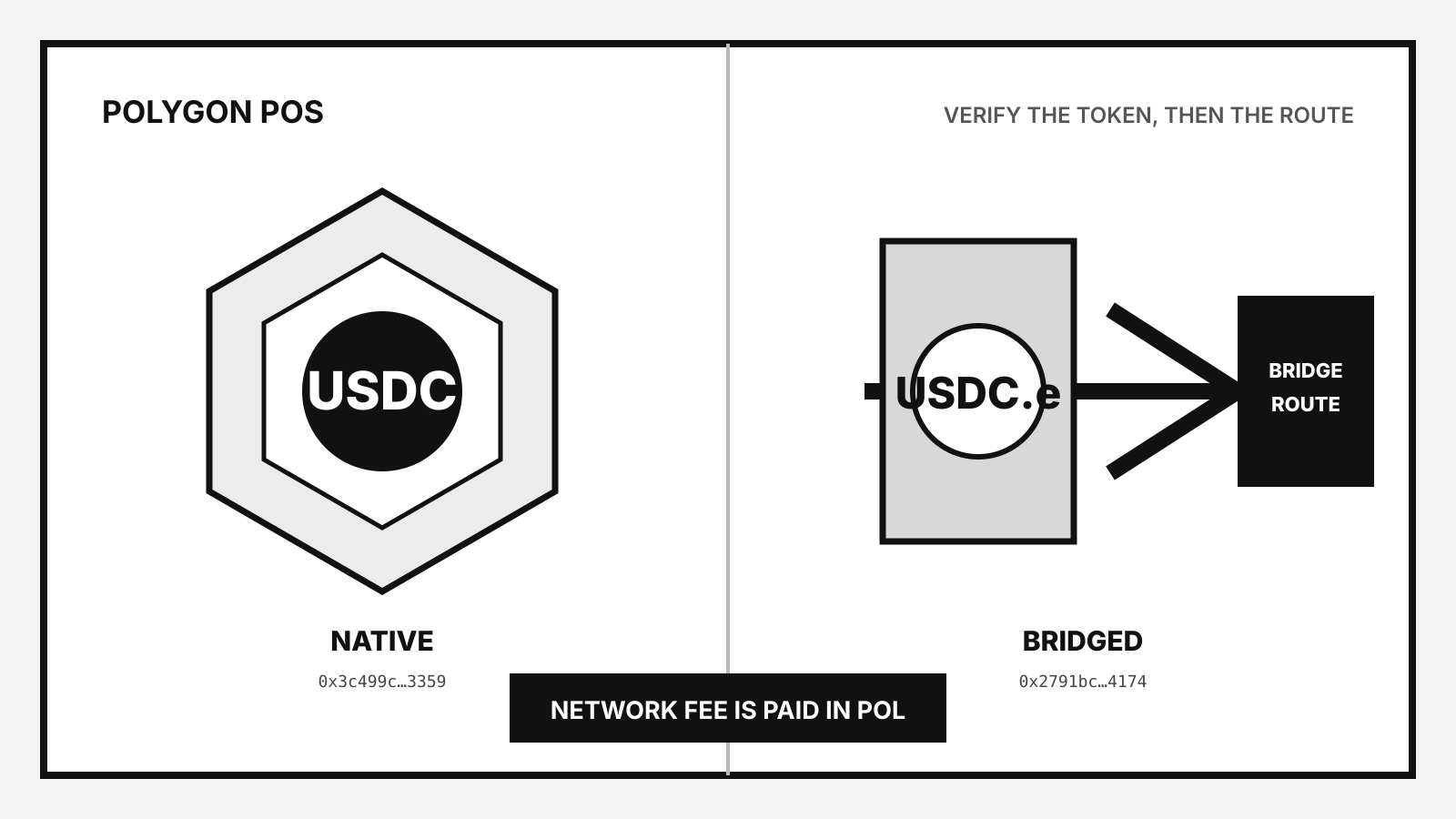
Check native USDC, USDC.e, Polygon PoS gas in POL and destination support before sending.
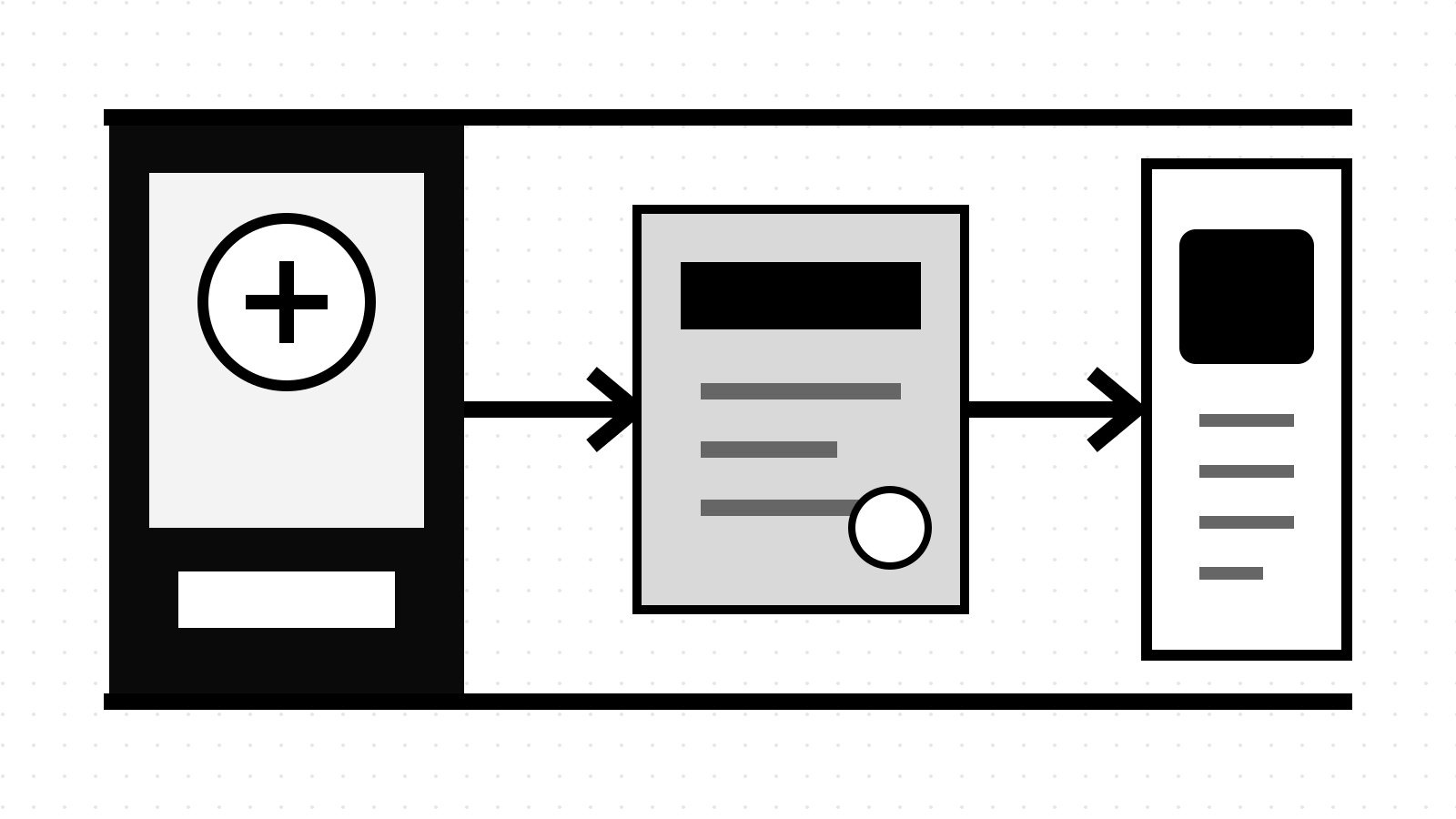
A stablecoin checkout needs a payment intent, supported chain, settlement record, refund policy and reconciliation.
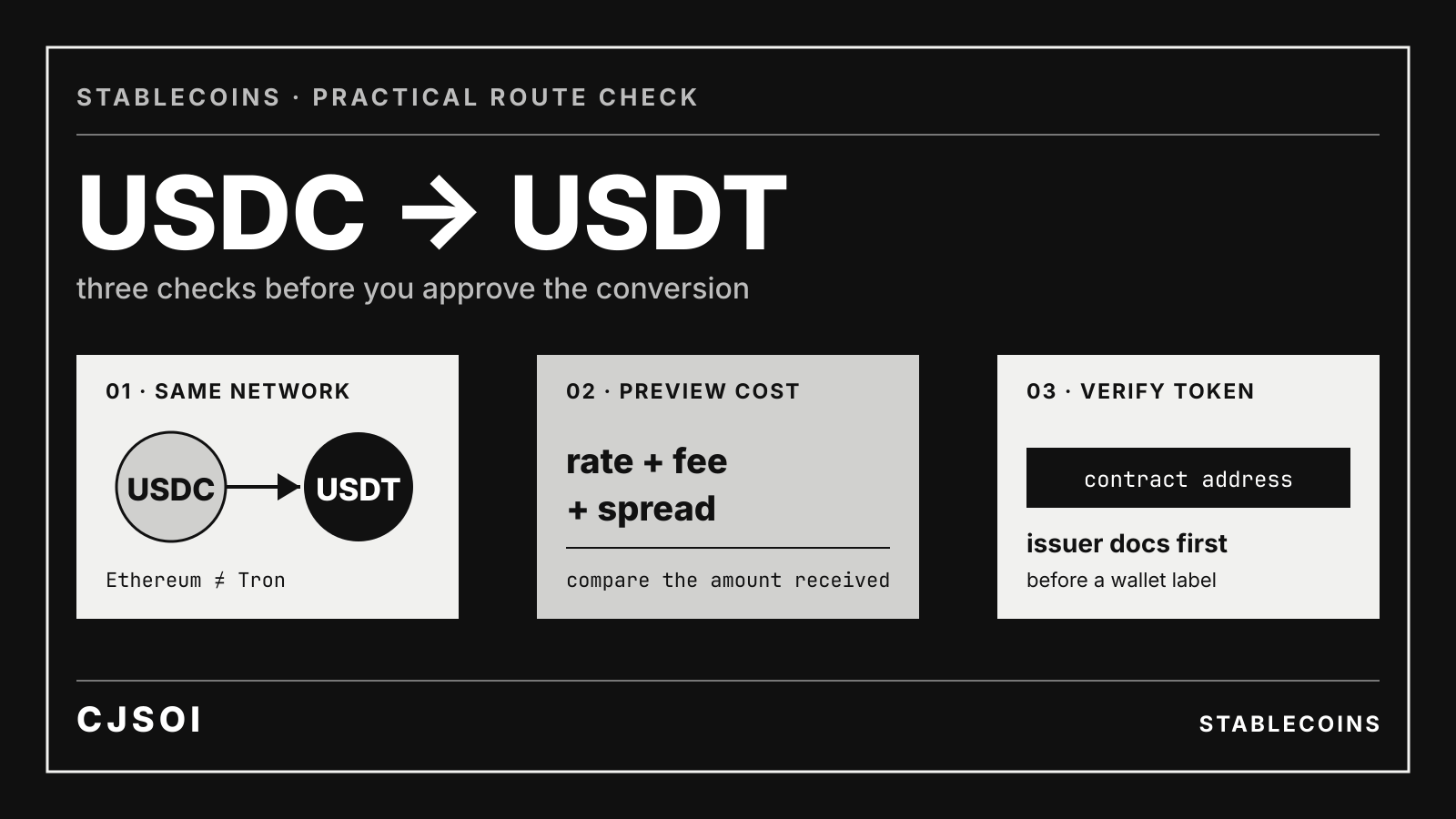
A practical USDC-to-USDT checklist for exchange conversions, wallet swaps, fees and network matching.
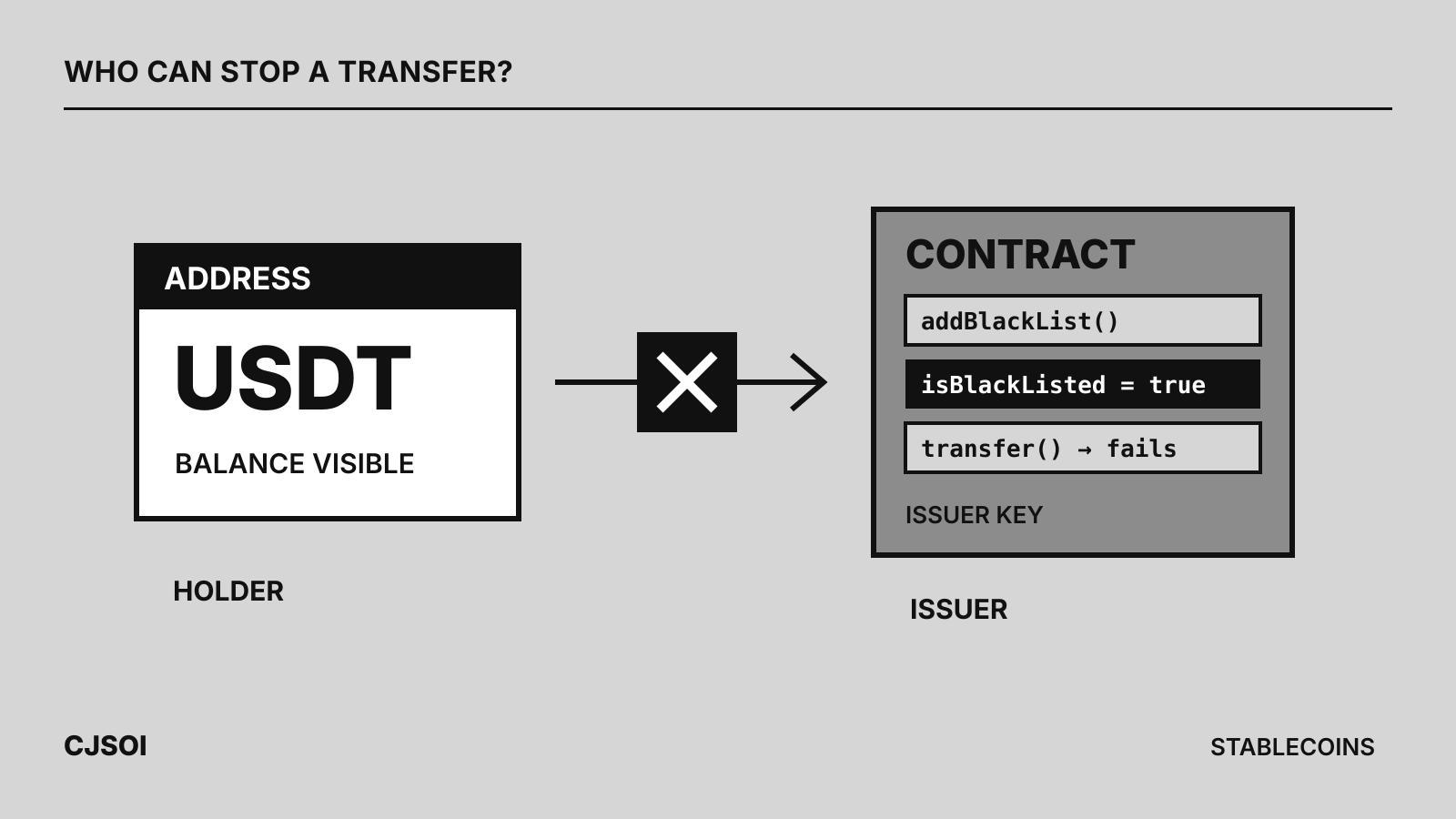
Yes, and so can USDC. The power sits in the issuers' terms and in the token contracts themselves.
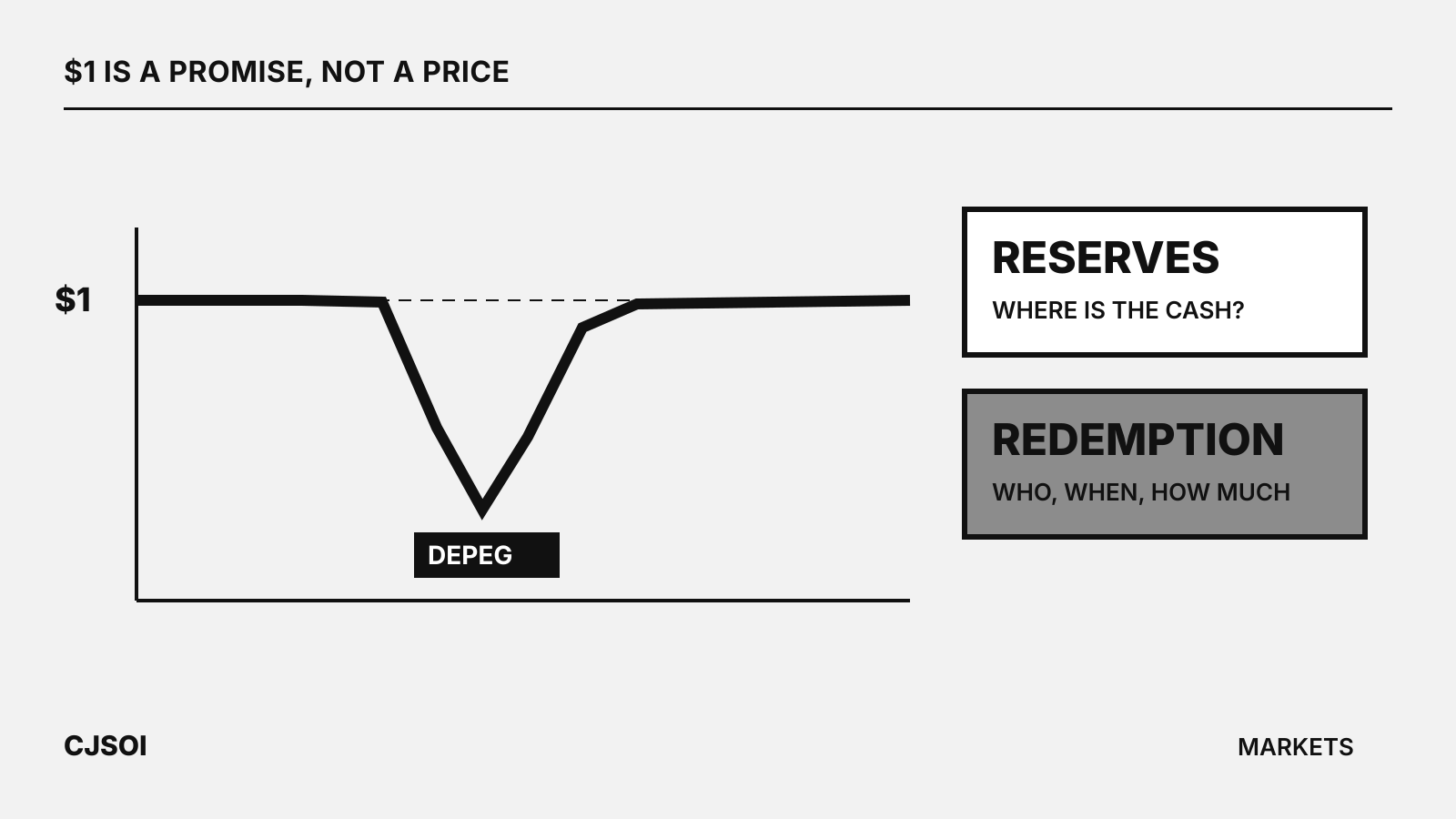
The $1 is a redemption promise, not a set price. USDC in 2023 and UST in 2022 show how it bends and breaks.
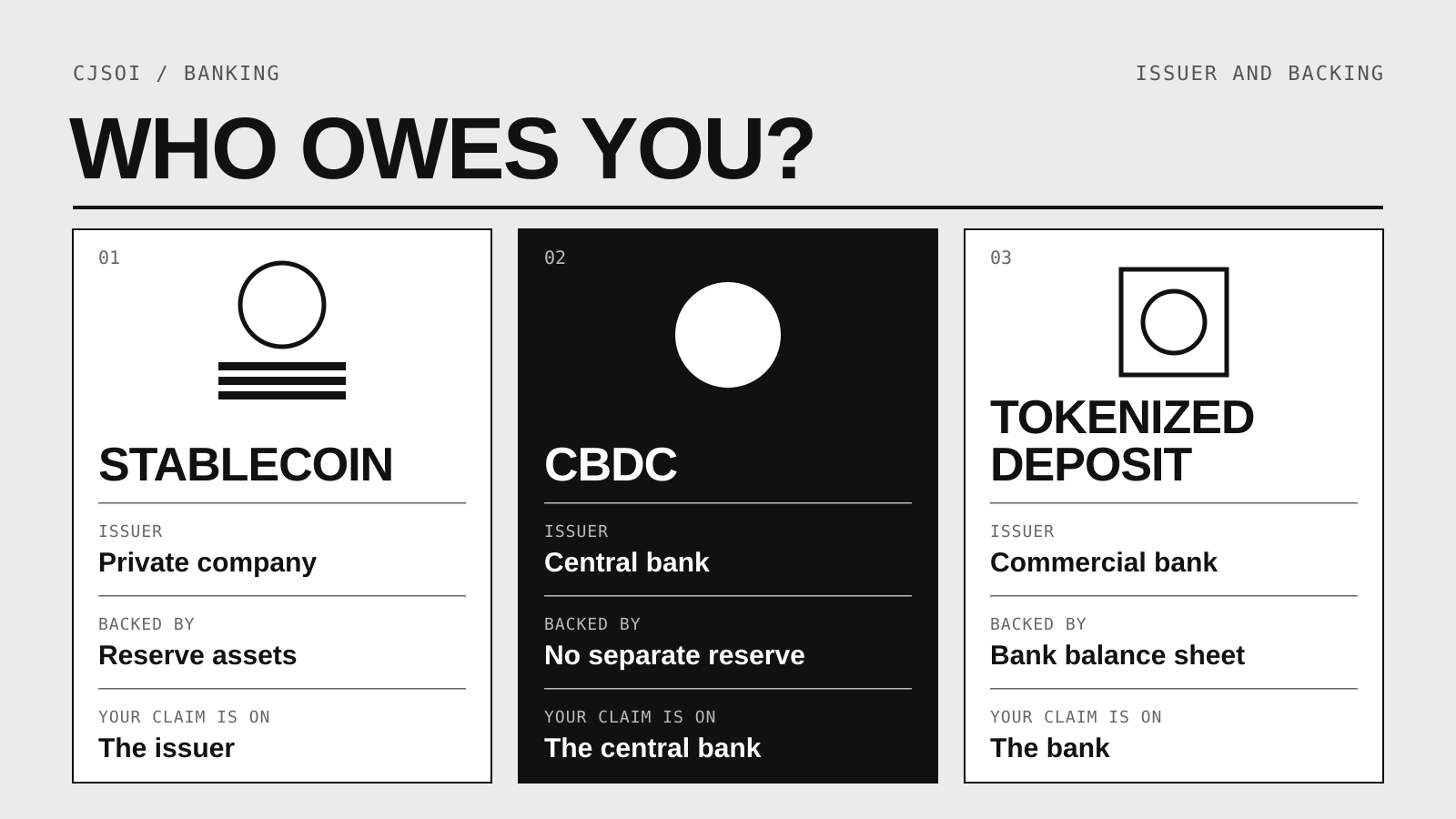
Three kinds of digital money, three different debtors: a private issuer, a central bank or a commercial bank.
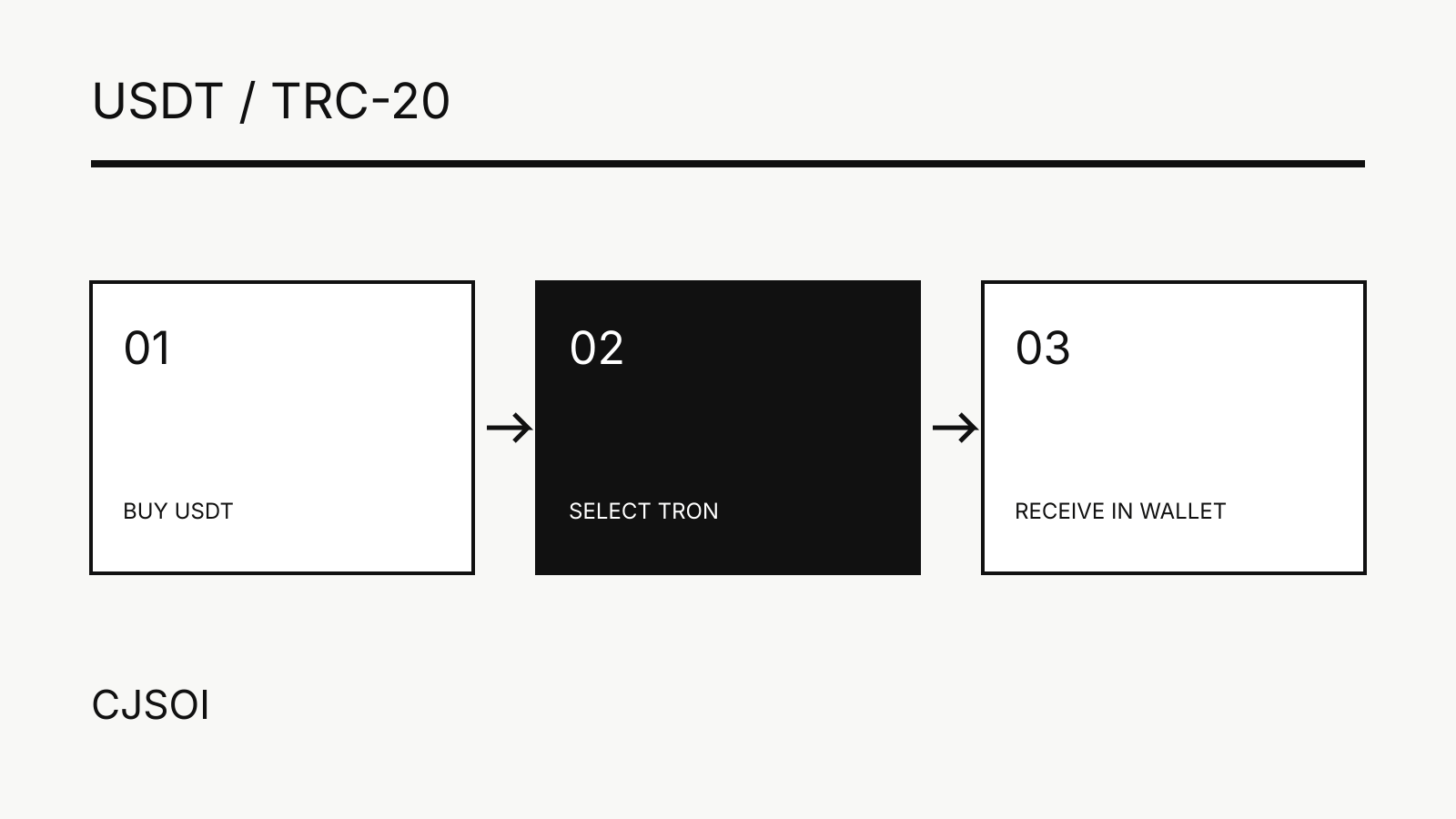
Buy USDT where TRON is a withdrawal network, then withdraw it on TRON: steps, holds, fees and the TRX you need next.
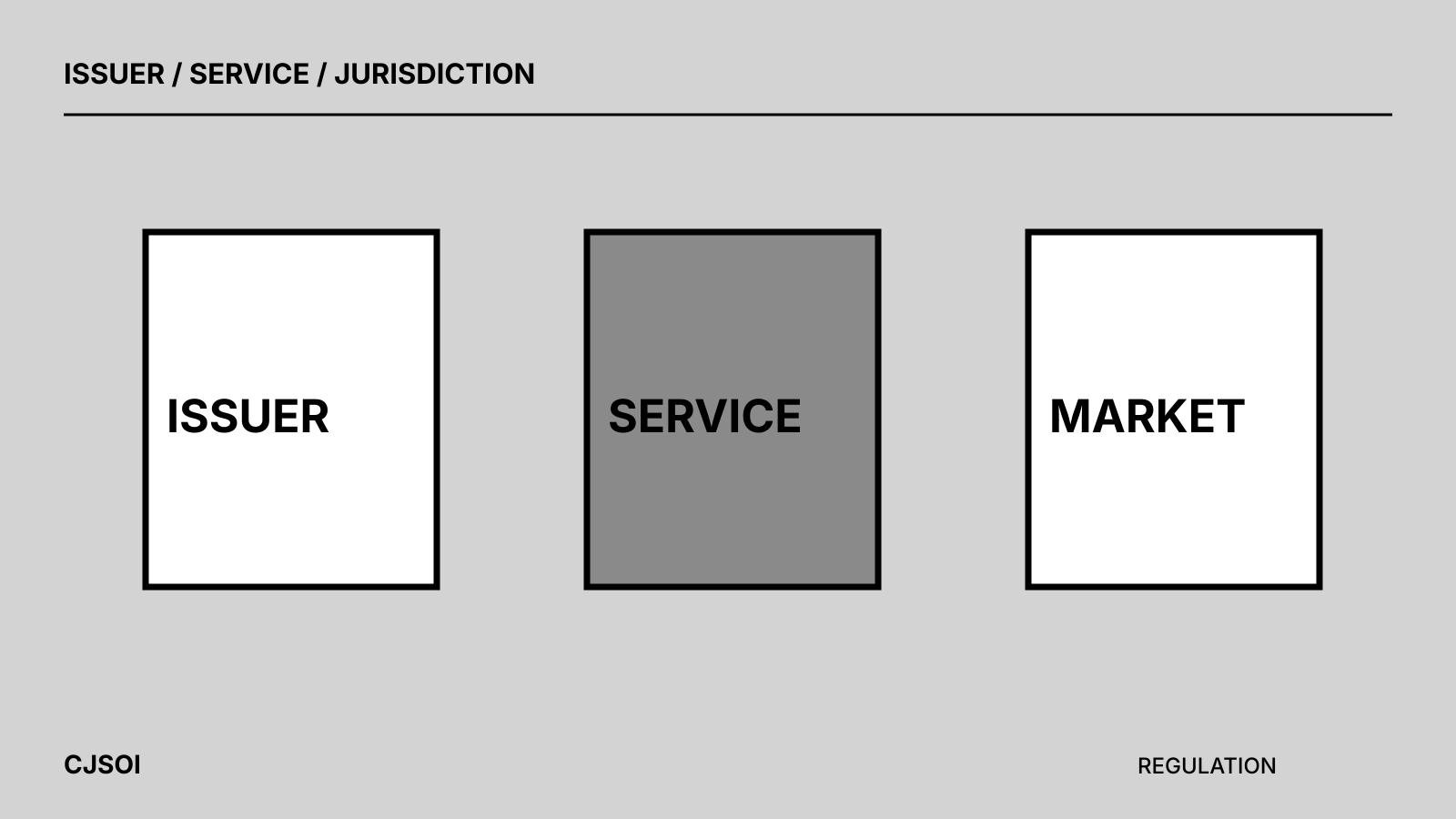
The issuer, the service and the customer's market can fall under different rules and authorities.
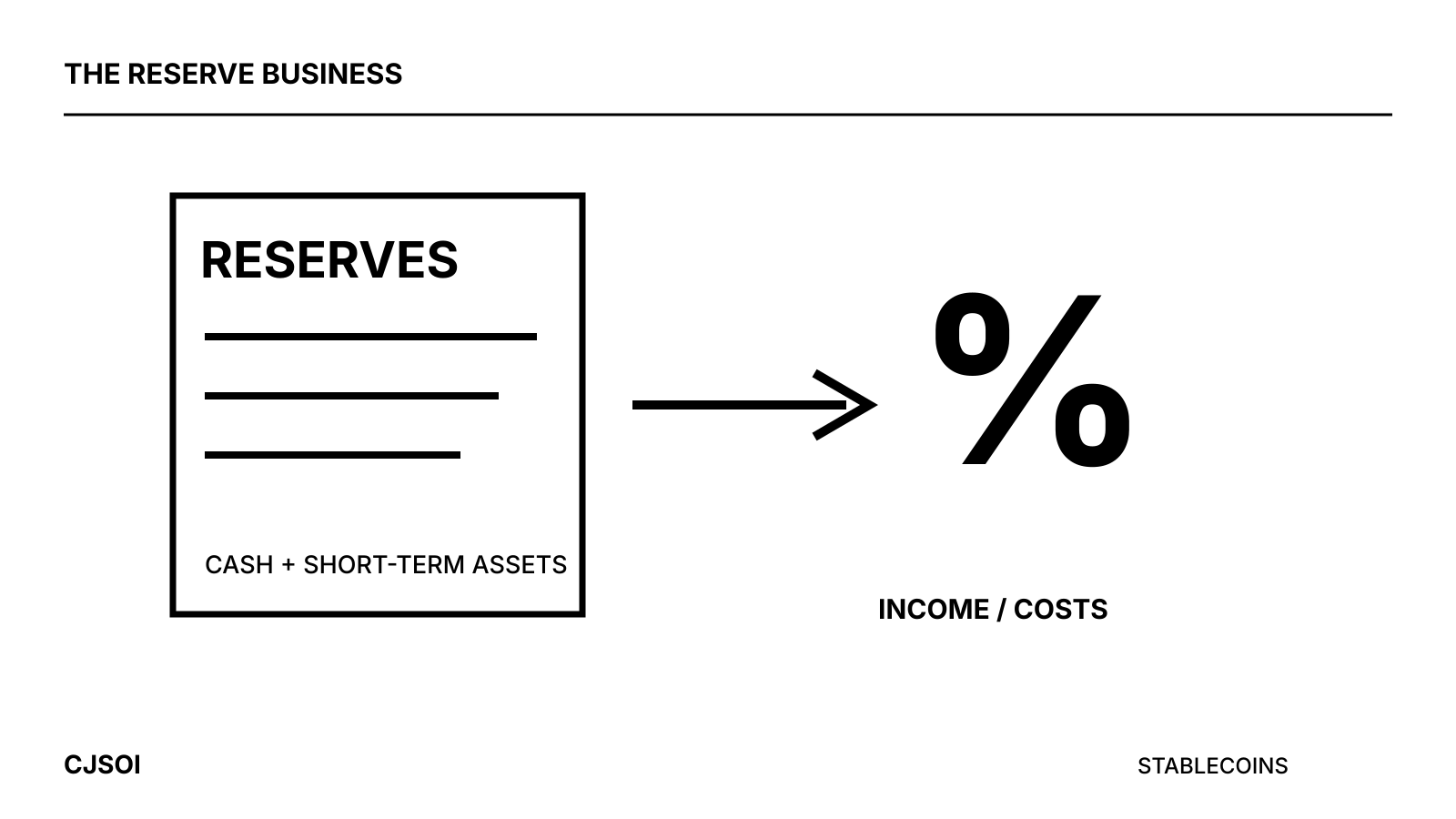
How stablecoin issuers make money: reserve income, distribution costs and interest-rate exposure.
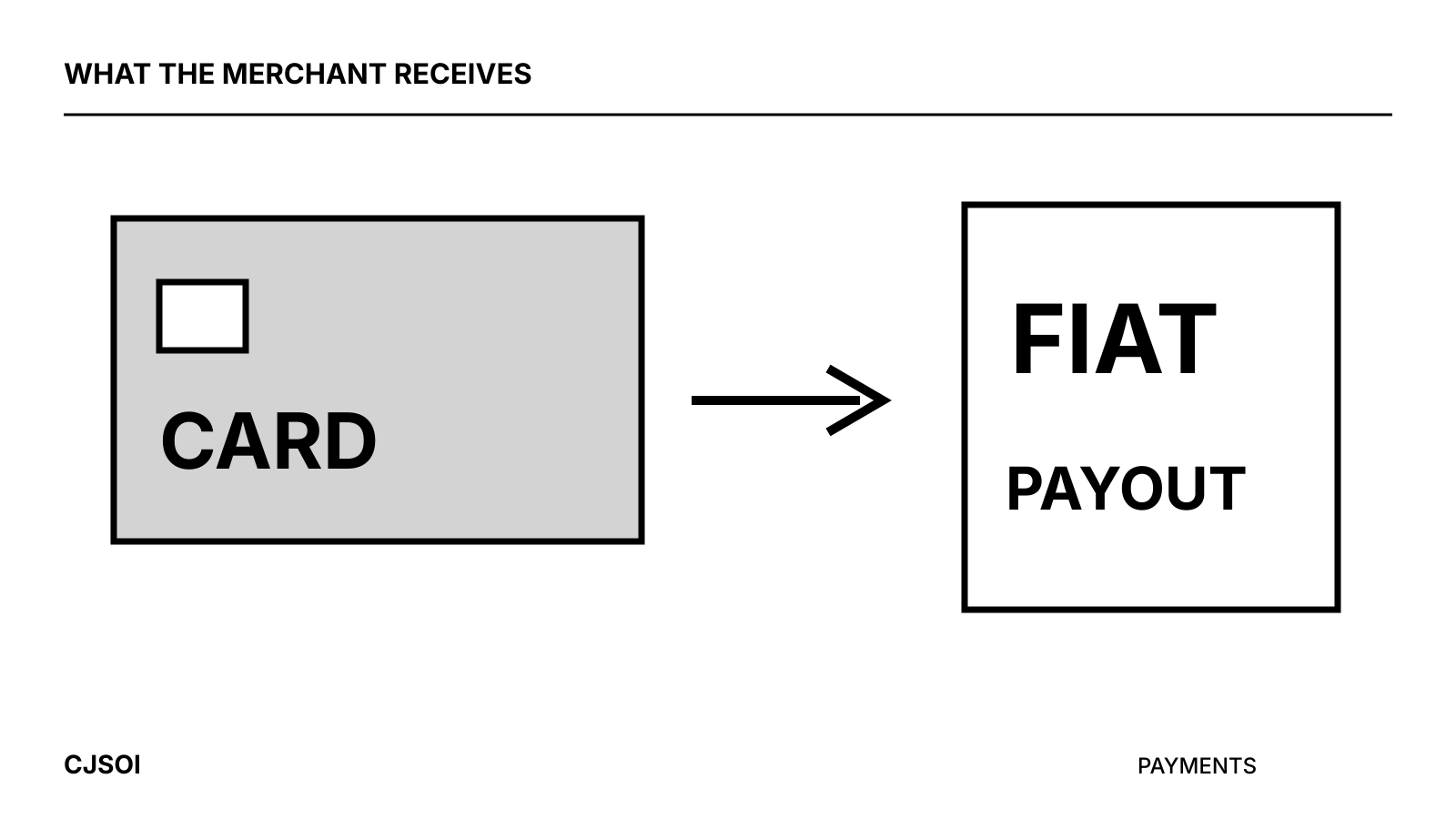
A card funded with stablecoins does not mean the shop receives a blockchain transfer.
Stablecoins & Markets
Coverage focuses on reserves, redemption and the flow of money through digital-asset markets.
View articles
Banking & Payments
Coverage follows settlement, custody and the costs of moving money across borders.
View articles
Blockchain & Regulation
Coverage explains wallets, network infrastructure and the rules governing digital assets.
View articles