CJSOI

Stablecoins, Banking & Blockchain

Explainers & Analysis: Banking

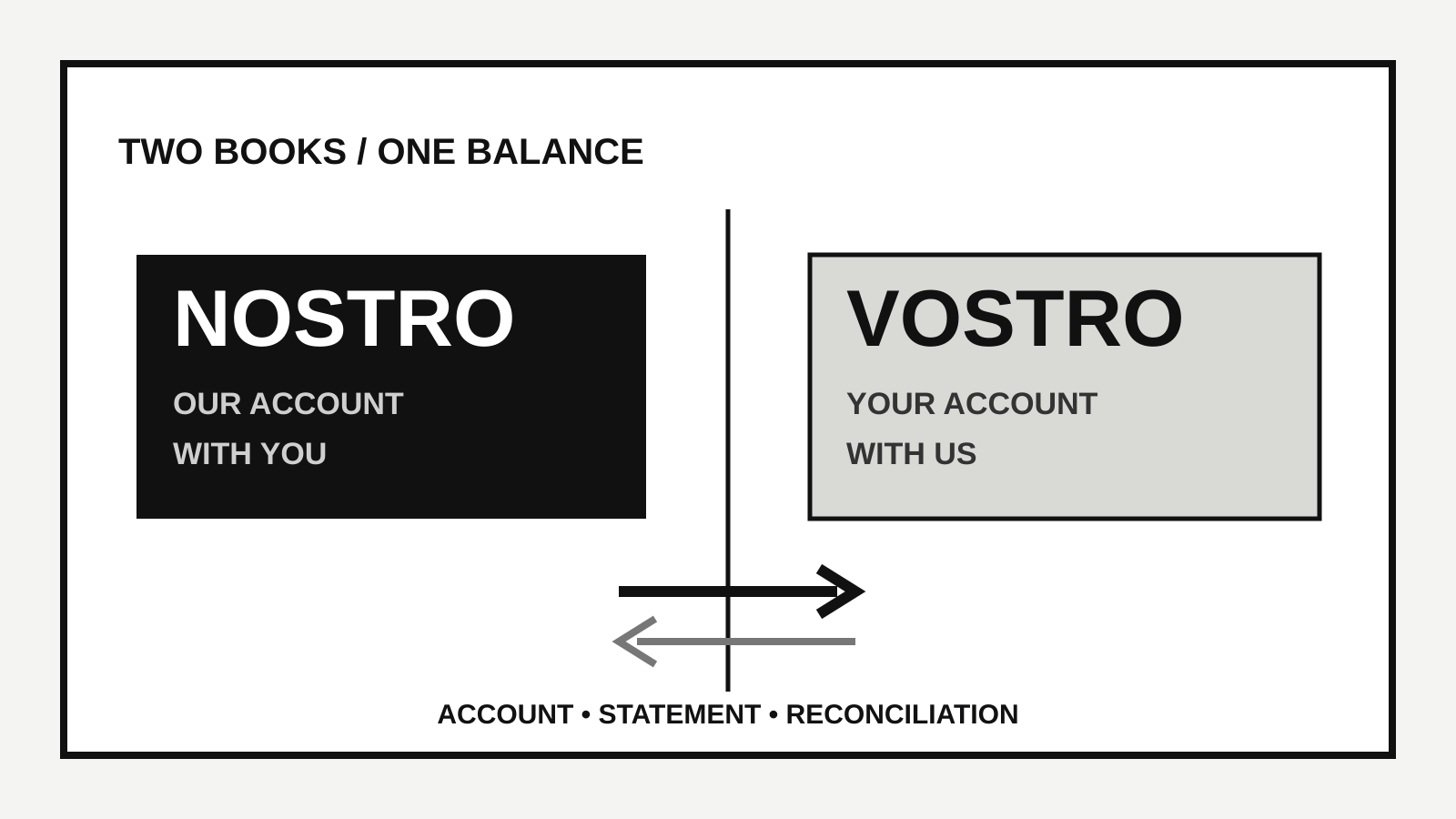
Diagram of one balance in two bank ledgers: nostro, our account with you, and vostro, your account with us, linked by arrows for account, statement and reconciliation
Banking ·

Nostro vs Vostro Accounts: One Balance, Two Bank Ledgers

Why nostro and vostro are two views of one correspondent account, and how banks reconcile the balance.
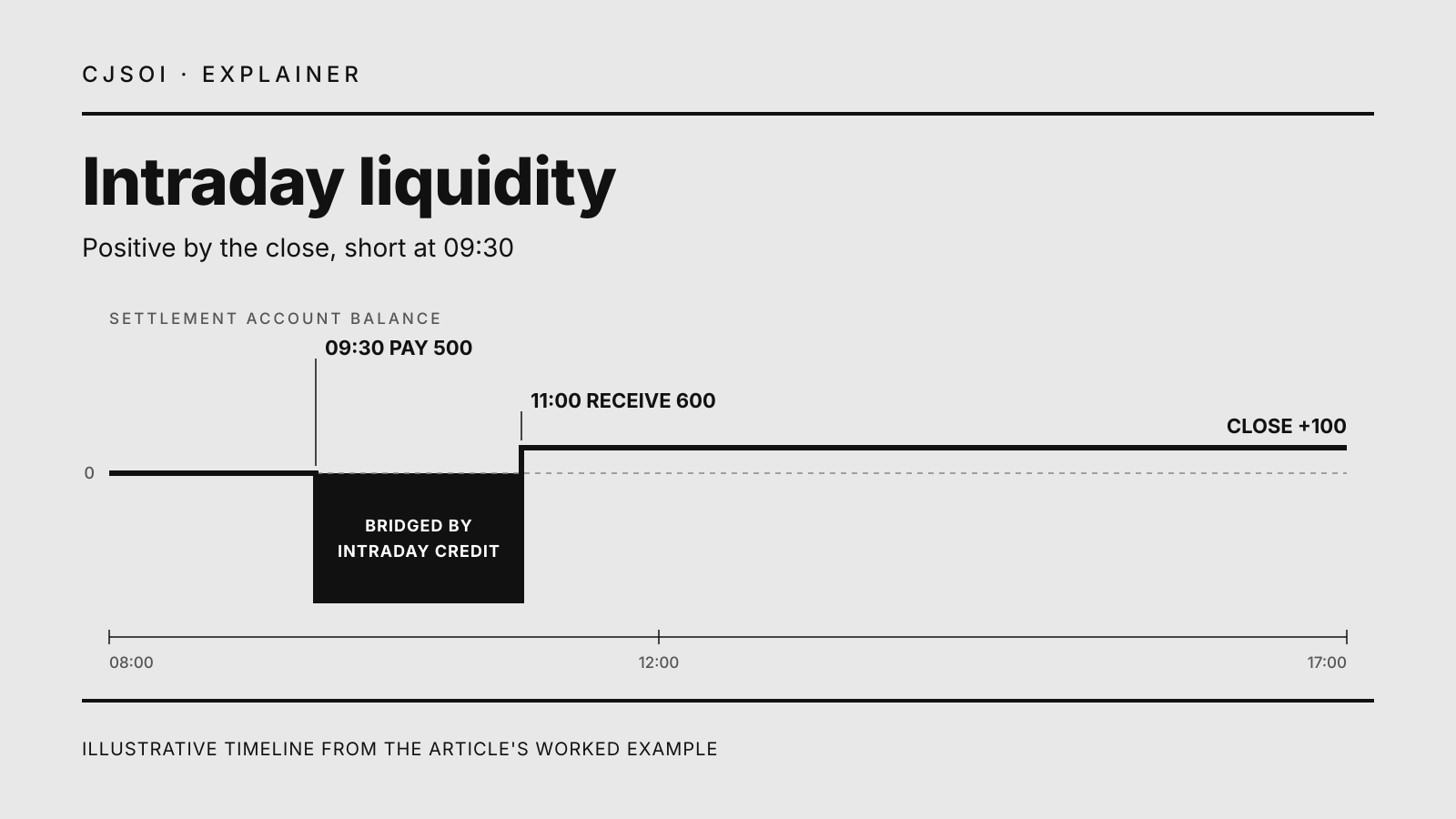
Black-and-white timeline of a settlement account balance: a payment of 500 at 09:30 pushes it below zero, the gap is bridged by intraday credit, and a receipt of 600 at 11:00 leaves it at +100 by the close.
banking ·

Intraday Liquidity: How Banks Fund the Payment Day

Why a bank can be liquid at day-end but still need funds before a payment deadline.
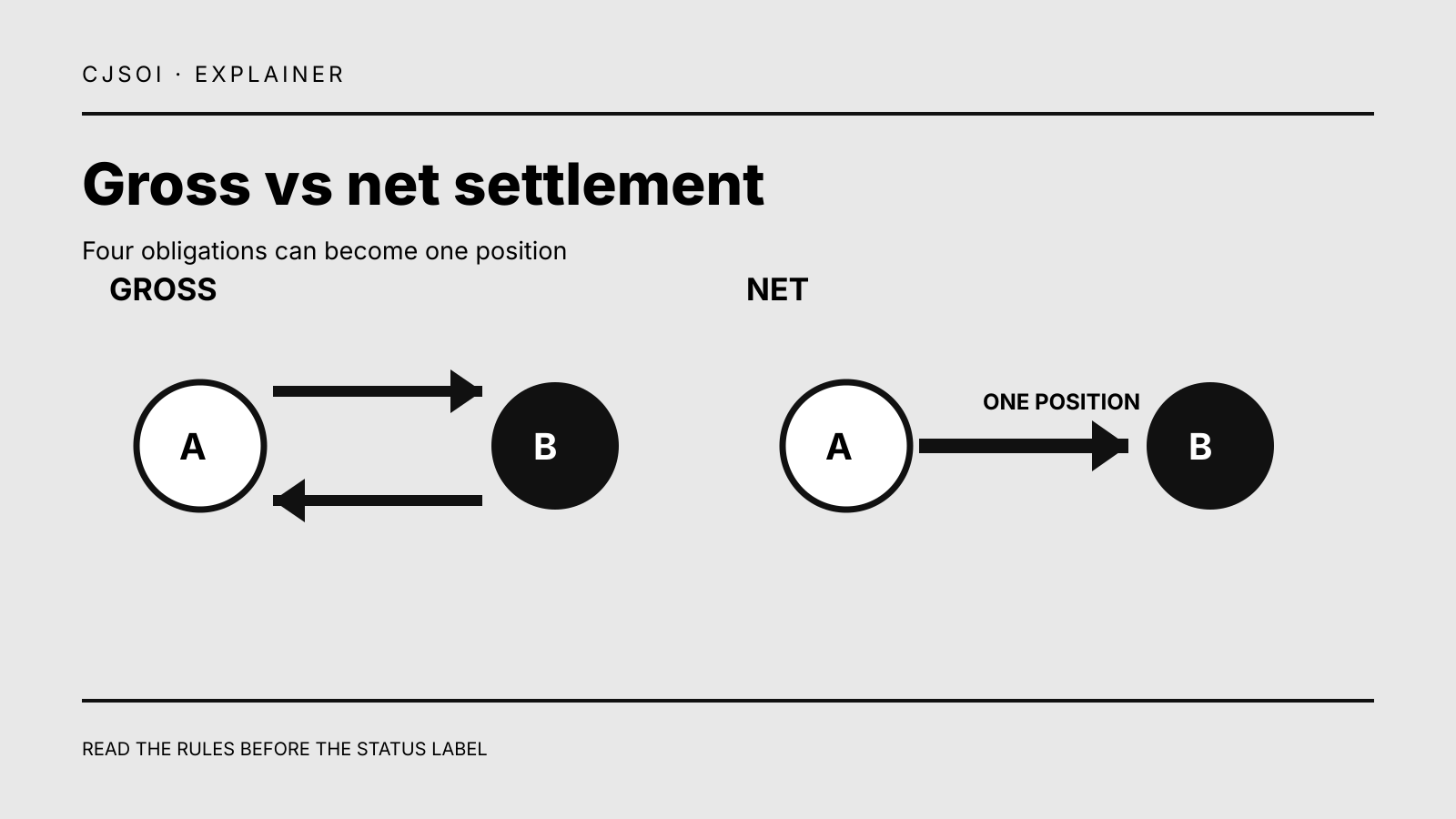
Diagram comparing gross and net settlement: on the left, banks A and B exchange two separate payments; on the right, the obligations are offset into one net position from A to B.
payments ·

Gross vs Net Settlement: How Payment Systems Move Money

Gross settlement moves each payment; net settlement offsets obligations before money moves.
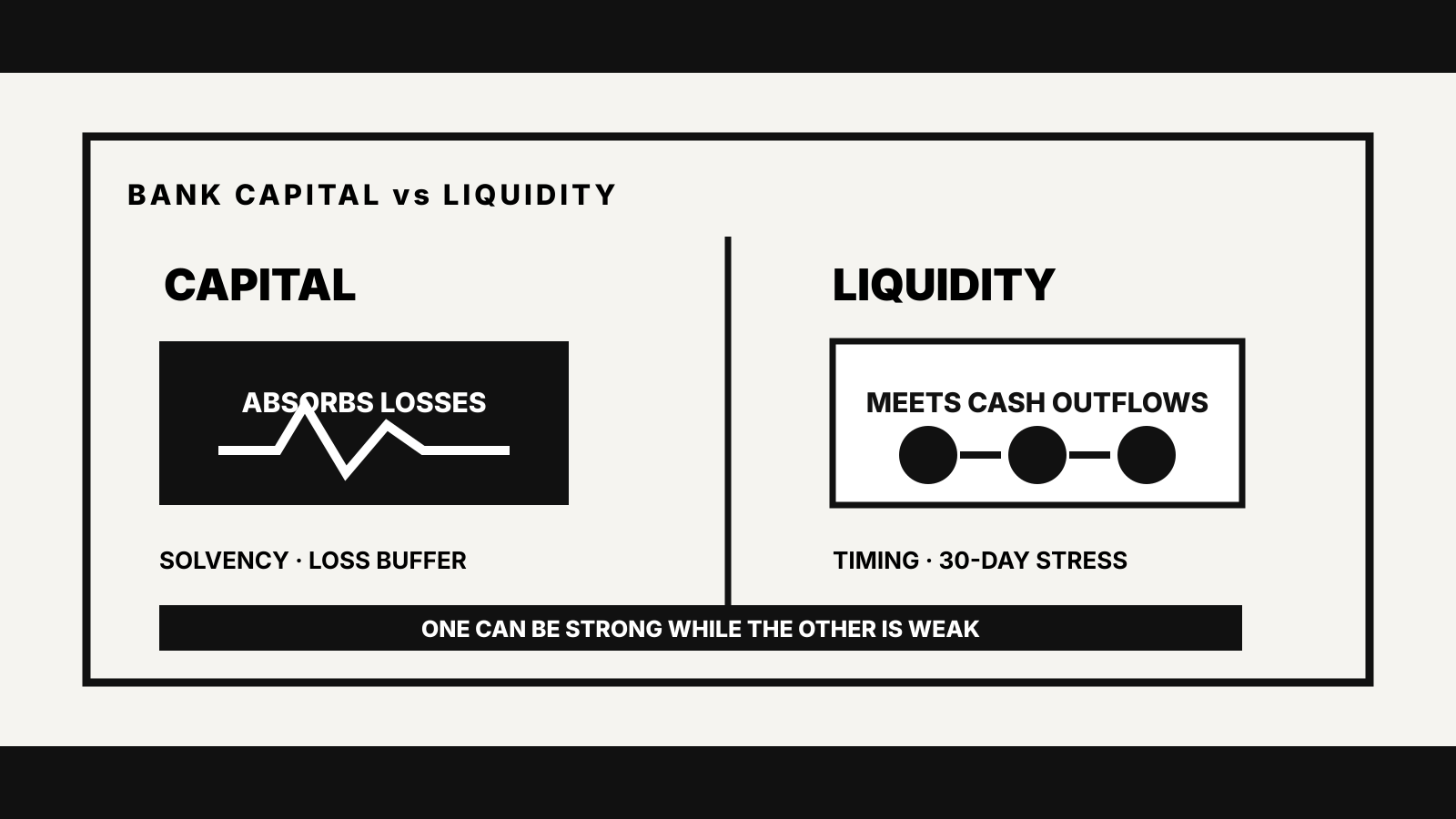
Monochrome comparison showing bank capital absorbing losses and bank liquidity meeting cash outflows over a 30-day stress period.
banking ·

Bank Capital vs Liquidity: What Each Buffer Does

Capital absorbs losses. Liquidity meets cash outflows. A bank can have enough of one and still run short of the other.
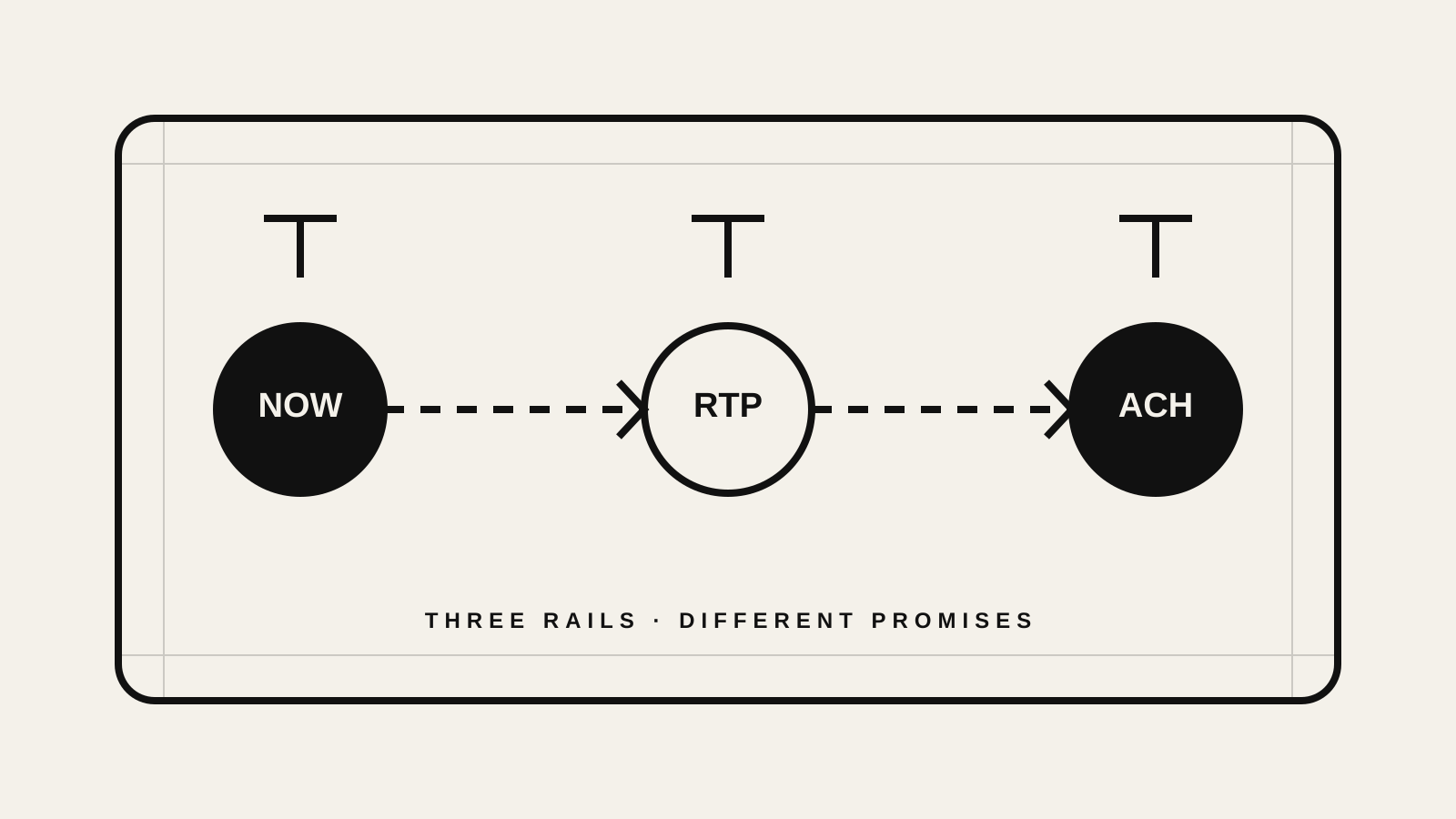
Three US payment rails connecting FedNow, RTP and ACH nodes
FedNow ·

FedNow vs RTP vs ACH: How US Bank Payments Move

FedNow and RTP settle instantly; ACH moves credits and debits in batches. Compare reach, timing and finality.
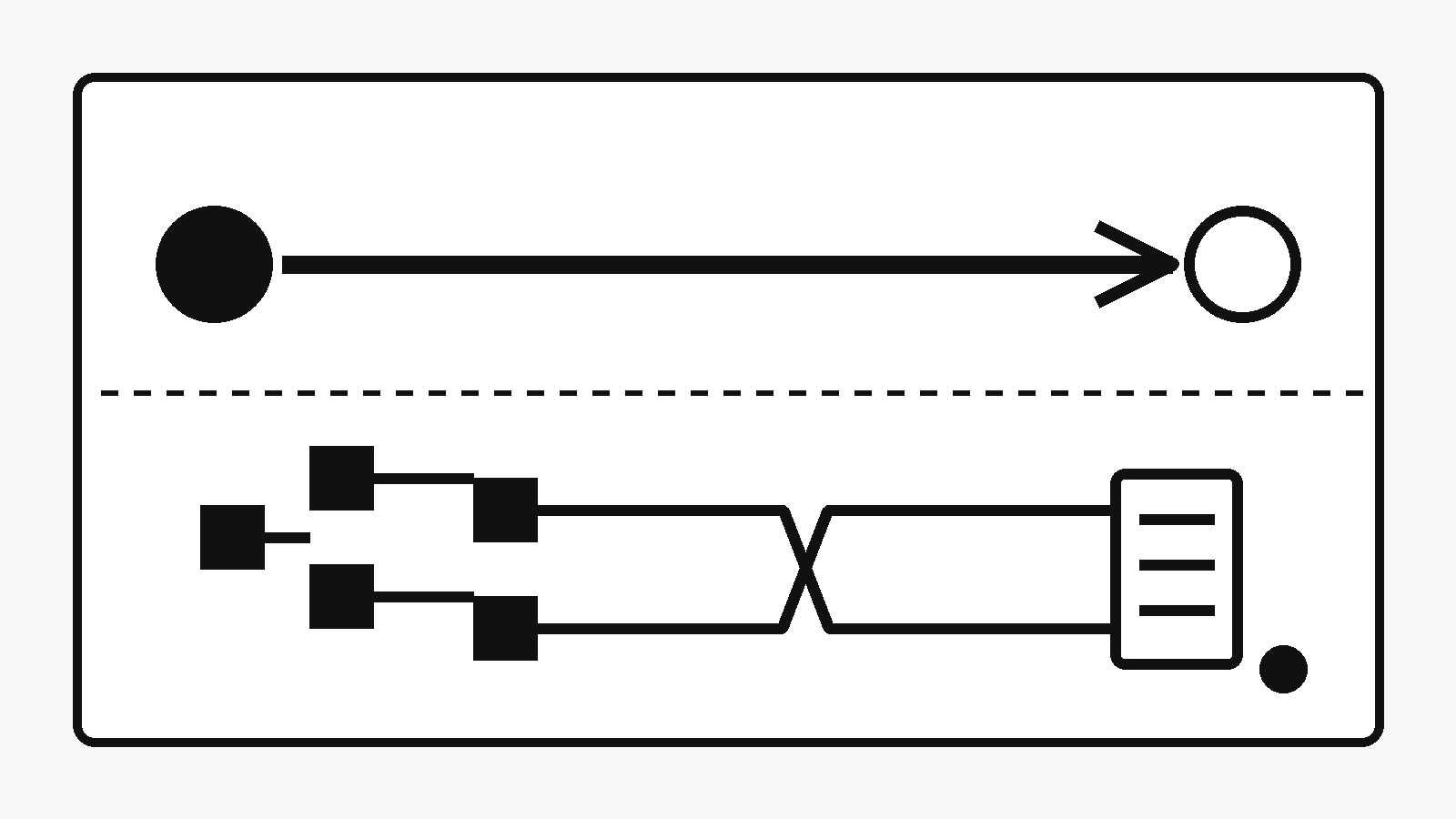
Fedwire gross settlement and CHIPS netting paths compared
Fedwire ·

Fedwire vs CHIPS: How High-Value Dollar Payments Settle

Fedwire settles payments one by one; CHIPS uses liquidity-saving netting. Here is what that changes in practice.
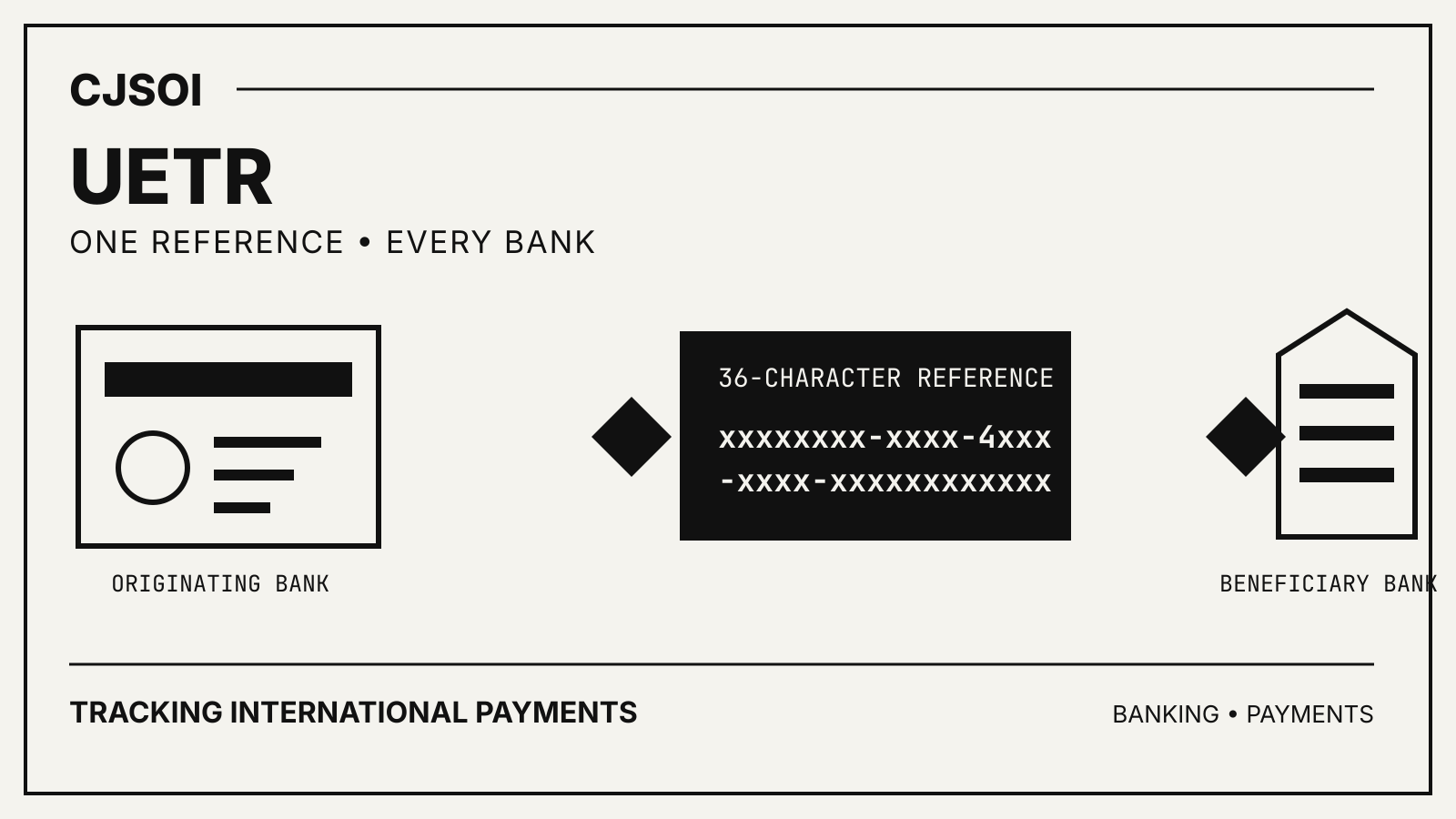
Monochrome UETR diagram showing one 36-character payment reference passed between originating and beneficiary banks
UETR ·

UETR Payment Tracking: How Banks Trace a Swift Transfer

How a 36-character UETR helps banks trace a Swift payment—and what it cannot prove.
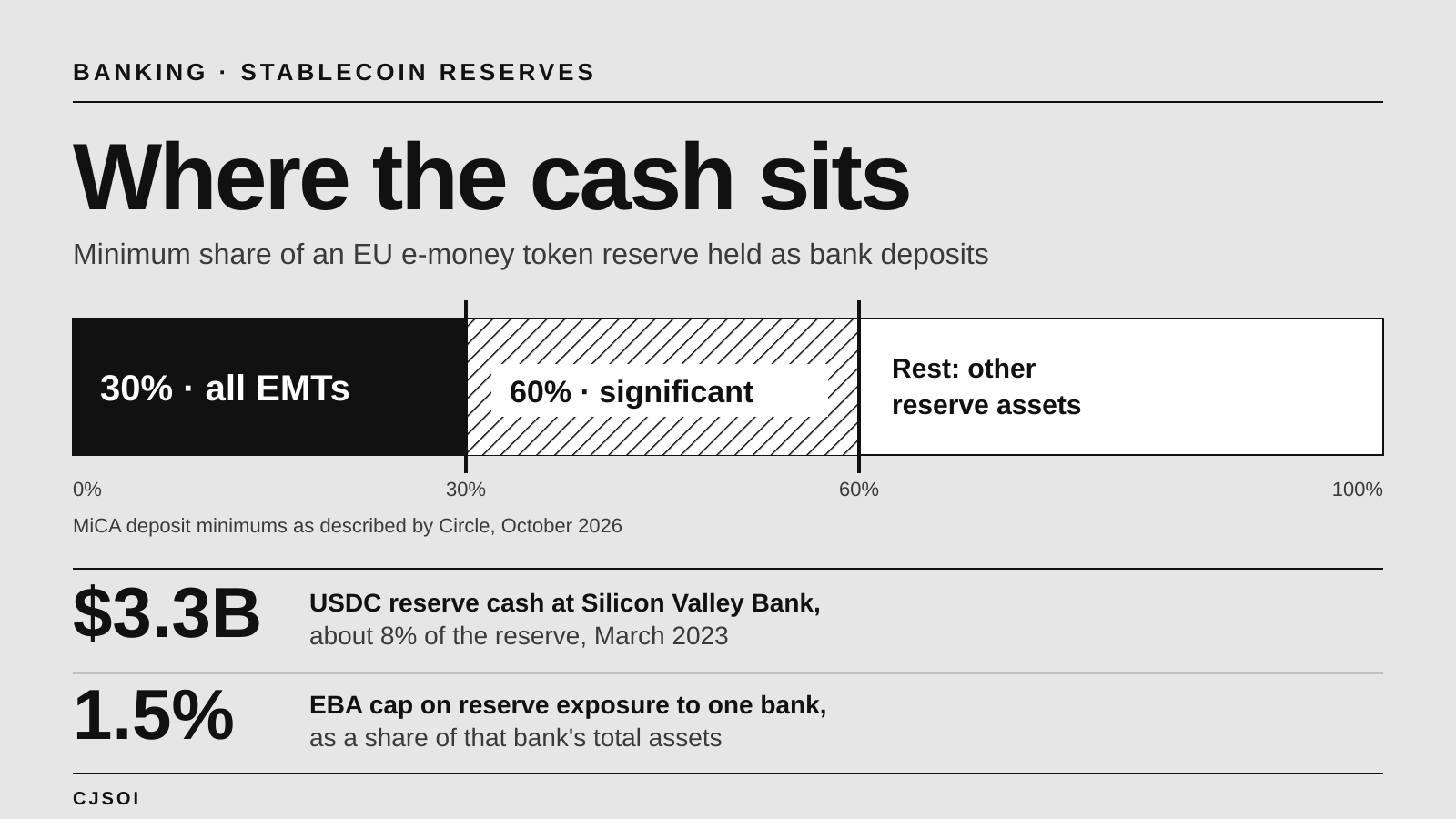
Bar diagram of the minimum share of an EU e-money token reserve held as bank deposits, 30% for all issuers and 60% for significant tokens as described by Circle, with two figures below: $3.3 billion of USDC reserve cash at Silicon Valley Bank in March 2023, about 8% of the reserve, and the EBA's 1.5% cap on reserve exposure to one bank.
Banking ·

Stablecoin Reserves in Bank Deposits: Why Issuers Hold Cash at Banks

Redemptions are paid in bank money, so issuers keep part of the reserve at banks. MiCA sets a minimum; March 2023 showed the risk.
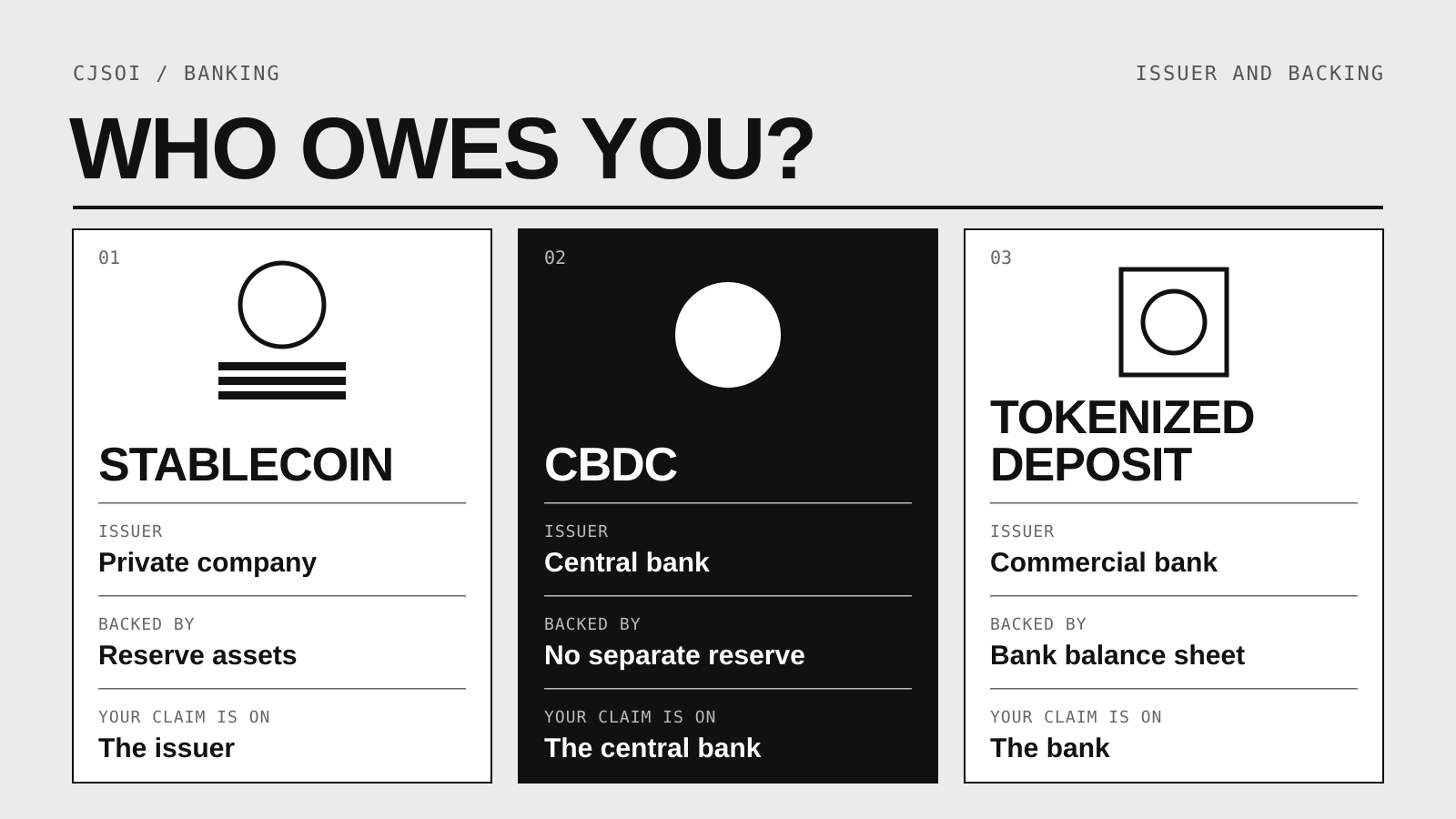
Three-column comparison of a stablecoin, a CBDC and a tokenized deposit: the issuer is a private company, a central bank or a commercial bank; the backing is reserve assets, no separate reserve or the bank's balance sheet; the holder's claim is on the issuer, the central bank or the bank.
Banking ·

Stablecoin vs CBDC vs Tokenized Deposit: Who Issues It and What Backs It

Three kinds of digital money, three different debtors: a private issuer, a central bank or a commercial bank.
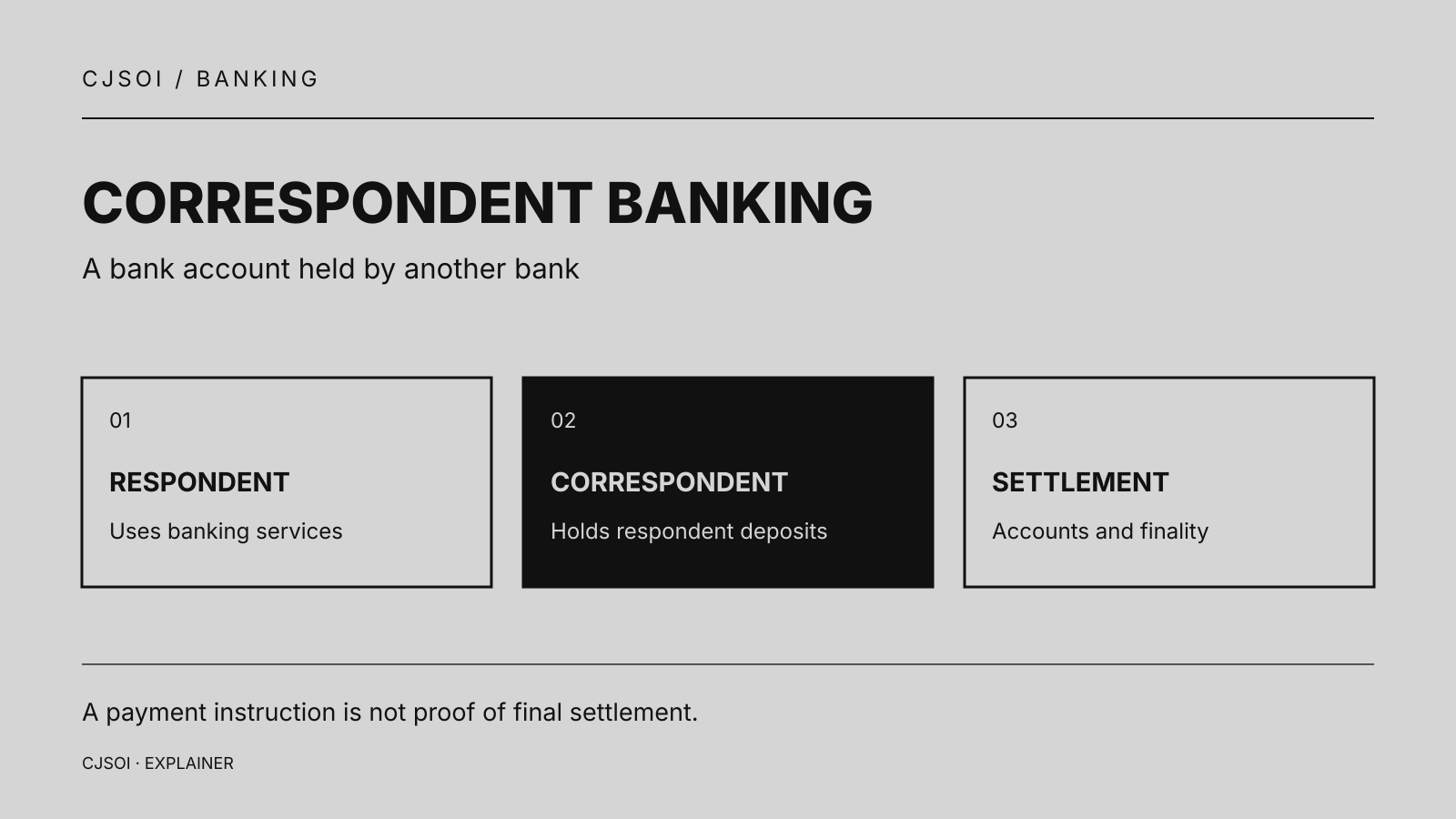
Correspondent banking roles: respondent, deposit-holding correspondent and settlement arrangements.
Banking ·

Correspondent Banking: How Banks Use Other Banks to Pay

The accounts and bank relationships behind cross-border settlement, and the risks a payment message cannot remove.
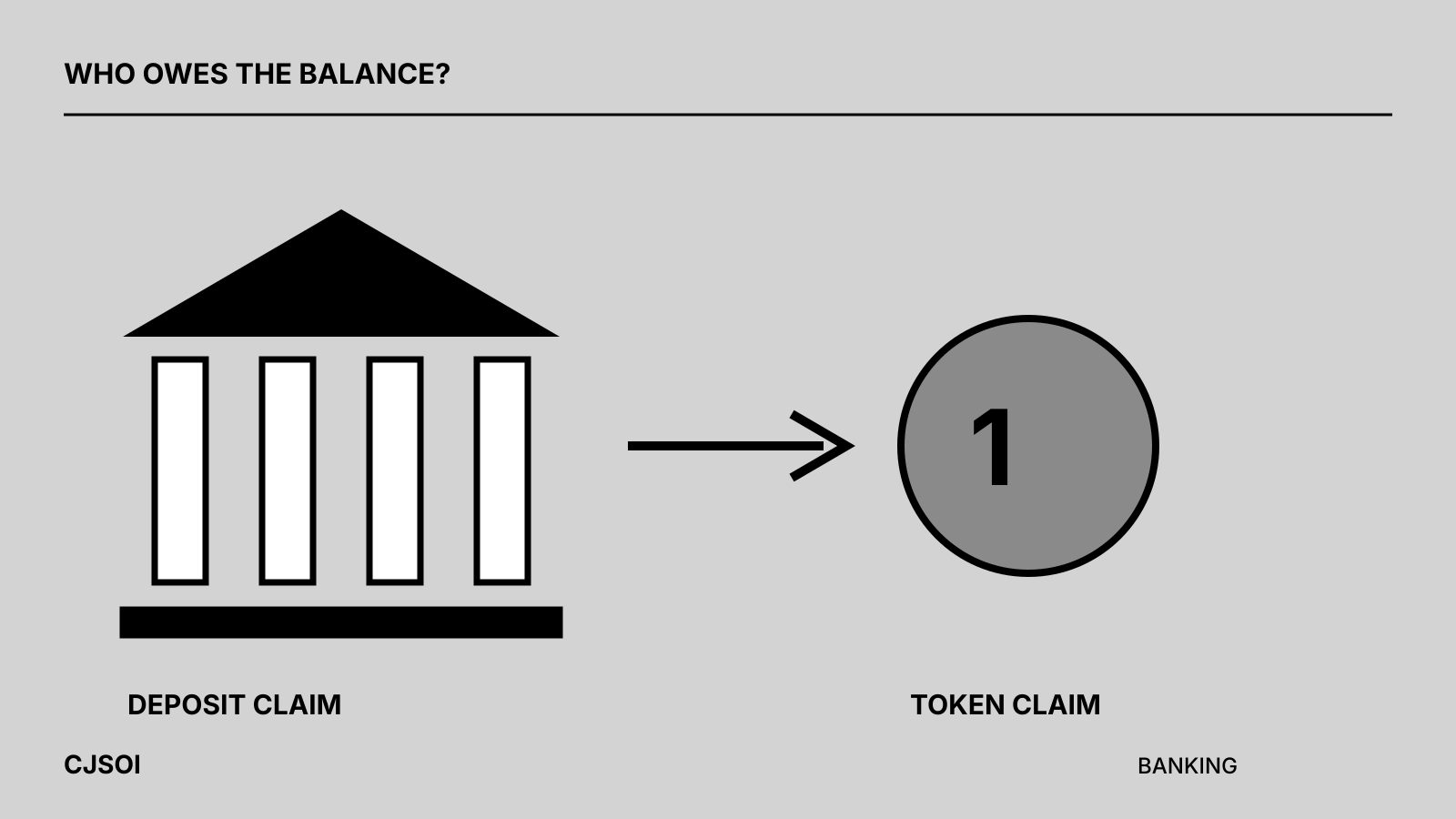
Bank deposit and token claims shown side by side
Banking ·

Tokenized Deposits and Stablecoins: The Difference

A digital token does not tell you who owes the money. Start with the claim behind it.
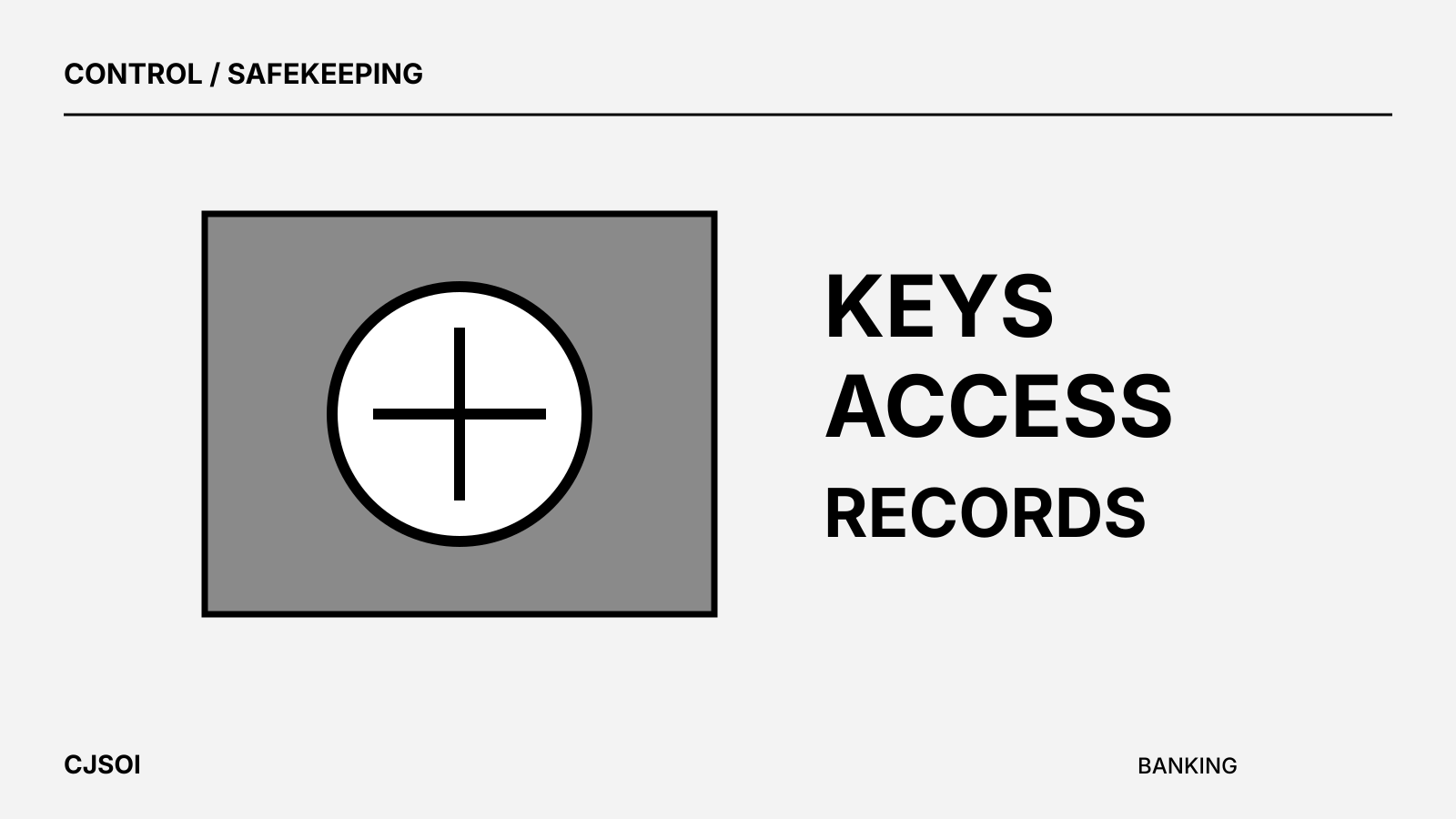
A vault with keys, access and custody records
Banking ·

How Banks Hold Digital Assets for Clients

Custody is about authority, records and recovery—not simply putting a key in a vault.
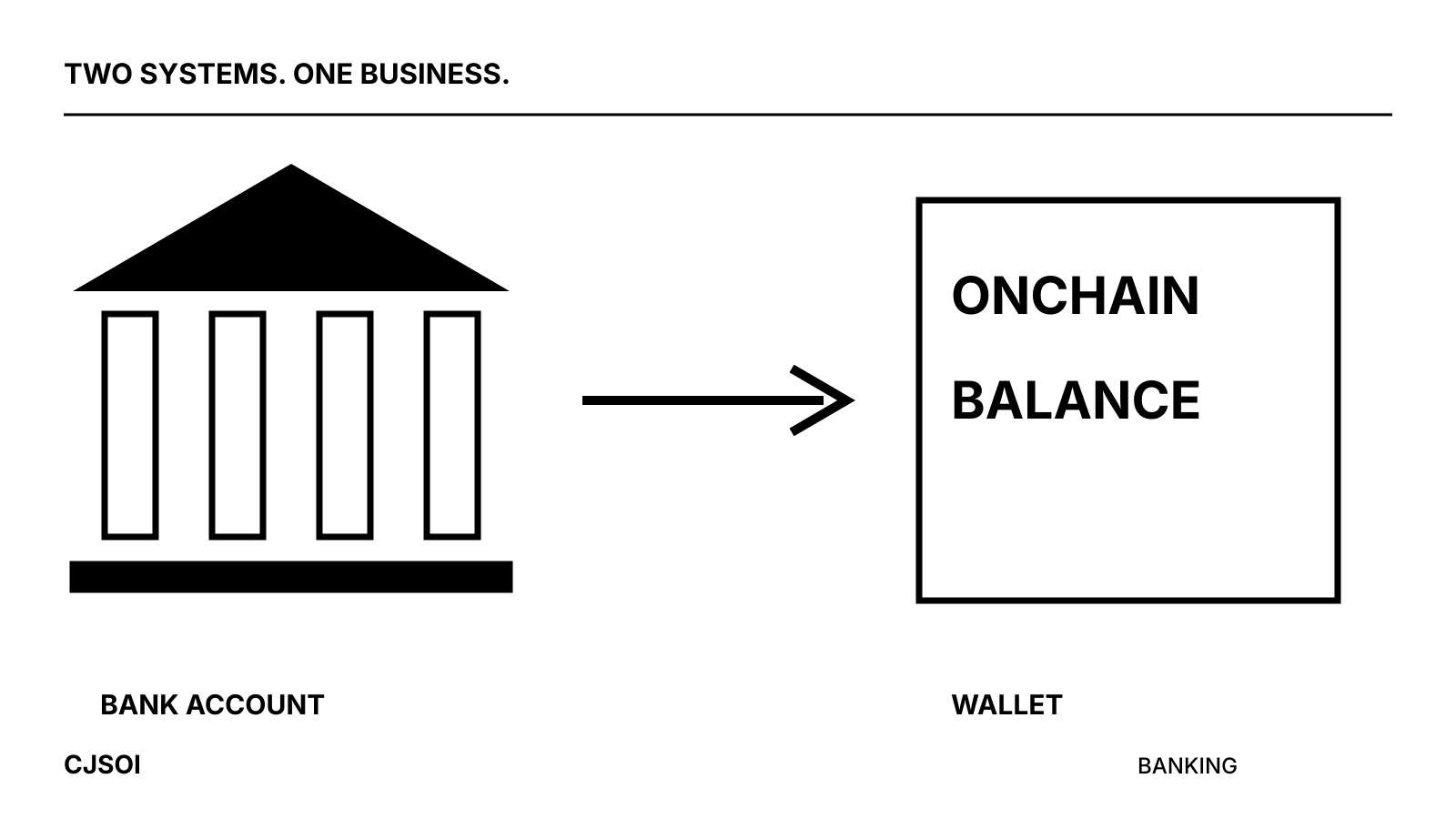
A bank account connected to an onchain balance
Banking ·

Why Crypto Companies Still Need Bank Accounts

An onchain business can still have offchain bills, reserve assets and customers who need cash.

CJSOI

What are you looking for?

Search by headline, topic or keyword.