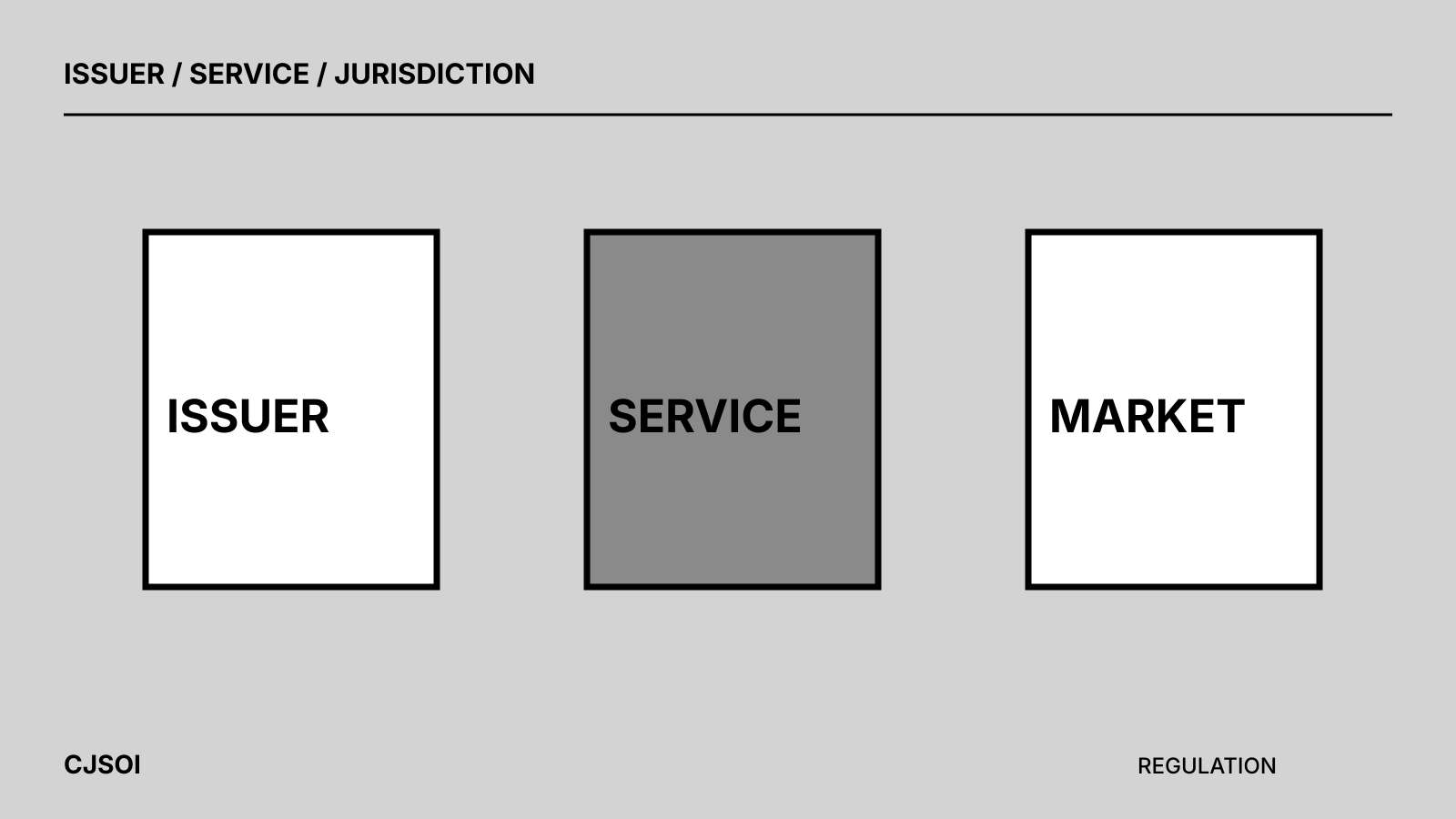
There is no single worldwide stablecoin regulator. Oversight depends on the issuer, the activity being performed and the jurisdiction involved. Issuing a token, holding reserve assets, operating an exchange and providing custody are different activities.
A useful regulatory claim therefore needs more than the word “regulated.” It needs the entity, authority, permission and scope.
Start with the issuer
An issuer creates a token and sets out the obligations attached to it. The relevant regime may govern authorization, reserves, disclosure, redemption and supervision.
In the European Union, the EBA’s MiCA overview explains the authorization framework for issuers of asset-referenced and e-money tokens. That is an issuer-focused question, not a universal approval of every service using the token.
A group can also operate through several entities. The legal issuer named in the product documents is more informative than the consumer-facing brand alone.
Then identify the service
A customer can hold a token through an exchange, use it through a payment provider or place it with a custodian. Each service may have its own authorization and obligations.
ESMA’s MiCA materials distinguish issuers, white papers and crypto-asset service providers in their registers. A record in one category is not interchangeable with a permission in another.
In the United States, OCC Interpretive Letter 1184 discusses crypto custody and related execution by national banks and federal savings associations. Its scope does not extend automatically to every business using a bank’s services.
A proposal is not a final requirement
On September 24, 2026, the Federal Reserve requested comment on two proposals for Board-supervised payment stablecoin issuers under the GENIUS Act. The proposals address matters including reserves, capital, risk management and applications.
That is a defined rulemaking stage. It should not be reported as if the proposed text had already become a final rule applying to every stablecoin issuer.
For any regulatory announcement, separate the date it was announced, the date it was formally published and the date its requirements take effect. A consultation deadline is not an implementation deadline.
Location changes the answer
A token can move across borders while its issuer and service providers remain subject to particular legal regimes. Availability through an app does not establish that the same product has the same permission in every market.
The customer’s jurisdiction, the offering arrangement and the activities performed all affect the analysis. Cross-border legal conclusions need current, specific advice; this article is a reading framework.
Our MiCA guide shows how the distinction between token categories and service providers works within one framework.
Questions
Does a license mean a product is risk-free?
No. Authorization concerns defined activities and requirements, not a guarantee against every loss.
Does an issuer’s authorization cover the exchange I use?
Not automatically. The issuer and the exchange can be separate entities with separate permissions.
Is a proposed rule already binding?
A proposal is part of rulemaking. Check the measure’s actual legal status and effective dates.
Sources
EBA MiCA overview; ESMA MiCA overview and registers; OCC Letter 1184; Federal Reserve proposals. Checked September 26, 2026.